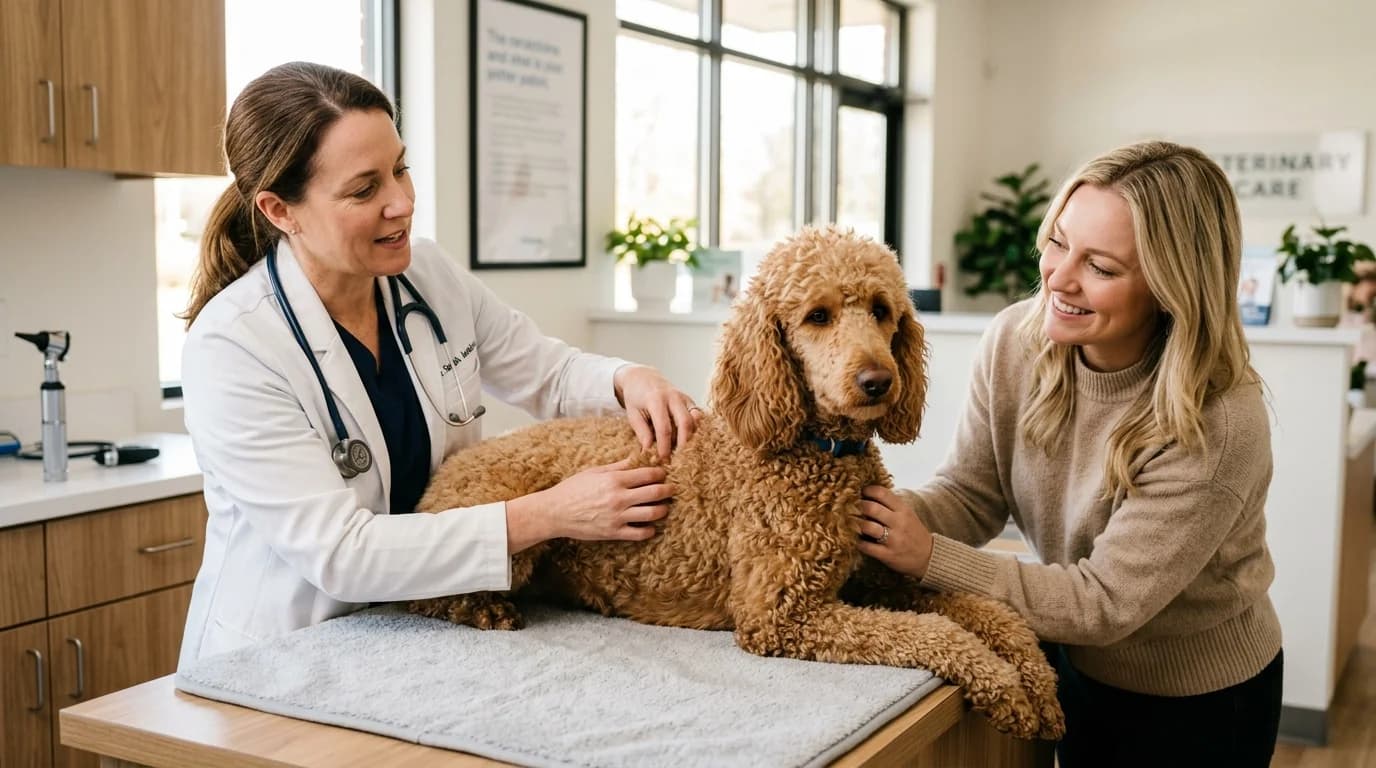
The dream of sharing life with a canine companion is often complicated by allergic rhinitis, conjunctivitis, and allergic asthma. Approximately 10% to 20% of the global human population exhibits immunological hypersensitivity to companion animals, leading millions of prospective pet owners to search for "hypoallergenic dog breeds."
However, from an evidence-based veterinary and clinical immunology perspective, a 100% non-allergenic dog does not exist. Every domestic dog (Canis lupus familiaris), regardless of pedigree or coat texture, produces microscopic protein allergens in their saliva, sebaceous sebum, urine, and desquamated epidermal dander.
What science does support is that certain canine breeds and genetic coat varieties release markedly lower quantities of airborne dander and shed dramatically less hair than double-coated shedding breeds. Furthermore, groundbreaking discoveries in molecular allergen mapping have revealed that many individuals are sensitized only to specific canine protein fractions—such as Can f 5, an allergen produced exclusively in the prostate of intact male dogs.
This comprehensive veterinary medical guide explores the molecular biology of canine allergens, the genetics of low-shedding coats, breed-by-breed clinical profiles, and multi-tier medical and environmental strategies to successfully manage pet allergies.
Molecular Allergen Profile: The Science of Can f 1 Through Can f 6
Contrary to popular belief, dog hair itself is not an allergen. Hair functions merely as a passive physical transport vehicle for microscopic proteins secreted by salivary, prostatic, perianal, and sebaceous glands.
The World Health Organization / International Union of Immunological Societies (WHO/IUIS) Allergen Nomenclature Sub-Committee has formally recognized six distinct canine allergen proteins:
| Allergen Protein | Protein Family | Primary Tissue Origin | Human Sensitization Prevalence | Clinical Significance |
|---|---|---|---|---|
| Can f 1 | Lipocalin | Saliva, Dander, Sebum | 50% – 75% | Major allergen; primary driver of IgE symptoms worldwide |
| Can f 2 | Lipocalin | Parotid Saliva, Dander | 20% – 35% | Minor allergen; frequently co-sensitizes with Can f 1 |
| Can f 3 | Serum Albumin | Blood Serum, Dander | 15% – 35% | Cross-reactive pan-allergen shared across mammals (bovine, equine, feline) |
| Can f 4 | Lipocalin | Epidermal Dander Flakes | 35% – 60% | Major dander allergen; triggers strong direct contact reactions |
| Can f 5 | Prostatic Kallikrein | Prostate Gland (Intact Males) | 30% – 50% | Sex-specific allergen; completely absent in female dogs and minimal in neutered males |
| Can f 6 | Lipocalin | Saliva, Dander | 25% – 40% | Cross-reacts with cat Fel d 4 and horse Equ c 1 |
1. Can f 1: The Predominant Canine Allergen
Can f 1 is a 25-kDa member of the lipocalin transport protein superfamily. Synthesized primarily in the sublingual and parotid salivary glands as well as cutaneous sebaceous glands, it accounts for 50% to 75% of all human canine-specific IgE responses. When a dog grooms itself, Can f 1 in saliva coats the hair shaft; as the saliva evaporates, microscopic protein crystals detach and remain suspended in ambient indoor air for days.
2. Can f 2 & Can f 4: Complementary Lipocalins
Can f 2 (27 kDa) and Can f 4 (18–23 kDa) are secondary lipocalins that frequently elicit co-sensitization alongside Can f 1. Can f 4 is particularly concentrated within desquamated dander flakes, contributing significantly to allergic symptoms upon direct physical contact with canine skin.
3. Can f 3: Cross-Reactive Serum Albumin
Can f 3 (66 kDa) is canine serum albumin. Because mammalian serum albumins share high amino acid sequence homology (approximately 75% to 80% identity with feline Fel d 2 and bovine Bos d 6), individuals sensitized to Can f 3 frequently experience cross-reactive allergic flares when exposed to cats, horses, or undercooked beef.
4. Can f 5: The Prostatic Kallikrein (The Male-Dog Allergen)
Perhaps the most clinically significant breakthrough in companion animal immunology is Can f 5, a 28-kDa arginine esterase identified as a prostatic kallikrein.
- Biological Source: Can f 5 is synthesized exclusively in canine prostatic epithelial tissue and secreted into seminal fluid and urine.
- Clinical Significance: Female dogs do not produce Can f 5, nor do neutered male dogs produce significant amounts, as prostatic tissue atrophies following surgical castration.
- Component-Resolved Diagnostics (CRD): Recent clinical allergy studies (Mattsson et al., JACI, 2010) demonstrate that up to 30% of dog-allergic individuals are mono-sensitized to Can f 5 alone. For these patients, adopting a female dog or a castrated male completely eliminates allergic reactions.
5. Can f 6: Multi-Species Pan-Allergen
Can f 6 is a lipocalin that shares high structural homology with cat allergen Fel d 4 and horse allergen Equ c 1. This cross-reactivity explains why poly-allergic individuals often experience compounding symptoms in multi-pet households.
Biophysics of Dander, Sebum & Coat Genetics
Understanding why certain breeds are classified as "hypoallergenic" requires examining canine follicle biology and coat genetics.
| Attribute | Single-Coated "Hair" Breeds | Double-Coated "Fur" Breeds |
|---|---|---|
| Follicle Growth Phase | Continuous anagen phase (prolonged active hair growth) | Predominant telogen phase (rapid resting and shedding cycle) |
| Undercoat Density | None to minimal fine undercoat | Dense, woolly thermal undercoat |
| Dander Trapping Dynamic | Curls and waves trap shedding hair & dander at skin surface | Constant release of aerosolized dander and hair plumes into air column |
| Indoor Airborne Dispersion | Very low ambient airborne dander load | High ambient PM2.5–PM10 dander dispersion |
| Representative Breeds | Poodle, Bichon Frise, Maltese, Portuguese Water Dog | Siberian Husky, German Shepherd, Golden Retriever, Labrador |
The Mechanism of Dander Aerosolization
Canine dander consists of microscopic flakes of desquamated epithelial cells from the stratum corneum. In healthy dogs, the epidermis undergoes complete turnover every 21 to 28 days. These micro-particles (measuring between 2.5 and 10 microns in diameter) are coated with sebum containing Can f 1, Can f 2, and Can f 4.
Because of their minuscule mass, aerosolized dander particles remain airborne for 4 to 24 hours under standard indoor thermal currents. In contrast, heavy dog hair settles rapidly to the floor. Therefore, hair is not the allergen—it is the aerodynamic catapult that propels dried salivary dander into the breathing zone.
Coat Genetics: RSPO2, FGF5, and KRT71
Modern canine genomic sequencing has isolated the primary genetic loci governing coat types and allergen dispersion:
- The Furnishings Gene (RSPO2): Controls the presence of a mustache, beard, and continuous facial hair growth. Breeds with homozygous furnishings (F/F) exhibit significantly reduced hair shedding compared to non-furnished breeds.
- The Long-Hair Gene (FGF5): Dictates follicle hair cycle length by prolonging the active growth (anagen) phase and delaying the shedding (telogen) phase.
- The Curl Gene (KRT71): Controls the structural curvature of the hair shaft. Tight curls act as a mechanical web, trapping loose hair and desquamated dander against the skin until manual grooming removes them, preventing atmospheric dispersion.
The "Doodle" Paradox & Crossbreed Variability
A widespread marketing claim is that "doodle" hybrids (Labradoodles, Goldendoodles, Bernedoodles) are inherently hypoallergenic. From a veterinary genetics perspective, this claim is unverified:
- First-generation (F1) crosses between a double-coated retriever and a poodle inherit unpredictable combinations of RSPO2 and FGF5 alleles.
- Studies sampling domestic dust have shown that homes with Labradoodles frequently exhibit Can f 1 concentrations identical to or higher than homes with non-hypoallergenic Labrador Retrievers (Nicholas et al., JACI, 2011).
- Only multi-generational hybrids tested and confirmed homozygous for furnishings (F/F) and curl traits consistently mirror true low-shedding phenotypes.
To evaluate your dog's physiological life stage and developmental milestones, explore our interactive Dog Age Calculator or review the comprehensive Dog Age Chart.
Veterinary Classification of Low-Allergen Dog Breeds
While no breed is allergen-free, breeds featuring a single hair coat, continuous anagen follicle growth, or absence of pelage present significantly lower airborne dander loads.
| Breed | AKC Group | Coat Architecture | Shedding Index (1–5) | Airborne Allergen Profile | Grooming Demands | Key Clinical Considerations |
|---|---|---|---|---|---|---|
| Poodle (Toy, Mini, Standard) | Non-Sporting / Toy | Single, dense tight curl | 1 / 5 | Minimal airborne dander | Daily brushing; professional trim every 4–6 wks | Clinical gold standard; hair traps dander until brushed out |
| Bichon Frise | Non-Sporting | Double, plush velvet curl | 1 / 5 | Low airborne dander | Daily combing; clipping every 4–6 wks | Very low dander release; requires frequent tear-stain and saliva cleansing |
| Maltese | Toy | Single, fine silky hair | 1 / 5 | Low-to-moderate | Daily combing; bathing every 1–2 wks | No undercoat; fine hair requires frequent wiping to remove saliva |
| Portuguese Water Dog | Working | Single, robust wavy or curly | 1.5 / 5 | Low airborne dander | Brushing 3x weekly; clipping every 6–8 wks | High sebum production; weekly therapeutic bathing essential |
| Miniature Schnauzer | Terrier | Double, wiry harsh topcoat | 1.5 / 5 | Low-to-moderate | Hand-stripping or clipping every 6–8 wks | Furnished beard traps saliva; requires post-meal facial wiping |
| Soft Coated Wheaten Terrier | Terrier | Single, silky wavy fleece | 1.5 / 5 | Low-to-moderate | Daily combing; professional grooming every 6–8 wks | Lacks dense undercoat; sheds far less hair than double-coated terriers |
| Yorkshire Terrier | Toy | Single, human-like fine hair | 1 / 5 | Minimal airborne dander | Daily brushing; regular trims | Fine hair texture minimizes dander carriage; prone to dental plaque (saliva) |
| Irish Water Spaniel | Sporting | Dense, tight crisp curls | 1.5 / 5 | Low airborne dander | 2–3x weekly combing; clipping every 6–8 wks | Water-repellent natural coat requires regular lipid-balancing shampoos |
| Xoloitzcuintli (Hairless) | Non-Sporting | Hairless (dermal surface) | 0.5 / 5 | No hair-borne dander | Weekly skin washing & moisturizing | Eliminates airborne hair dander, but sebum & saliva contact allergens remain |
| Giant Schnauzer | Working | Double, wiry hard coat | 2 / 5 | Moderate (larger body mass) | Regular stripping/trimming | Large canine surface area; requires strict adherence to bedroom exclusion |
1. Poodles (Toy, Miniature, and Standard)
The Poodle represents the clinical gold standard of low-shedding canines. Their coat consists of dense, tightly coiled single hair that grows continuously. Because the hair sheds minimally and dead hairs are caught in the surrounding coils, salivary dander remains trapped until brushed out, minimizing ambient respiratory exposure.
2. Bichon Frise & Maltese
- Bichon Frise: Possesses a soft undercoat combined with a coarser curly outer coat, producing a powder-puff texture that sheds minimally when maintained with daily combing.
- Maltese: Possesses a pure single coat of fine white silky hair without an undercoat. When bathed regularly to remove salivary residues, they trigger remarkably few contact reactions.
3. Portuguese Water Dog & Irish Water Spaniel
Working breeds featuring waterproof, dense, single-layer wavy or curly hair. Bred for maritime recovery, their skin produces healthy sebum, making a consistent bathing and drying regimen essential to prevent oily dander accumulation.
4. Wire-Haired Terriers & Schnauzers
- Miniature, Standard, and Giant Schnauzers: Feature a wiry topcoat and a soft undercoat. When properly hand-stripped or clipped, shedding is negligible.
- Kerry Blue Terrier & Soft Coated Wheaten Terrier: Possess unique single-layer wave coats that lack the bristly shedding undercoat found in standard sporting breeds.
5. Hairless Breeds: A Critical Clinical Caveat
Breeds such as the Xoloitzcuintli (Mexican Hairless), Chinese Crested (Hairless variety), and American Hairless Terrier completely eliminate hair-borne dander. However, veterinary dermatologists caution:
- Hairless dogs produce identical levels of salivary Can f 1 and prostatic Can f 5.
- Without a hair coat to absorb dermal secretions, sebum and sweat accumulate directly on the skin surface.
- Allergic owners petting a hairless dog can develop severe contact urticaria unless the dog receives gentle weekly dermatological baths.
Life Stage Dynamics: How Age Influences Canine Allergens
Allergen production is not static throughout a dog's life. Biological maturation, hormonal milestones, and age-related epidermal changes significantly alter allergen concentrations:
| Canine Life Stage | Biological Age Profile | Immunological & Allergen Dynamics | Clinical Management Strategy |
|---|---|---|---|
| Juvenile Puppy | Birth to 6 Months (Human equiv: 0–10 yrs) | • Negligible Can f 5 (prostate immature) • Lower sebum output; downy juvenile coat • Often well-tolerated by allergic individuals | Begin desensitization grooming early; test adult family members with CRD |
| Adolescent & Adult | 6 Months to 7 Years (Human equiv: 12–45 yrs) | • Sexual maturity surges prostatic testosterone • Rapid jump in Can f 5 excretion in intact males • Adult coat blow transitions follicles | Spay/neuter consideration; institute strict HEPA air filtration & weekly bathing |
| Senior & Geriatric | 7+ Years (Size dependent) (Human equiv: 50–80+ yrs) | • Epidermal barrier lipid depletion • Secondary seborrhea elevates dander flaking • Decreased self-grooming alters saliva spread | Add dietary Omega-3s (EPA/DHA); use ceramide-restoring shampoos |
The "Puppy Honeymoon" Phenomenon
Prospective owners frequently bring home a 10-week-old puppy with zero allergic symptoms, only to develop severe respiratory distress when the dog reaches 8 to 12 months of age. This occurs because:
- Immature Prostatic Tissue: The puppy produces negligible Can f 5 prior to androgen-driven sexual maturation.
- Juvenile Epidermis: Puppy skin exhibits low sebaceous gland activity and minimal dander production.
- The Adult Coat Transition: Between 6 and 14 months, puppies shed their juvenile downy coat, releasing a sudden surge of dander and loose hair.
For precise guidance on when your dog crosses developmental thresholds, consult our guide on Puppy Growth Stages and Senior Dog Care.
Multi-Tiered Veterinary & Environmental Management Protocol
Living comfortably with a dog when sensitized to canine allergens requires a comprehensive, multi-modal clinical strategy addressing the pet, the physical indoor environment, and human immunology.
                    +---------------------------------------------+
                    |          TIER 3: HUMAN MEDICINE             |
                    |   CRD Testing, SLIT / SCIT, Antihistamines  |
                    +---------------------------------------------+
                                          ^
                    +---------------------------------------------+
                    |     TIER 2: INDOOR MICROENVIRONMENT         |
                    |  HEPA H13 Purifiers, Bedroom Sanctuary, LVT |
                    +---------------------------------------------+
                                          ^
                    +---------------------------------------------+
                    |  TIER 1: PATIENT-DIRECTED VETERINARY CARE   |
                    | Bathing Protocols, Spay/Neuter, Marine EPA  |
                    +---------------------------------------------+
Tier 1: Patient-Directed Veterinary Interventions
1. Evidence-Based Bathing Protocols
Bathing the dog with warm water and a specialized veterinary shampoo reduces airborne Can f 1 by up to 84% immediately post-bath, with allergen loads rebounding after 4 to 7 days (Hodson et al., JACI, 1999).
- Recommended Frequency: Once weekly. Bathing more frequently than every 5 days can strip the epidermal lipid mantle, triggering reactive hyper-seborrhea and increasing dander production.
- Formulation: Use colloidal oatmeal, phytosphingosine, or ceramide-enriched moisturizing veterinary shampoos. Avoid human shampoos, which disrupt the canine cutaneous pH (canine pH: 6.8–7.4 vs. human pH: 5.5).
- Post-Bath Anti-Allergen Sprays: Applying topical neutralizers containing quaternium compounds or tannic acid helps denature residual lipocalins on the coat shaft.
2. Spaying and Neutering Considerations
If a family member is sensitized to Can f 5 (prostatic kallikrein):
- Adopt Female Dogs: Female canines produce virtually zero Can f 5.
- Early Castration for Male Dogs: Surgical castration (gonadectomy) induces rapid atrophy of prostatic glandular epithelium, reducing Can f 5 production by over 90% within 4 to 8 weeks post-surgery.
3. Nutritional Optimization of the Epidermal Barrier
A healthy stratum corneum sheds far fewer desquamated dander particles. Veterinary nutritional support includes:
- Therapeutic Marine Omega-3 Fatty Acids (EPA & DHA): Dosed at 100 to 150 mg combined EPA+DHA per kg of body weight daily. Long-chain omega-3s incorporate into cell membranes, suppressing cutaneous inflammation and reducing trans-epidermal water loss (TEWL).
- Zinc & Biotin: Essential cofactors for keratinocyte maturation and cellular cohesion.
Tier 2: Indoor Microenvironment Architecture
Because canine dander particles (2.5–10 $\mu\text{m}$) remain suspended in the air column for extended periods, home environmental engineering is paramount:
1. The Bedroom "Clean Sanctuary" (Absolute Pet-Free Zone)
The human respiratory tract requires 7 to 9 hours of nightly recovery from antigenic provocation:
- Zero Pet Access: Keep bedroom doors closed 24/7. Never allow pets on bedding, mattresses, or bedroom carpets.
- High-Purity Bedding Encasing: Utilize micro-porous allergen-barrier mattress and pillow encasings with a pore size smaller than 5 microns.
2. True HEPA Air Filtration
- Install freestanding Class H13 or H14 True HEPA air purifiers in primary living areas and the master bedroom.
- Size units to achieve at least 4 to 6 complete Air Changes per Hour (ACH).
- Position purifiers away from room corners, allowing unobstructed intake of room air currents.
3. Flooring & Textile Remediation
- Carpet Elimination: Carpet acts as an irreversible reservoir for canine lipocalins; walking on carpet re-suspends millions of allergen particles into the breathing zone. Replace carpets with hardwood, tile, or luxury vinyl tile (LVT).
- Sealed HEPA Vacuuming: Standard vacuum cleaners exhaust fine particulate allergens back into the air. Utilize certified sealed HEPA canister vacuums equipped with motorized agitators.
- Steam Sanitization: Routine dry-steam cleaning of upholstery at temperatures exceeding 140°F (60°C) denatures protein allergens without generating toxic chemical residues.
Tier 3: Human Medical & Immunological Strategies
1. Component-Resolved Diagnostic Testing (CRD)
Before selecting a canine breed, prospective owners should visit a board-certified allergist for Component-Resolved Diagnostics (CRD) utilizing blood serum immunoassays (e.g., ImmunoCAP).
- If your IgE antibodies test positive exclusively for Can f 5, you can safely cohabitate with female dogs or castrated male dogs regardless of breed.
- If your test demonstrates high-titer IgE against Can f 1 and Can f 2, single-coated, low-shedding breeds paired with environmental filtration are mandatory.
2. Allergen-Specific Immunotherapy (AIT)
- Subcutaneous Immunotherapy (SCIT): Traditional allergy shots administered over 3 to 5 years re-educate the immune system by inducing regulatory T-cells ($T_{\text{reg}}$) and blocking IgG4 antibodies.
- Sublingual Immunotherapy (SLIT): Daily liquid or dissolvable oral drops that offer comparable desensitization profiles with superior home compliance and lower risk of systemic anaphylaxis.
Weekly Allergen Reduction Schedule
This evidence-based weekly checklist outlines the clinical maintenance routine for homes with sensitive individuals:
| Day | Primary Action Item | Protocol Specifics | Clinical Objective |
|---|---|---|---|
| Monday | HEPA vacuuming & damp microfiber mop | Run sealed HEPA vacuum across rugs; damp mop all hard floors | Captures settled weekend dander without re-aerosolizing fine particulate matter |
| Tuesday | Outdoor brushing session | Brush dog outdoors with slicker comb; allergic owner wears KN95 mask | Removes shedding hair and bound dried saliva outside the indoor air column |
| Wednesday | Hot-water textile decontamination | Wash dog bedding and washable sofa covers at $\ge 130^\circ\text{F}$ ($54^\circ\text{C}$) | Thermally denatures canine lipocalins and kills house dust mites |
| Thursday | Coat wipe & facial cleanse | Wipe dog coat and muzzle with damp microfiber cloth or allergen wipes | Neutralizes surface salivary Can f 1 and Can f 2 between baths |
| Friday | Environmental HEPA audit | Vacuum HEPA pre-filters; dust hard furniture with electrostatic cloths | Ensures continuous maximum Air Changes per Hour (ACH) for the weekend |
| Saturday | Therapeutic bathing session | 10-minute lather with moisturizing oatmeal or phytosphingosine shampoo | Removes up to 84% of loose dander precursors while hydrating stratum corneum |
| Sunday | Rest day & Sanctuary verification | Check bedroom door seal; inspect air purifier status | Preserves zero-allergen bedroom sanctuary for restorative nocturnal sleep |
Frequently Asked Questions
Is any dog breed 100% hypoallergenic?
No. Every dog produces dander, saliva, and sebum containing lipocalin and albumin proteins. The term "hypoallergenic" biologically denotes reduced allergen dispersion, not the complete absence of allergens. Single-coated breeds (like Poodles and Maltese) shed significantly less hair and release lower quantities of airborne dander into the home.
Why am I allergic to male dogs but not female dogs?
You are likely sensitized to Can f 5, a prostatic kallikrein allergen synthesized exclusively in the prostate gland of intact male dogs. Female dogs do not possess a prostate and produce virtually no Can f 5. Castrated male dogs produce dramatically lower amounts than intact males.
Do Labradoodles and Goldendoodles guarantee an allergy-safe home?
No. First-generation (F1) and second-generation (F2) "Doodles" inherit unpredictable coat genetics. Many retain the shedding double coat and high dander production of their retriever ancestry. Controlled studies have demonstrated that allergen levels in homes with Labradoodles are frequently indistinguishable from homes with standard Labrador Retrievers.
Does shaving a dog reduce allergic reactions?
No. Shaving a dog down to the skin is counterproductive. Dander originates from the epidermal skin cells, not the hair shaft. Shaving exposes the skin to mechanical irritation and drying, which accelerates epidermal desquamation and increases dander production. Furthermore, shorter bristles allow dried saliva from grooming to flake directly into the air column.
Can air purifiers alone control dog allergies?
While True HEPA (Class H13/H14) air purifiers operating at 4 to 6 air changes per hour significantly reduce airborne pet dander, they cannot capture heavy allergen deposits embedded in carpets, mattresses, and upholstery. Air purifiers must be paired with hard-surface flooring, weekly bathing, and pet-free bedroom sanctuaries.
How does my dog's age influence allergic reactions?
Puppies under 6 months old produce lower amounts of sebum and no prostatic Can f 5, often creating a false sense of security. As dogs reach adolescence (6 to 18 months), hormone production spikes and adult coats blow in, often triggering new allergic symptoms. In senior dogs (8+ years), age-related dry skin or seborrhea can increase dander flaking.
References & Scientific Literature
- World Health Organization / International Union of Immunological Societies (WHO/IUIS). Allergen Nomenclature Sub-Committee: Allergen Details for Canis lupus familiaris (Can f 1 – Can f 6). Available at: allergen.org
- Mattsson, L., et al. (2010). Prostatic kallikrein: A major allergen in human dog allergy. Journal of Allergy and Clinical Immunology (JACI), 126(6), 1311–1317. Available at: jacionline.org
- Nicholas, C. E., et al. (2011). Dog allergen levels in homes of hypoallergenic versus nonhypoallergenic dogs. American Journal of Rhinology & Allergy, 25(4), 262–266.
- Hodson, T., et al. (1999). Washing the dog reduces airborne Lab d 1 and Can f 1 levels. Journal of Allergy and Clinical Immunology, 103(4), 581–585.
- Cadieu, E., et al. (2009). Coat variation in the domestic dog is governed by variants in three genes (RSPO2, FGF5, KRT71). Science, 326(5949), 150–153.
- American Academy of Allergy, Asthma & Immunology (AAAAI). Pet Allergy: Overview, Diagnosis, and Management Guidelines. Available at: aaaai.org
Veterinary & Medical Disclaimer: This article is for educational and informational purposes only and does not substitute for personalized medical diagnosis or veterinary clinical care. Individuals suffering from severe allergic asthma or anaphylaxis should undergo comprehensive immunological testing with a board-certified allergist before acquiring any companion animal.