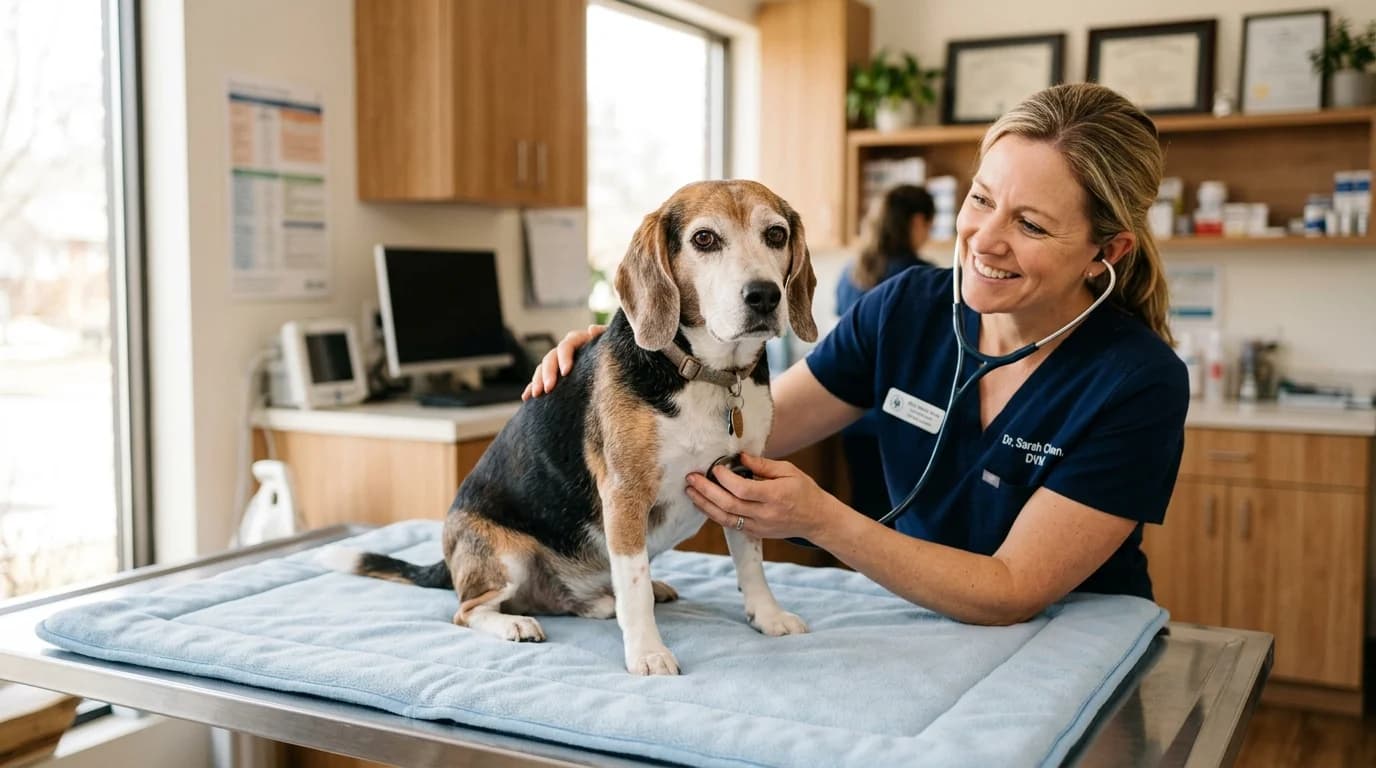
The Beagle (Canis lupus familiaris) stands as one of the most enduring, universally recognizable, and scientifically scrutinized breeds in modern veterinary biogerontology. Originally refined in Great Britain for tracking hare and rabbit by scent in foot packs ("beagling"), the modern Beagle is a compact, robust scent hound characterized by extraordinary olfactory acuity, exceptional cardiovascular stamina, and an affectionate, food-motivated temperament.
Within purebred canine demographics, kennel clubs divide the breed into two primary size varieties:
- The 13-Inch Variety: Height at the shoulder $\le 13$ inches ($\le 33\text{ cm}$); adult weight typically $18$ to $24\text{ lbs}$ ($8$ to $11\text{ kg}$).
- The 15-Inch Variety: Height at the shoulder $> 13$ inches up to $15$ inches ($33$ to $38\text{ cm}$); adult weight typically $22$ to $30+\text{ lbs}$ ($10$ to $14\text{ kg}$).
Beyond their hunting heritage, Beagles have played an unprecedented role in medical science: for decades, their uniform body size, stable temperament, and cooperative nature made them the primary canine model in pharmacology, toxicology, and mammalian biogerontology. Consequently, veterinary clinicians possess unmatched longitudinal physiological datasets tracking Beagle aging, metabolic shifts, and disease progression across their entire life course.
In general companion populations, Beagles are remarkably resilient, with a median life expectancy of 12 to 15 years. Many well-managed individuals comfortably surpass 15 to 17 years, with verified super-seniors occasionally attaining 18+ years.
However, realizing this maximum genetic longevity potential requires proactive clinical navigation of several breed-specific vulnerabilities:
- Hyperphagia and Obesity: Driven by ancient olfactory foraging circuits, Beagles exhibit profound food motivation; chronic excess adiposity accelerates osteoarthritis, metabolic strain, and premature mortality.
- Intervertebral Disc Disease (IVDD): As a chondrodystrophic breed harboring the FGF4 retrogene insertion, Beagles experience early nucleus pulposus degeneration and acute disc herniations.
- Steroid-Responsive Meningitis-Arteritis (SRMA): A juvenile immune-mediated vasculitis ("Beagle Pain Syndrome") requiring timely immunosuppression.
- Neurological and Endocrine Disorders: Including idiopathic primary epilepsy, lymphocytic thyroiditis (hypothyroidism), and late-life Canine Cognitive Dysfunction (CCD).
To calculate your Beagle's exact physiological life stage and human age equivalent based on current veterinary biogerontology, explore our interactive Dog Age Calculator or consult our comprehensive Dog Age Chart.
Epidemiological Baseline: How Long Do Beagles Live?
Cross-sectional and cohort studies across international primary-care and academic databases demonstrate consistent lifespan metrics for the Beagle. Because Beagles occupy an intermediate body size category (approximately $10$ to $14\text{ kg}$), they benefit from the physiological advantages of modest somatic mass without suffering the extreme metabolic fragility of ultra-toy toy breeds.
                    BEAGLE LIFESPAN BY COHORT & REGISTRY
+------------------------------------+------------------+-------------------+-----------------------------------------+
| Registry / Cohort Database         | Variety / Group  | Reported Median   | Epidemiological Context / Methodology   |
+------------------------------------+------------------+-------------------+-----------------------------------------+
| VetCompass UK (Royal Vet College)  | Combined Beagles | 12.5 – 13.5 Years | Primary care electronic patient records |
| UK Kennel Club Health Survey       | Purebred Beagle  | 12.7 – 13.0 Years | Owner-reported pedigree mortality study |
| Japanese Pet Animal Insurance Data | Companion Beagle | 13.8 – 15.2 Years | High-density companion animal cohort    |
| Agria Pet Insurance Database (SWE) | Nordic Beagle    | 12.8 – 14.1 Years | Multi-year insured veterinary population|
| University of Georgia VMDB (USA)   | Purebred Beagle  | 12.4 – 13.3 Years | Tertiary academic referral hospitals    |
| Purina Lifespan Caloric Cohort     | Restricted Group | 14.0 – 15.4 Years | 25% Caloric restriction lifetime trial  |
| Documented Centenarian Outliers    | Individual Dogs  | 17.0 – 19.5 Years | Verified clinical geriatric records     |
+------------------------------------+------------------+-------------------+-----------------------------------------+
                   BEAGLE LIFESPAN DISTRIBUTION CURVE
   Survival
   Probability (%)
     ▲
 100 │═════════════════╗
  80 │                 ╚══════════╗
  60 │                            ╚══════════╗  (50% Median: 13.2 yrs)
  40 │                                       ╚══════════╗
  20 │                                                  ╚═════════╗
   0 │────────────────────────────────────────────────────────────╚════►
     0         2         4         6         8        10   12   14   16   18
                                Chronological Age (Years)
1. 13-Inch Beagle Lifespan
- Median Lifespan: 13.0 to 15.5 years
- Interquartile Range: 12.0 to 16.2 years
- Weighing between $18$ and $24\text{ lbs}$, the smaller 13-inch variety exhibits slightly reduced biomechanical stress on articular cartilage and intervertebral discs compared to their larger counterparts. When kept at a lean body condition, these dogs frequently maintain vigorous physical activity well into their 13th and 14th years.
2. 15-Inch Beagle Lifespan
- Median Lifespan: 12.0 to 14.5 years
- Interquartile Range: 11.2 to 15.0 years
- The 15-inch Beagle possesses a longer spinal column and heavier muscular frame ($25$ to $32+\text{ lbs}$). While fundamentally healthy and athletic, they display a slightly higher clinical incidence of thoracolumbar disc extrusion and cranial cruciate ligament (CCL) strain if weight is allowed to drift into the overweight or obese category.
To discover why smaller body mass systematically correlates with extended canine lifespan, read our foundational analysis on Why Small Dogs Live Longer Than Large Dogs.
Biogerontology: Olfactory Drive, Metabolism & The Caloric Restriction Factor
Understanding Beagle aging requires an examination of the breed's evolutionary hunting specialization, olfactory neurology, and energy balance.
                THE BEAGLE METABOLIC TRAP & LONGEVITY AXIS

    INTENSE OLFACTORY SCANNING & HUNTING DRIVE
    * 220+ million olfactory receptors (vs. 5 million in humans)
    * High cerebral blood flow allocated to olfactory cortex
    * Continuous foraging drive evolved for endurance tracking
         │
         ▼
    URBAN SEDENTARY LIFESTYLE + AD-LIBITUM / HIGH-CALORIE FEEDING
    * Reduced physical energy expenditure (no 20-mile tracking days)
    * Constant begging behavior misinterpreted by owners as genuine hunger
         │
         ▼
    CHRONIC ADIPOSITY & VISCERAL ADIPOKINE SECRETION
    * TNF-alpha, IL-6, and Leptin resistance
    * Chronic low-grade systemic inflammation (Inflammaging)
    * Excessive axial load on chondrodystrophic spinal columns
         │
         ▼
    ACCELERATED SENESCENCE & MORBIDITY
    * Intervertebral disc rupture (IVDD)
    * Accelerated articular cartilage erosions (Osteoarthritis)
    * Hepatic lipidosis, insulin insensitivity, shortened lifespan (-1.8 to 2.0 yrs)
The Landmark Purina Lifespan Study: Caloric Restriction in Canines
Much of what modern veterinary medicine understands regarding caloric restriction, aging, and longevity stems directly from the classic 14-year longitudinal study conducted by Kealy and colleagues (JAVMA, 2002; Am J Vet Res, 2000). While Labradors were the primary model alongside hound cohorts, the molecular principles apply directly to the Beagle:
- The Study Design: 48 paired littermates were divided into two cohorts: an ad-libitum control group fed standard commercial rations, and a restricted cohort fed 25% fewer calories, maintaining a lean Body Condition Score (BCS) of 4.5 to 5.0 out of 9.
- The Results: Dogs in the calorically restricted cohort achieved a median lifespan extension of 1.8 to 2.0 full calendar years (a 15% increase in total lifespan).
- Morbidity Delay: Caloric restriction did not merely extend chronological time; it delayed the clinical requirement for medical intervention for chronic degenerative conditions (particularly osteoarthritis and neoplasia) by a median of 2.1 years.
- Clinical Translation for Beagles: For a Beagle with an anticipated median lifespan of 13 years, preventing obesity equates to gaining nearly two full years of high-quality, pain-free life.
Critical Genetic & Clinical Health Predispositions
While Beagles are free from many of the catastrophic structural deformities found in extreme brachycephalic or giant breeds, their genetic heritage presents several major clinical challenges. Early diagnosis, accurate biomarker identification, and prompt intervention are critical.
                    BEAGLE CLINICAL VULNERABILITY MATRIX
+-------------------------------------+------------------+-------------------+-----------------------------------------+
| Condition / Disease                 | Genetic / Etiol  | Peak Onset Age    | Clinical Hallmark / Diagnostic Marker   |
+-------------------------------------+------------------+-------------------+-----------------------------------------+
| Intervertebral Disc Disease (IVDD)  | FGF4 retrogene   | 3 – 8 Years       | Severe spinal hyperesthesia, ataxia     |
| Steroid-Responsive Meningitis (SRMA)| Immune-mediated  | 6 – 18 Months     | Cervical rigidity, fever, CSF IgA elev  |
| Idiopathic Epilepsy                 | Polygenic        | 1 – 5 Years       | Recurrent tonic-clonic motor seizures   |
| Primary Hypothyroidism              | Autoimmune thyr. | 4 – 9 Years       | Weight gain, alopecia, low Free T4/fTSH |
| Primary Open-Angle Glaucoma (POAG)  | ADAMTS10 gene    | 4 – 8 Years       | Bilateral IOP elevation, buphthalmos    |
| Cherry Eye (Nictitans Prolapse)     | Connective lax.  | 3 – 12 Months     | Pink smooth mass at medial canthus      |
| Musladin-Lueke Syndrome (MLS)       | ADAMTSL2 gene    | Birth – 6 Months  | Fibrotic tight skin, "tiptoe" gait      |
| Canine Cognitive Dysfunction (CCD)  | Neurodegeneration| 12 – 16+ Years    | DISHA scoring, night pacing, disorientation|
+-------------------------------------+------------------+-------------------+-----------------------------------------+
1. Intervertebral Disc Disease (IVDD / Hansen Type I)
Like Dachshunds, Corgis, and Basset Hounds, the Beagle is an anatomic chondrodystrophoid breed. Genetic sequencing reveals that Beagles harbor the retrotransposed insertion of the Fibroblast Growth Factor 4 (FGF4) gene.
Pathophysiology & Chondroid Metaplasia
In non-chondrodystrophic canines, the gelatinous inner core of the spinal disc (the nucleus pulposus) remains hydrated (over 80% water and proteoglycans) well into old age. In Beagles, the FGF4 retrogene triggers premature chondroid metaplasia during the first year of life:
- The proteoglycan matrix degrades and dehydrates.
- The soft nucleus pulposus mineralizes and turns into chalky, brittle, calcified debris.
- Under normal mechanical flexion or sudden torsional load (such as leaping off a couch or navigating steep stairs), the calcified nucleus tears through the surrounding annulus fibrosus.
- Hansen Type I Extrusion: Nuclear fragments explode dorsally into the spinal canal, violently concussing and compressing the spinal cord and local spinal nerves.
                    IVDD PATHOMECHANICS IN THE BEAGLE

    NORMAL HYDRATED DISC                    CHONDROID METAPLASIA (BEAGLE)
    +------------------------------+        +------------------------------+
    |         Spinal Cord          |        |    COMPRESSED SPINAL CORD    | <- Ischemia
    +==============================+        +==============/\==============+
    |    Annulus Fibrosus (Intact) |        | Ruptured   / || \  Extruded  |
    |  [ Gelatinous Core (80% H2O) ]|        | Annulus   |  ||  |  Debris   | <- Hansen Type I
    |    Annulus Fibrosus (Intact) |        | Calcified, Brittle Nucleus   |
    +------------------------------+        +------------------------------+
Anatomical Predilection Sites in Beagles
Unlike Dachshunds whose herniations concentrate predominantly in the thoracolumbar junction (T12–L2), Beagles exhibit a remarkably high incidence of cervical disc disease (C2–C3, C3–C4, and C4–C5), comprising nearly 40% to 50% of all Beagle IVDD presentations:
- Cervical Disc Herniations: Produce excruciating neck spasm, low-head carriage, guarded movements, vocalization upon turning, and reluctance to lower the head to food bowls. Because the cervical spinal canal is relatively wide, neurological deficits (tetraparesis) may develop later, but pain is agonizing.
- Thoracolumbar Disc Herniations: Result in arched-back kyphosis, tense abdominal splinting, pelvic limb ataxia ("drunken walk"), and potential paraplegia.
Clinical Grading & Neurological Management
Veterinary treatment protocols depend strictly on the functional neurological grade:
- Grade 1 (Spinal Hyperesthesia Only): Severe pain without motor weakness. Managed conservatively with 4 to 6 weeks of strict crate rest, multimodal analgesia (gabapentin, NSAIDs or corticosteroids—never both simultaneously), and muscle relaxants (methocarbamol).
- Grade 2 (Ambulatory Paraparesis): Can still walk but stumbles, scuffs paws, and exhibits proprioceptive deficits.
- Grade 3 (Non-Ambulatory Paraparesis): Retains voluntary motor limb movement when supported, but cannot stand or walk independently. Surgical consultation recommended.
- Grade 4 (Paraplegia with Deep Pain Intact): Total paralysis of pelvic limbs with loss of voluntary bladder control. Urgent decompressive hemilaminectomy or ventral slot surgery yields an 85% to 90% recovery rate.
- Grade 5 (Paraplegia with Loss of Deep Pain): Complete sensory cutoff across digits. If decompressive surgery is performed within 24 hours, prognosis remains 50% to 60%; beyond 48 hours, prognosis falls below 10%, with a risk of fatal ascending myelomalacia.
2. Steroid-Responsive Meningitis-Arteritis (SRMA / "Beagle Pain Syndrome")
Steroid-Responsive Meningitis-Arteritis is an immune-mediated inflammatory vasculitis targeting the leptomeninges and associated arteries of the cervical spinal cord. Because the condition was first characterized extensively in laboratory Beagle colonies, it carries the historical clinical moniker "Beagle Pain Syndrome".
                   SRMA IMMUNOPATHOGENESIS IN BEAGLES

    GENETIC PREDISPOSITION (CANINE LEUKOCYTE ANTIGEN DLA HAPLOTYPES)
    + TRIGGER (ENVIRONMENTAL / EPIGENETIC ACTIVATION)
         │
         ▼
    DYSREGULATED IMMUNE ACTIVATION
    * Massive systemic production of Immunoglobulin A (IgA)
    * Upregulation of Matrix Metalloproteinases (MMP-2, MMP-9)
    * Neutrophil recruitment into meningeal vascular beds
         │
         ▼
    ACUTE LEPTOMENINGEAL ARTERITIS & PAIN
    * Necrotizing vasculitis of spinal and cerebral arteries
    * Severe meningeal stretching and nerve root inflammation
    * Clinical triad: Pyrexia (104–106°F), Cervical Rigidity, Agonizing Pain
Clinical Presentation & Diagnosis
SRMA predominantly manifests in juvenile Beagles aged 6 to 18 months:
- Acute Classic Form: Sudden onset of high fever ($39.5^\circ\text{C}$ to $41.0^\circ\text{C}$ / $103^\circ\text{F}$ to $106^\circ\text{F}$), severe stiff-legged gait, cervical rigidity, reluctance to move the neck, and dramatic vocalization upon gentle handling.
- Laboratory Biomarkers:
- Marked peripheral neutrophilic leukocytosis with a left shift.
- Greatly elevated C-Reactive Protein (CRP)—a vital objective biomarker for monitoring treatment response.
- Serum and Cerebrospinal Fluid (CSF) IgA: Markedly elevated polyclonal IgA levels.
- Cerebrospinal Fluid Analysis: Lumbar or cisternal puncture reveals striking neutrophilic pleocytosis (often $> 100\text{ to }10,000\text{ cells}/\mu\text{L}$) with elevated protein, in the absence of infectious organisms.
Curative Immunosuppressive Protocol
SRMA is an immunological emergency, but carries an excellent clinical prognosis ($>80\text{ to }90%$ long-term cure rate) if treated aggressively:
- Induction Phase: High-dose systemic immunosuppressive corticosteroids (prednisolone at $2\text{ mg/kg/day}$ divided BID) initiated immediately upon ruling out infectious meningitis.
- Tapering Regimen: Corticosteroids must be tapered slowly and systematically over a minimum of 6 to 9 months, guided by serial serum CRP monitoring. Premature cessation within 6 to 8 weeks frequently precipitates aggressive relapses.
- Adjunctive Immunosuppressants: In refractory or relapse cases, secondary agents such as azathioprine, cyclosporine, or cytarabine (Cytosar-U) are added to allow lower steroid dosages and mitigate steroid-induced hepatopathy.
3. Idiopathic Epilepsy
Beagles display a pronounced familial predisposition to idiopathic primary epilepsy, an inherited neurological disorder characterized by recurrent unprovoked seizures arising from abnormal electrical hypersynchrony within the cerebral cortex.
Clinical Profile & Staging
- Age of Onset: Typically between 1 and 5 years of age. Seizures debuting before 6 months or after 6 years strongly suggest alternative etiologies (portosystemic liver shunt, hypoglycemia, encephalitis, or intracranial neoplasia).
- Seizure Morphology: Most Beagle seizures are generalized tonic-clonic ("grand mal"): sudden loss of consciousness, recumbency, paddling of the limbs, jaw champing, hypersalivation, involuntary urination, and defecation, typically lasting 60 to 120 seconds.
- The Post-Ictal Phase: Following the seizure, Beagles experience a post-ictal recovery period lasting from 30 minutes to several hours, presenting with temporary blindness, disorientation, ataxia, pacing, and insatiable ravenous hunger.
                      SEIZURE PHASES IN THE CANINE BRAIN

    1. PRODROME / AURA (Minutes to Hours Prior)
       Restlessness, seeking owner clinginess, anxious pacing, hiding.
         │
         ▼
    2. ICTAL EVENT (60 – 120 Seconds)
       Sudden collapse, tonic rigidity -> clonic limb paddling, autonomic release.
         │
         ▼
    3. POST-ICTAL RECOVERY (30 Minutes to 6 Hours)
       Cortical exhaustion, transient cortical blindness, ataxia, ravenous appetite.
Threshold for Pharmacological Intervention
According to the International Veterinary Epilepsy Task Force (IVETF) consensus guidelines, maintenance antiepileptic drug (AED) therapy is mandatory when:
- The dog experiences two or more seizures within a 6-month period.
- The dog experiences cluster seizures (two or more seizures within a single 24-hour window).
- The dog suffers status epilepticus (continuous seizure activity lasting $> 5$ minutes or consecutive seizures without regaining consciousness—a critical life-threatening emergency).
- The post-ictal phase is severe or protracted.
Primary Therapeutic Agents
- Phenobarbital: Hepatically metabolized GABA receptor agonist. Requires baseline serum trough level monitoring at 2 weeks, 6 weeks, and every 6 months, along with liver function testing (serum bile acids, ALT, ALP).
- Levetiracetam (Keppra): Presynaptic calcium channel modulator. Exceptionally safe, non-hepatotoxic, available in extended-release (XR) formulations, but may exhibit a "honeymoon effect" (tolerance development over prolonged years).
- Potassium Bromide (KBr): Excreted exclusively via the kidneys; ideal for dogs with elevated hepatic enzymes, though salt intake in the diet must remain strictly uniform.
- Emergency Rescue Protocol: Every Beagle owner managing an epileptic dog must keep intranasal or rectal midazolam or diazepam at home to immediately terminate cluster seizures or impending status epilepticus.
4. Endocrine Disorders: Primary Hypothyroidism
Hypothyroidism is the most frequent endocrine disorder affecting adult and mature Beagles. In over 95% of cases, it results from immune-mediated lymphocytic thyroiditis or idiopathic thyroid follicular atrophy.
                   CANINE HYPOTHYROID PATHOGENESIS

    AUTOIMMUNE ATTACK (ANTI-THYROGLOBULIN ANTIBODIES)
    --> PROGRESSIVE DESTRUCTION OF THYROID FOLLICULAR EPITHELIUM
         │
         ▼
    DEFICIENCY OF CIRCULATING FREE T4 & T3 HORMONES
         │
         ▼
    SYSTEMIC METABOLIC SUPPRESSION ACROSS ALL BODY TISSUES
    * Reduced cellular ATP production & basal metabolic rate
    * Accumulation of dermal mucopolysaccharides (Myxedema)
    * Impaired lipid clearance -> Hypercholesterolemia & Hypertriglyceridemia
Diagnostic Evaluation
Because the clinical signs—lethargy, cold intolerance, unexplained weight gain despite strict caloric restriction, symmetrical non-pruritic trunk alopecia, "rat tail" (loss of tail fur), and a mournful "tragic facial expression" caused by skin thickening—can be subtle, definitive laboratory testing is essential:
- Total T4 (TT4): Useful screening tool, but can be falsely depressed by non-thyroidal illness (Euthyroid Sick Syndrome) or medications (NSAIDs, phenobarbital, steroids).
- Free T4 by Equilibrium Dialysis (fT4-ED): The gold-standard measurement of biologically active unbound hormone, minimally affected by non-thyroidal factors.
- Canine Thyroid Stimulating Hormone (cTSH): Elevated cTSH alongside low Free T4 confirms primary thyroid failure.
- Thyroglobulin Autoantibodies (TgAA): Identifies active autoimmune lymphocytic destruction even before complete clinical glandular exhaustion occurs.
Treatment & Prognosis
Treatment is straightforward, cost-effective, and completely restorative: synthetic oral levothyroxine sodium (Thyro-Tabs) dosed at $0.02\text{ mg/kg}$ orally every 12 hours. Post-pill peak therapeutic monitoring (evaluating serum TT4 4 to 6 hours post-administration) is performed after 4 to 6 weeks. Successfully managed hypothyroid Beagles achieve a 100% normal life expectancy.
5. Ophthalmic Pathologies: Cherry Eye & Glaucoma
The ocular structure of the Beagle carries two specific vulnerabilities requiring distinct veterinary surgical and medical strategies.
                    BEAGLE OCULAR DISORDERS COMPARISON
+-------------------------+---------------------------------+---------------------------------+
| Metric                  | Cherry Eye (Nictitans Prolapse) | Primary Open-Angle Glaucoma     |
+-------------------------+---------------------------------+---------------------------------+
| Etiology                | Fibrous ligament laxity         | ADAMTS10 gene mutation (POAG)   |
| Primary Tissue Affected | Gland of the Third Eyelid       | Trabecular meshwork (Aqueous)   |
| Peak Clinical Age       | 3 to 12 Months (Juvenile)       | 4 to 8 Years (Adult)            |
| Presenting Symptom      | Smooth pink swelling at medial  | Cloudiness, dilated pupil,      |
|                         | canthus of the eye              | elevated intraocular pressure   |
| Critical Clinical Rule  | NEVER EXCISE THE GLAND;         | Screen breeding stock via DNA;  |
|                         | Always surgical pocketing       | Aggressive topical hypotensives |
| Long-term Hazard        | Keratoconjunctivitis Sicca (KCS)| Irreversible optic nerve death  |
+-------------------------+---------------------------------+---------------------------------+
"Cherry Eye" (Prolapse of the Gland of the Third Eyelid)
The nictitating membrane (third eyelid) houses a critical lacrimal gland responsible for producing 35% to 50% of the canine eye's aqueous tear film:
- In young Beagles, congenital weakness of the connective tissue anchoring the gland to the periorbital fascia allows the gland to invert and prolapse upward, appearing as a fleshy red or pink oval mass at the inner corner of the eye.
- CRITICAL VETERINARY SURGICAL MANDATE: The prolapsed gland must NEVER be surgically excised or cut out. Historically, excision was practiced for cosmetic speed; however, removing the gland invariably condemns the dog to severe, intractable Keratoconjunctivitis Sicca (KCS / dry eye) later in life, resulting in chronic corneal ulceration, corneal pigmentation, and blindness.
- Modern Surgical Standard: The gland must be preserved and repositioned using microsurgical imbrication or pocketing techniques (the Morgan Pocket Technique).
Primary Open-Angle Glaucoma (POAG)
Beagles carry a well-documented autosomal recessive point mutation in the ADAMTS10 gene, which impairs aqueous humor outflow through the pectinate ligament and trabecular meshwork:
- Unlike acute angle-closure glaucoma, POAG in Beagles develops insidiously between 4 and 8 years of age.
- Intraocular pressure (IOP) slowly rises from normal ($15\text{ to }25\text{ mmHg}$) to sustained elevations ($35\text{ to }60\text{ mmHg}$).
- Because the pressure rises gradually, dogs rarely vocalize from acute ocular headache; instead, owners notice progressive corneal edema (bluish haze), globe enlargement (buphthalmos), lens subluxation, and subtle vision loss.
- Management requires topical prostaglandin analogs (latanoprost), carbonic anhydrase inhibitors (dorzolamide), and beta-blockers (timolol). DNA testing of breeding parents has dramatically reduced the incidence of this mutation in modern registered lines.
6. Musladin-Lueke Syndrome (MLS / "Chinese Beagle Syndrome")
Musladin-Lueke Syndrome is an inherited connective tissue disorder unique to the Beagle, governed by an autosomal recessive mutation in the ADAMTSL2 gene:
- Pathophysiology: Dysregulation of microfibril assembly and excessive TGF-beta signaling leads to widespread, progressive fibrosis of the skin, fascia, and joint capsules.
- Clinical Appearance: Affected puppies display tight, inelastic skin that cannot be folded or pinched; unusual slanted, high-set ear placement; rigid, hyperextended hocks causing an unnatural "tiptoe" gait; and hard, fibrotic muscle tone.
- While not inherently painful or immediately fatal, the progressive joint contractures limit mobility. DNA testing (PCR) is commercially available and can completely prevent the birth of affected puppies when used by responsible breeders.
7. Canine Cognitive Dysfunction (CCD / Senior Dementia)
Because Beagles possess excellent baseline organ longevity, a high proportion of dogs surviving past 13 to 14 years exhibit neurodegenerative changes analogous to human Alzheimer's disease:
- Neuropathology: Age-related cerebral cortical atrophy, ventricular enlargement, loss of cholinergic neurons, and diffuse accumulation of neurotoxic beta-amyloid ($\text{A}\beta$) oligomers and perivascular plaques.
- Clinical Scoring: The veterinary DISHA framework provides systematic tracking:
- Disorientation (getting stuck behind doors, staring blankly at corners).
- Interactions (social withdrawal or sudden unprovoked irritability).
- Sleep-Wake Cycle Disturbances (nighttime pacing, vocalizing, day reversal).
- Housetraining Loss (loss of voluntary sphincter control, urinating indoors without signaling).
- Activity Changes (purposeless wandering, diminished exploratory drive).
- Interventions: Monoamine oxidase B (MAO-B) inhibitors (selegiline / Anipryl), medium-chain triglyceride (MCT) dietary supplementation, and antioxidant therapies (SAMe, S-adenosylmethionine, Vitamin E).
To evaluate whether your senior dog's behavioral shifts reflect normal aging or true neurodegeneration, read our detailed diagnostic guide to Signs of Canine Cognitive Dysfunction.
Beagle Life Stages & Human Age Equivalent Conversion
The traditional folk heuristic that "one dog year equals seven human years" is mathematically and biologically inaccurate. Canines undergo rapid sexual and skeletal maturation within their first 18 to 24 months, followed by a decelerated, linear rate of biological aging.
Because Beagles are a medium-sized breed ($10$ to $14\text{ kg}$), their biological trajectory aligns with specialized mammalian epigenetic and biogerontological models.
                    BEAGLE LIFE STAGE & HUMAN AGE TRANSLATION
+-------------------+-----------------+--------------------+------------------------------------------+
| Chronological Age | Life Stage      | Human Equivalent   | Physiological & Clinical Milestones      |
+-------------------+-----------------+--------------------+------------------------------------------+
| 6 Months          | Juvenile Puppy  | 10 – 12 Years      | Permanent dentition, SRMA risk window    |
| 1 Year            | Young Adult     | 16 – 18 Years      | Epiphyseal growth plate closure, adult   |
| 2 Years           | Prime Adult     | 24 Years           | Behavioral maturity, peak athletic power |
| 4 Years           | Mature Adult    | 32 Years           | Peak IVDD screening window, baseline CBC |
| 6 Years           | Mature Adult    | 40 Years           | Annual total T4 screening, dental scale  |
| 8 Years           | Senior Entrance | 48 – 50 Years      | Transition to geriatric wellness screens |
| 10 Years          | Senior Adult    | 56 – 58 Years      | Bi-annual exams, cardiac & renal labs    |
| 12 Years          | Geriatric       | 64 – 66 Years      | Osteoarthritis therapy, cognitive check  |
| 14 Years          | Super-Senior    | 72 – 75 Years      | Sensory decline management, kidney care  |
| 16 Years          | Centenarian     | 80 – 84 Years      | Palliative comfort, environmental adapt. |
+-------------------+-----------------+--------------------+------------------------------------------+
                   BEAGLE CHRONOLOGICAL VS. HUMAN BIOLOGICAL AGE
    Human
    Years
      ▲
  90  │                                                      ● (16 yrs = 84)
  80  │                                            ● (14 yrs = 74)
  70  │                                  ● (12 yrs = 65)
  60  │                        ● (10 yrs = 57)
  50  │              ● (8 yrs = 49)
  40  │    ● (6 yrs = 40)
  30  │  ● (4 yrs = 32)
  20  │● (2 yrs = 24)
  10  │● (1 yr = 17)
   0  └────────────────────────────────────────────────────────►
      0    2    4    6    8    10   12   14   16   18   20
                         Beagle Age (Years)
Senior Beagle Clinical Care & Longevity Protocol
To maximize your Beagle's lifespan and ensure that longevity is matched with comfort, mobility, and cognitive clarity, implement this evidence-based clinical protocol.
                      BEAGLE LIFESPAN OPTIMIZATION WHEEL

                 ┌──────────────────────────────────────┐
                 │     1. CALORIC RESTRICTION & BCS     │
                 │   Strict BCS 4.5/9; Measured Grams   │
                 └──────────────────┬───────────────────┘
                                    │
       ┌────────────────────────────┼────────────────────────────┐
       │                                                         │
┌──────┴──────────────────────┐                           ┌──────┴──────────────────────┐
│  2. SPINAL ERGONOMICS       │                           │  3. OLFACTORY ENRICHMENT    │
│  No furniture jumps; ramps; │                           │  Daily scent tracking walks;│
│  wide chest harness use     │                           │  puzzle feeders; slow bowls │
└──────┬──────────────────────┘                           └──────┬──────────────────────┘
       │                                                         │
       └────────────────────────────┼────────────────────────────┘
                                    │
                 ┌──────────────────┴───────────────────┐
                 │ 4. BI-ANNUAL GERIATRIC SURVEILLANCE │
                 │ Chem/CBC, Free T4, Urinalysis, BP    │
                 └──────────────────────────────────────┘
1. Caloric Restriction and Precise Body Condition Scoring
- Enforce a Target BCS of 4.5 out of 9: You must be able to easily feel the ribs without pressing through subcutaneous fat; an obvious abdominal waistline must be visible from above, with a clear abdominal tuck on profile.
- Weigh Meals in Grams: Never use volume-based measuring cups, which introduce 20% to 30% measurement errors. Use a digital gram scale calibrated to your dog's calculated Resting Energy Requirement ($\text{RER} = 70 \times [\text{body weight in kg}]^{0.75}$).
- Low-Calorie Vegetable Treats: Replace high-fat commercial biscuits with raw green beans, sliced cucumber, or baby carrots to satisfy the Beagle's powerful urge to ingest bulk food without caloric overload.
2. Spinal Ergonomics and IVDD Prevention
- Household Access Ramps: Install carpeted ramps beside sofas, beds, and porch steps. Repeated vertical concussive forces from jumping down onto hardwood floors are a primary trigger for calcified disc extrusion.
- Eliminate Neck Collars for Leash Walking: Always walk a Beagle using a padded, ergonomic chest harness. Pulling against a traditional neck collar transmits intense mechanical stress directly across the cervical vertebrae (C2–C5), directly aggravating vulnerable cervical intervertebral discs.
- Avoid Slippery Flooring: Provide runners or yoga mats across slick tile and hardwood floors to prevent sudden pelvic limb slips and acute spinal twisting.
3. Olfactory and Cognitive Enrichment
- "Sniffaris" for Neuroplasticity: The Beagle's brain dedicates a vast amount of neurological tissue to olfactory processing. Allowing your senior Beagle 20 to 30 minutes of unstructured, slow sniffing during daily walks provides vital cognitive stimulation, dampens stress cortisol levels, and helps stave off cognitive decline.
- Scent Games and Puzzle Feeders: Utilize snuffle mats and multi-tier puzzle toys. Scent work harnesses the dog's innate instinctual drive, maintaining executive mental focus well into their teenage years.
4. Proactive Senior Veterinary Screening Schedule
- Starting at Age 7: Transition from annual to bi-annual (every 6 months) veterinary examinations.
- Essential Geriatric Panel:
- Complete Blood Count (CBC) and Comprehensive Serum Biochemistry (evaluating renal SDMA, creatinine, hepatic enzymes, electrolytes, and blood glucose).
- Complete Urinalysis with Urine Protein-to-Creatinine (UPC) ratio to detect early occult kidney disease.
- Total T4 screening with reflex Free T4 by Equilibrium Dialysis to catch subclinical hypothyroidism.
- Indirect Doppler Blood Pressure measurement to detect systemic hypertension.
- Baseline survey thoracic and abdominal radiographs to screen for subclinical neoplasia or early disc calcification.
For additional actionable techniques on extending canine healthspan, explore our comprehensive guide on How to Help a Senior Dog Live Longer.
Frequently Asked Questions
What is the average lifespan of a Beagle?
The average lifespan of a healthy, well-cared-for Beagle is 12 to 15 years, with an overall median of approximately 13.2 years. Beagles that maintain a lean body condition score (BCS 4.5/9) and receive regular veterinary care routinely survive to 15 or 16 years, with verified outlier centenarians reaching 17 to 18+ years.
Do 13-inch Beagles live longer than 15-inch Beagles?
On average, 13-inch Beagles live approximately 6 to 12 months longer than 15-inch Beagles. Their smaller body mass ($18$ to $24\text{ lbs}$ vs. $25$ to $32+\text{ lbs}$) exerts slightly less biomechanical load across their articular joints and spinal column, reducing the severity of late-life mobility disorders and intervertebral disc disease.
What is the leading cause of death in Beagles?
Epidemiological veterinary surveys indicate that the leading causes of death in Beagles are:
- Neoplasia (Cancer): Particularly lymphoma, hemangiosarcoma, and osteosarcoma.
- Cardiovascular & Renal Disease: Chronic degenerative mitral valve disease and progressive chronic kidney disease (CKD).
- Complications of Severe Trauma or Neurological Disease: Intractable status epilepticus or severe Grade 5 Intervertebral Disc Disease with myelomalacia.
- Obesity-Related Degenerative Complications: Secondary complications from chronic severe osteoarthritis and metabolic failure.
Why do Beagles have such a strong tendency to become overweight?
Beagles possess ancient olfactory hunting circuits that drive intense foraging behavior, combined with low natural satiety signaling. In modern domestic environments with limited exercise and human food sharing, this evolutionary drive leads to chronic overeating. Caloric restriction and daily physical exercise are essential to prevent obesity.
What is "Beagle Pain Syndrome"?
"Beagle Pain Syndrome" is the historical term for Steroid-Responsive Meningitis-Arteritis (SRMA), an immune-mediated necrotizing vasculitis that affects the leptomeninges and spinal arteries. It typically strikes young Beagles between 6 and 18 months of age, causing severe neck pain, high fever ($104^\circ\text{F}$ to $106^\circ\text{F}$), and extreme stiffness. When treated promptly with a structured corticosteroid protocol over 6 to 9 months, the cure rate is over 85%.
At what age is a Beagle considered a senior?
A Beagle officially enters the senior life stage at 8 to 9 years of age (roughly equivalent to 50 to 54 human years). Upon reaching this age, veterinary health screenings should be scheduled every 6 months, and joint support supplements should be integrated into their daily routine.
Can a Beagle with epilepsy live a normal lifespan?
Yes. As long as idiopathic epilepsy is diagnosed accurately and seizures are controlled with antiepileptic medications (such as phenobarbital, levetiracetam, or potassium bromide) to prevent prolonged status epilepticus or cluster seizure damage, an epileptic Beagle can enjoy a normal, full lifespan and high quality of life.
Should I remove my Beagle's prolapsed third eyelid gland (Cherry Eye)?
No, absolutely not. Surgical excision of the prolapsed third eyelid gland is contraindicated because that gland produces up to 50% of your dog's natural tear film. Excision frequently leads to permanent, painful Keratoconjunctivitis Sicca (KCS / dry eye) later in life. Always insist that your veterinarian or a veterinary ophthalmologist surgically reposition and preserve the gland using a pocketing procedure (such as the Morgan Pocket Technique).
References & Peer-Reviewed Scientific Literature
- Kealy, R. D., Lawler, D. F., Ballam, J. M., Mantz, S. L., Biery, D. N., Greeley, E. H., et al. (2002). Effects of diet restriction on life span and age-related changes in dogs. Journal of the American Veterinary Medical Association (JAVMA), 220(9), 1315–1320. doi: 10.2460/javma.2002.220.1315.
- O'Neill, D. G., Church, D. B., McGreevy, P. D., Thomson, P. C., & Brodbelt, D. C. (2013). Longevity and mortality of owned dogs in England. The Veterinary Journal, 198(3), 638–643. doi: 10.1016/j.tvjl.2013.09.020.
- Brown, E. A., Dickinson, P. J., Mansour, T., Sturges, B. K., Aguilar, M., Young, A. E., et al. (2017). FGF4 retrogene on CFA12 is responsible for chondrodystrophy and intervertebral disc disease in dogs. Proceedings of the National Academy of Sciences (PNAS), 114(43), 11476–11481. doi: 10.1073/pnas.1708808114.
- Lowrie, M., Penderis, J., McLaughlin, M., Eckersall, P. D., & Anderson, T. J. (2009). Steroid responsive meningitis-arteritis: A prospective study of potential disease markers, management, and outcome in 22 dogs. Journal of Small Animal Practice, 50(7), 350–358. doi: 10.1111/j.1748-5827.2009.00762.x.
- Tipold, A., & Schatzberg, S. J. (2010). An update on steroid-responsive meningitis-arteritis. Journal of Small Animal Practice, 51(3), 150–154. doi: 10.1111/j.1748-5827.2009.00848.x.
- Bader, H. L., Ruhe, A. L., Wang, E. B., Wong, A. K., Veeramah, K. R., et al. (2010). An ADAMTS10 missense mutation causes open-angle glaucoma in beagle dogs. PLOS ONE, 5(10), e13468. doi: 10.1371/journal.pone.0013468.
- Bader, H. L., Leeb, T., & Jagannathan, V. (2010). An ADAMTSL2 founder mutation causes Musladin-Lueke syndrome in the Beagle dog. Genomics, 96(5), 291–297. doi: 10.1016/j.ygeno.2010.08.006.
- Berendt, M., Farquhar, R. G., Mandigers, P. J., Pakozdy, A., Bhatti, S. F., De Risio, L., et al. (2015). International veterinary epilepsy task force consensus report on epilepsy definition, classification and terminology in companion animals. BMC Veterinary Research, 11, 182. doi: 10.1186/s12917-015-0461-2.
- Mooney, C. T., & Peterson, M. E. (2012). BSAVA Manual of Canine and Feline Endocrinology (4th ed.). British Small Animal Veterinary Association. ISBN: 978-1905319282.
- Morgan, R. V., Duddy, J. M., & McClurg, K. (1993). Prolapse of the gland of the third eyelid in dogs: A retrospective study of 89 cases (1980 to 1990). Journal of the American Animal Hospital Association, 29(1), 56–60.
- Landsberg, G. M., Nichol, J., & Araujo, J. A. (2012). Cognitive dysfunction syndrome: A disease of canine and feline brain aging. Veterinary Clinics of North America: Small Animal Practice, 42(4), 749–768. doi: 10.1016/j.cvsm.2012.04.003.
Veterinary Medical Disclaimer: This clinical guide is authored strictly for educational, informational, and biogerontological reference and does not replace individualized examination, diagnosis, or therapeutic intervention by a licensed veterinarian. Acute spinal pain, sudden paralysis, high fever with neck stiffness (suspected SRMA), cluster seizures, or eye cloudiness represent urgent veterinary emergencies. If your Beagle displays signs of acute distress, transport them immediately to an accredited veterinary emergency hospital.