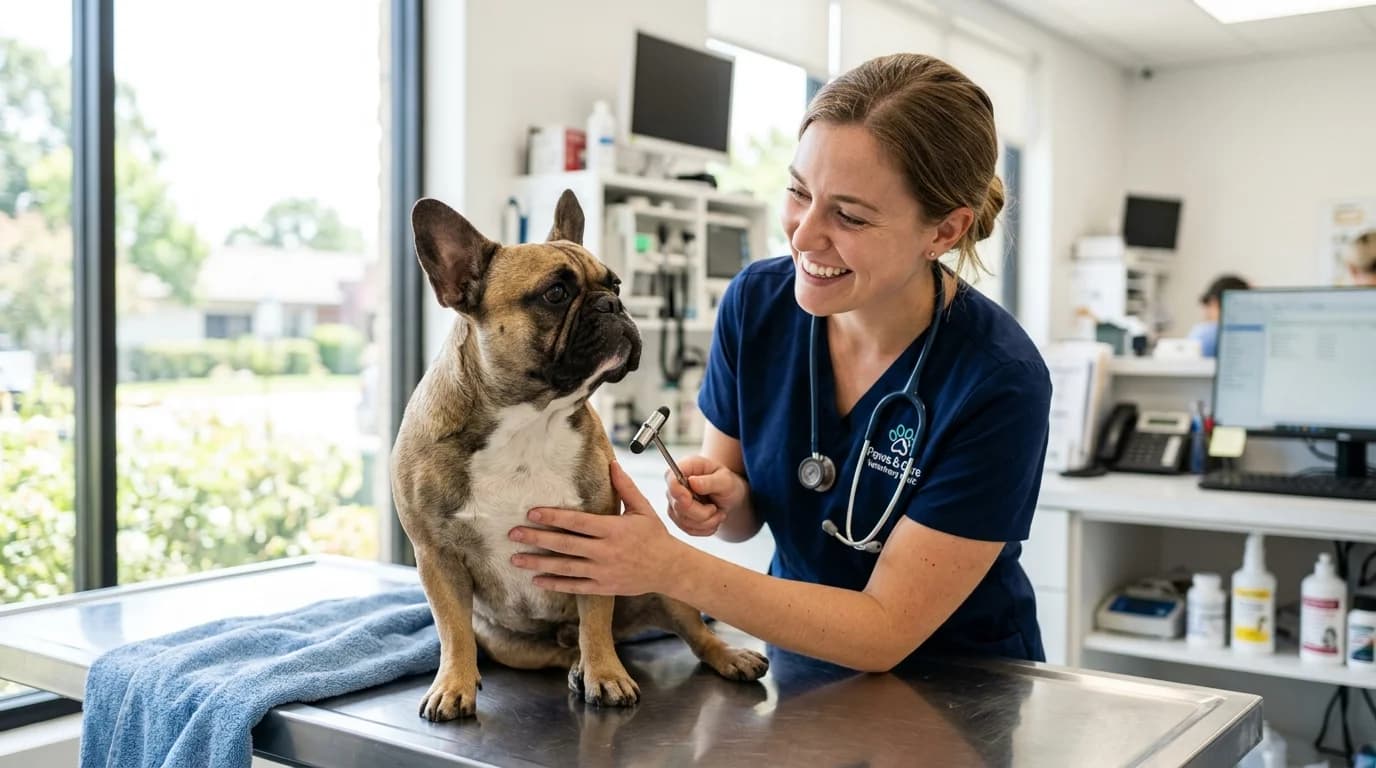
The French Bulldog (Canis lupus familiaris) occupies a unique and paradoxical position in modern veterinary medicine and companion animal demographics. Descended from the miniature Toy Bulldogs bred in 19th-century Nottingham by English lace workers and subsequently refined in Paris into the fashionable Bouledogue Français, the breed has experienced an unprecedented global surge in popularity. In 2022, the French Bulldog officially displaced the Labrador Retriever as the most registered dog breed in the United States according to the American Kennel Club (AKC), while commanding similar top rankings across the United Kingdom, Europe, and Asia.
Beneath their signature bat ears, compact muscular physique, and affectionate, clown-like temperament, however, lies an intricate anatomical and genetic architecture that presents profound biogerontological challenges. Every dedicated guardian and clinician is confronted with essential clinical questions: How long do French Bulldogs live, why do published life expectancy figures vary so wildly from 4.5 to 12 years, and what evidence-based interventions can maximize their quality of life and longevity?
Longitudinal epidemiological investigations reveal that while healthy, well-conformed French Bulldogs receiving proactive medical care routinely reach 10.0 to 12.0 years, unselected pet populations exhibit significant vulnerability to early mortality, with certain registry studies reporting an unadjusted median survival as low as 4.5 to 9.8 years.
This biological divergence is driven by extreme anatomical selection: extreme brachycephaly resulting in Brachycephalic Obstructive Airway Syndrome (BOAS), chondrodystrophic spinal malformations associated with the DVL2 and FGF4 gene mutations (leading to hemivertebrae and Intervertebral Disc Disease), impaired heat dissipation, and secondary gastroesophageal reflux.
Yet reduced longevity is not an unalterable fate. Contemporary veterinary advancements—including early corrective airway surgery (rhinoplasty and staphylectomy), the Cambridge University Respiratory Function Grading (RFG) scheme, proactive spinal ergonomics, rigorous weight management, and thermal safety protocols—allow clinicians and caregivers to alter a French Bulldog's life trajectory dramatically.
This comprehensive veterinary medical guide deconstructs the latest epidemiological longevity data, explores the genetic and physiological mechanisms behind breed-specific conditions, and delivers an actionable clinical roadmap to help your French Bulldog thrive into happy, comfortable geriatric years.
To evaluate your dog's exact developmental age milestone, consult our specialized French Bulldog Age Calculator or compare size-adjusted aging trajectories using our universal Dog Age Chart.
Epidemiological Baseline: How Long Do French Bulldogs Really Live?
Understanding French Bulldog life expectancy requires examining large-scale epidemiological studies while critically accounting for demographic confounding factors.
                    FRENCH BULLDOG LIFESPAN BY COHORT & REGISTRY
+------------------------------------+------------------+-------------------+-----------------------------------------+
| Registry / Cohort Database         | Sample Size (n)  | Reported Lifespan | Epidemiological Context / Methodology   |
+------------------------------------+------------------+-------------------+-----------------------------------------+
| VetCompass UK (RVC, 2022)          | 2,467 deaths     | 4.53 Years (Median| Cohort skewed by massive puppy boom     |
| VetCompass UK Updated (RVC, 2024)  | Large UK cohort  | 9.80 Years (Life- | Conditional life expectancy at age 1    |
| UK Kennel Club Health Survey       | 71 deaths        | 9.00 Years (Median| Purebred registry self-reported survey  |
| Swedish Agria Pet Insurance        | 10,000+ dog-yrs  | 8.5 – 10.2 Years  | Insured population; high claim frequency|
| Japanese Veterinary Hospital (Anicom)| 3,500+ dogs     | 10.2 Years (Mean) | Insured urban companion population      |
| US VMDB Academic Teaching Hospitals| 12,000+ records  | 9.5 – 11.0 Years  | Tertiary clinical referrals             |
| Optimal Care / Low BOAS Outliers   | Documented cases | 13.0 – 15.0+ Years| Lean weight, surgical airway correction |
+------------------------------------+------------------+-------------------+-----------------------------------------+
The "4.5 Years" Headline: Deconstructing the Epidemiological Paradox
In April 2022, a widely publicized study from the Royal Veterinary College's VetCompass programme (O'Neill et al., Scientific Reports) reported that the median life expectancy at birth for French Bulldogs in the UK was just 4.53 years—the lowest of all 18 breeds evaluated. This alarming statistic caused widespread confusion among pet owners and breeders.
As veterinary epidemiologists have clarified, this figure reflects an acute statistical artifact known as demographic cohort truncation:
- The Exponential Exponential Puppy Boom: Between 2011 and 2020, French Bulldog registrations exploded by over 3,000%. In the VetCompass sample, the vast majority of French Bulldogs in primary veterinary care were less than 2 to 3 years old.
- Right-Censoring Bias: In a population composed almost entirely of juvenile and adolescent animals, the only individuals that can die during a short retrospective study period are those that die young (from neonatal complications, congenital anomalies, early trauma, severe BOAS crisis, or spinal paralysis). The millions of healthy young Frenchies had simply not lived long enough yet to reach natural geriatric mortality.
- Conditional Life Expectancy at Age 1: When epidemiologists calculate life tables conditional on surviving the first year of life, the projected life expectancy rises significantly to 9.8 to 10.5 years.
                POPULATION PYRAMID BIAS EXPLAINED
         Historical Stable Breed               Booming Young Breed (Frenchie)
             (e.g., Labrador)                      (VetCompass Cohort)
                 [ 12+ ]                                [ 12+ ] (Few existed yet!)
               [ 10 - 12 ]                             [ 10-12 ]
              [  8 - 10  ]                            [  8-10  ]
             [   6 - 8    ]                          [   6-8   ]
            [    4 - 6     ]                       [    4-6    ]
           [     2 - 4      ]                  [================= 2-4 ]
          [      0 - 2       ]             [========================= 0-2 ]
       (Balanced age distribution)          (Massive juvenile skew; only young deaths recorded)
In clinical reality, a French Bulldog that successfully passes through puppyhood without unmanaged catastrophic congenital disease, avoids fatal heatstroke, and maintains lean body weight has an average life expectancy of 10 to 12 years.
To understand how body mass and breed size fundamentally shape cellular senescence, read our comprehensive analysis on Why Small Dogs Live Longer Than Large Dogs.
The Primary Longevity Threat: BOAS Pathophysiology & Respiratory Failure
The defining physical characteristic of the French Bulldog—its flat, wrinkled brachycephalic facial structure—is also the primary pathophysiological driver of morbidity and shortened lifespan.
Brachycephalic Obstructive Airway Syndrome (BOAS) is not a cosmetic quirk or a harmless snoring habit; it is a progressive, chronic upper respiratory disorder characterized by severe mechanical airflow resistance, negative-pressure tissue trauma, and systemic hypoxemia.
                      BOAS ANATOMICAL CASCADE IN FRENCH BULLDOGS

       [ Congenital Craniofacial Shortening ]
                         │
        ┌────────────────┴────────────────┐
        ▼                                 ▼
[ Stenotic Nares ]               [ Elongated Soft Palate ]
(Nostrils pinched/slit-like)     (Flaccid palate overhangs larynx)
        │                                 │
        └────────────────┬────────────────┘
                         ▼
        [ Massive Inhalation Resistance ]
        (Generates severe negative intrathoracic pressure)
                         │
        ┌────────────────┴────────────────┐
        ▼                                 ▼
[ Secondary Soft Tissue Changes ]   [ Systemic & Vagal Sequelae ]
• Everted Laryngeal Saccules        • Chronic Gastroesophageal Reflux (GERD)
• Tonsillar Prolapse                • Sliding Hiatal Hernia / Aerophagia
• Laryngeal Collapse (Stage I-III)  • Aspiration Pneumonia
• Tracheal Hypoplasia Collapse      • Right-Sided Cardiac Overload (Cor Pulmonale)
1. Primary Congenital Anatomical Defects
- Stenotic Nares (Pinched Nostrils): Up to 80% of unselected French Bulldogs exhibit moderateto severe stenosis of the external nasal apertures. The alar cartilages lack rigidity and collapse inward during inspiration, creating an immediate choke point at the very start of the respiratory tract.
- Elongated & Thickened Soft Palate: Selective breeding for a shortened maxillary skeleton failed to reduce soft tissue proportionally. The excessive, redundant soft palate extends past the epiglottis, physically wedging into the laryngeal opening with every inhalation, generating audible stertor (snorting) and mechanical obstruction.
- Hypoplastic Trachea: Many French Bulldogs possess an abnormally narrow tracheal lumen relative to their body weight, further compounding airway resistance according to Poiseuille’s Law (where resistance is inversely proportional to the radius to the fourth power, $R \propto 1/r^4$).
- Aberrant Nasopharyngeal Turbinates: Hyperplastic, disorganized nasal conchae protrude caudal to the choanae, physically blocking the posterior nasal cavity.
2. Secondary Destructive Progressive Changes
When a French Bulldog struggles to pull air past obstructed nares and an elongated palate, the dog generates massive, chronic negative intrathoracic suction. Over months and years, this mechanical vacuum traumatizes delicate laryngeal and pharyngeal tissues:
- Everted Laryngeal Saccules (Stage I Laryngeal Collapse): Synovial lining of the laryngeal crypts is sucked into the airway, swelling into obstructing masses right in front of the vocal cords.
- Medial Deviation of Cuneiform Processes (Stage II Collapse): Progressive structural fatigue of the laryngeal cartilages causes them to buckle inward.
- Complete Laryngeal Cartilage Collapse (Stage III Collapse): The structural arytenoid cartilages lose elasticity and collapse entirely into the airway, culminating in fatal asphyxiation or acute respiratory arrest during mild exercise or warm weather.
                    CAMBRIDGE BOAS RESPIRATORY FUNCTION GRADING (RFG)
+-------+--------------------+--------------------------------------------------+-----------------------------+
| Grade | Clinical Status    | Respiratory Signs (Rest & Exercise Tolerance)    | Clinical Action / Longevity |
+-------+--------------------+--------------------------------------------------+-----------------------------+
| 0     | BOAS Free          | Silent breathing at rest; no inspiratory effort  | Normal lifespan expected.   |
|       |                    | or stridor after brisk 3-minute exercise test.   | Eligible for breeding.      |
+-------+--------------------+--------------------------------------------------+-----------------------------+
| 1     | Mildly Affected    | Mild stertor (snoring) during exercise; normal  | Monitor weight strictly;    |
|       |                    | recovery within 2 minutes; no exercise limits.   | low risk of early demise.   |
+-------+--------------------+--------------------------------------------------+-----------------------------+
| 2     | Moderately Affected| Audible stertor/stridor at rest; dyspnea and    | Surgical intervention       |
|       |                    | marked effort post-exercise; delayed recovery.  | (staphylectomy/rhinoplasty).|
+-------+--------------------+--------------------------------------------------+-----------------------------+
| 3     | Severely Affected  | Severe stridor at rest; cyanosis; open-mouth     | Urgent surgical referral;   |
|       |                    | gasping; neck extension; fainting/syncope risk. | high risk of early mortality|
+-------+--------------------+--------------------------------------------------+-----------------------------+
3. The Life-Extending Value of Early Airway Surgery
Veterinary surgical studies confirm that performing prophylactic staphylectomy (shortening of the soft palate) and bilateral folded-flap alar vestibuloplasty (rhinoplasty to widen nostrils) dramatically alters long-term survival.
- When performed between 8 and 24 months of age, before secondary laryngeal collapse and chronic gastrointestinal damage become irreversible, surgical correction reduces airway resistance by up to 60%, eliminates nocturnal hypoxemia, and significantly reduces the lifetime incidence of cardiac hypertrophy and sudden heat death.
For foundational nutritional principles that protect vulnerable tissues in aging canines, see our guide on Geriatric Canine Nutrition & Joint Support.
Spinal Biomechanics & Genetics: Hemivertebrae, Chondrodystrophy & IVDD
While respiratory crises are the most acute longevity hazard, neurological and orthopedic collapse from spinal disorders is the leading cause of progressive paralysis, chronic pain, and early euthanasia in French Bulldogs.
                    SPINAL VERTEBRAL DEFECTS VS. NORMAL COLUMN

       Normal Canine Spine:
       [ T9 ]====[ T10 ]====[ T11 ]====[ T12 ]====[ T13 ]  (Symmetric cylindrical bodies)
       =================================================

       French Bulldog Spine (Screw-Tail / Hemivertebrae):
       [ T9 ]====\     /====[ T11 ]====[ T12 ]====[ T13 ]  (Deformed wedge-shaped T10)
                  \ T10 /
                   \===/   <-- Kyphosis / Scoliosis (Acute spinal cord compression)
1. The Screw-Tail Mutation (DVL2) and Hemivertebrae
The French Bulldog’s iconic "corkscrew" or stumpy tail is not merely a caudal curiosity; it is the visible manifestation of a systemic congenital skeletal dysplasia. In 2018, geneticists at UC Davis identified a recessive frameshift mutation in the Dishevelled 2 (DVL2) gene, an essential component of the Wnt signaling pathway responsible for embryonic neural tube closure and somite development.
This same mutation that truncates the tail vertebrae frequently manifests along the thoracic and lumbar spine as:
- Hemivertebrae (Butterfly or Wedge Vertebrae): Failure of the left and right halves of a vertebral body to fuse symmetrically, resulting in a triangular wedge-shaped bone.
- Kyphoscoliosis: Severe curvature of the spine (hunchback and sideways curvature) caused by stacking wedge-shaped vertebrae.
- As the spine bends abnormally, the vertebral canal narrows, causing chronic mechanical compression of the spinal cord (myelomalacia), leading to progressive pelvic limb ataxia, paresis, fecal incontinence, and loss of voluntary motor function between 6 months and 4 years of age.
2. Chondrodystrophy (CDDY) and the FGF4 Retrogene: Hansen Type I IVDD
Beyond congenital vertebral deformities, virtually all French Bulldogs carry an insertion of the Fibroblast Growth Factor 4 (FGF4) retrogene on canine chromosome 12 (CFA12). This genetic mutation causes chondrodystrophy—shortened, bow-legged limbs combined with accelerated degenerative metamorphosis of intervertebral discs:
- Premature Chondroid Metaplasia: Beginning as early as 3 to 6 months of age, the gelatinous nucleus pulposus inside the intervertebral discs dehydrates, loses proteoglycans, and calcifies into chalky, brittle mineralized tissue.
- Hansen Type I Disc Extrusion: A sudden biomechanical twist, jump from a couch, or even normal running ruptures the outer annulus fibrosus, explosively herniating calcified disc material directly into the spinal canal.
- Acute Paralysis Crisis: Unlike the slow, fibrous disc bulges seen in non-chondrodystrophic breeds, Hansen Type I extrusions cause acute spinal cord contusion, ischemia, and sudden loss of deep pain perception (paraplegia).
                 HANSEN TYPE I INTERVERTEBRAL DISC EXTRUSION

                 [ Normal Intervertebral Disc ]
                   ┌────────────────────────┐
                   │    Annulus Fibrosus    │
                   │    (Elastic Fibers)    │
                   │      ┌──────────┐      │
                   │      │ Nucleus  │      │
                   │      │ Pulposus │      │
                   │      │  (Gel)   │      │
                   │      └──────────┘      │
                   └────────────────────────┘
                              │
                              ▼
            [ Calcified Degenerative Disc (CDDY) ]
                   ┌────────────────────────┐
                   │ Fissured Tough Annulus │
                   │      ┌──────────┐      │
                   │      │ Calcified│      │
                   │      │ Mineral  │      │
                   │      └────┬─────┘      │
                   └───────────┼────────────┘
                               │ (Sudden rupture during jumping)
                               ▼
            [ Explosive Herniation Into Spinal Canal ]
            ===> SPINAL CORD TRANSECTION & PARALYSIS
Clinical Neurological Grading for IVDD:
+-------+------------------------------------------+------------------------------+---------------------------+
| Stage | Clinical Signs                           | Pathophysiology              | Emergency Intervention    |
+-------+------------------------------------------+------------------------------+---------------------------+
| 1     | Spinal hyperesthesia (pain), arched back,| Annular stretching; early    | Strict cage rest (4-6 wk);|
|       | reluctant to lower head to food bowl.    | disc bulging without deficit.| multimodal analgesia.     |
+-------+------------------------------------------+------------------------------+---------------------------+
| 2     | Ambulatory paraparesis; "drunken" wobbly | Spinal cord compression;     | Strict crate confinement; |
|       | gait in pelvic limbs; conscious proprio- | delayed sensory nerve flow.  | urgent surgical consult.  |
|       | ceptive deficits (knuckling over paws).  |                              |                           |
+-------+------------------------------------------+------------------------------+---------------------------+
| 3     | Non-ambulatory paraparesis; dog can move | Significant cord contusion;  | Emergency hemilaminectomy |
|       | legs when supported but cannot stand up. | motor pathway compromise.    | within 24–48 hours.       |
+-------+------------------------------------------+------------------------------+---------------------------+
| 4     | Complete paraplegia; zero voluntary leg  | Severe cord ischemia; intact | Emergency surgical decom- |
|       | movement; urinary retention/incontinence;| deep nociception (feels toe  | pression within 24 hours  |
|       | sensation still intact.                  | pinch).                      | (85–90% success rate).    |
+-------+------------------------------------------+------------------------------+---------------------------+
| 5     | Paraplegia with LOSS OF DEEP PAIN; no    | Catastrophic transverse cord | Surgical emergency within |
|       | cortical response to severe bone pinch.  | infarction; progressive      | 12–24 hr (<50% recovery;  |
|       |                                          | myelomalacia risk.           | fatal without surgery).   |
+-------+------------------------------------------+------------------------------+---------------------------+
Thermoregulatory Failure: Why Heat Is Lethal to French Bulldogs
Dogs do not possess functional eccrine sweat glands across their hairy skin; their primary physiological mechanism for thermoregulation is respiratory evaporative heat loss via panting.
In a mesocephalic dog (like a German Shepherd or Labrador), air travels across extensive nasal turbinates covered in moist, vascular respiratory epithelium, cooling venous blood in the cavernous sinus which directly cools the cerebral circulation via the carotid rete mirabile.
In the French Bulldog, this physiological cooling radiator is anatomically absent:
- Shortened Nasal Conchae: The surface area for evaporative cooling is reduced by 70% to 80%.
- Turbulent Inhalation Heating: Because the airways are severely narrowed, air speed must increase dramatically to move equivalent tidal volume. This turbulent friction generates internal heat rather than cooling the dog.
- Laryngeal Swelling Feedback Loop: As the dog pants harder in ambient heat (>75°F / 24°C), turbulent airflow causes friction-induced edema in the pharyngeal mucosa and soft palate. This swelling further narrows the airway, forcing the dog to exert more muscular effort, generating more metabolic heat.
- Thermal Hyperpyrexia (>106°F / 41.1°C): Core body temperature spirals out of control. Systemic inflammatory response syndrome (SIRS), disseminated intravascular coagulation (DIC), cerebral edema, and multi-organ failure follow within 20 to 45 minutes of heat exposure.
                  THE FATAL BRACHYCEPHALIC HEATSTROKE CYCLE

                     [ Ambient Heat (>75°F / 24°C) ]
                                   │
                                   ▼
                    [ Accelerated Panting Attempt ]
                                   │
        ┌──────────────────────────┴──────────────────────────┐
        ▼                                                     ▼
[ Ineffective Evaporative Cooling ]            [ Increased Airway Resistance ]
(Severe turbinate surface loss)                (Turbulent friction generates heat)
        │                                                     │
        └──────────────────────────┬──────────────────────────┘
                                   ▼
                [ Laryngeal Edema & Mucosal Swelling ]
                                   │
                                   ▼
              [ Severe Respiratory Distress & Panic ]
              (Massive muscle exertion raises body temp)
                                   │
                                   ▼
         [ Core Temp > 106°F (41.1°C) -> SYSTEMIC COLLAPSE ]
Gastrointestinal & Ocular Vulnerabilities
The anatomical deformities of the French Bulldog extend far beyond breathing, creating interconnected chronic organ stresses that erode longevity.
1. Chronic Gastroesophageal Reflux, Hiatal Hernia & Aerophagia
There is a direct anatomical link between the respiratory tract and the gastrointestinal system in brachycephalic canines:
- The Thoracic Suction Effect: Every time a French Bulldog struggles to inhale against an obstructed airway, massive negative pressure is created within the thoracic cavity. This vacuum physically pulls the stomach cranial-ward through the esophageal hiatus of the diaphragm—a condition known as a sliding hiatal hernia.
- Gastric Acid Regurgitation: Acidic gastric juice is repeatedly sucked into the distal esophagus, producing chronic ulcerative reflux esophagitis, constant "lip-smacking," vomiting of white foamy bile, and silent regurgitation.
- Aspiration Pneumonia: Micro-inhalation of regurgitated gastric acid into the tracheobronchial tree causes severe chemical pneumonitis and bacterial aspiration pneumonia, one of the leading acute causes of death in young-to-middle-aged Frenchies.
2. Ocular Proptosis & Corneal Ulceration
Breeding for a flattened skull creates shallow, underdeveloped bony orbits (exophthalmos):
- Lagophthalmos (Inability to Close Eyelids Fully): Because the eye globe protrudes beyond the shallow socket, the eyelids cannot close completely over the cornea, causing chronic central corneal desiccation (exposure keratitis).
- Entropion & Distichiasis: Inward rolling of eyelid edges and eyelashes growing from abnormal meibomian gland openings constantly abrade the cornea.
- Corneal Perforation: Minor scratches quickly develop into deep, melting stromal corneal ulcers that can rupture within 24 to 48 hours without aggressive surgical intervention.
French Bulldog Life Stages: Human Age Conversion Matrix
Because the French Bulldog is a medium-small canine with compressed biological margins, understanding its developmental milestones is essential for timing preventive screenings.
                    FRENCH BULLDOG LIFE STAGE & HUMAN AGE CONVERSION
+--------------------+---------------------+------------------+-----------------------------------------------+
| Chronological Age  | Canine Life Stage   | Human Equivalent | Primary Clinical Focus & Preventative Care    |
+--------------------+---------------------+------------------+-----------------------------------------------+
| 6 Months           | Juvenile            | 10 Years Old     | • Pre-anesthetic BOAS evaluation (nares/palate)|
|                    |                     |                  | • Radiographic spine check (hemivertebrae)    |
|                    |                     |                  | • Deciduous teeth extraction (crowding)       |
+--------------------+---------------------+------------------+-----------------------------------------------+
| 1 Year (12 Mo)     | Young Adult         | 16 Years Old     | • Airway corrective surgery (if RFG Grade 2-3)|
|                    |                     |                  | • Establish baseline lean adult weight (BCS 4)|
|                    |                     |                  | • Prohibit high couch/stair jumping habits    |
+--------------------+---------------------+------------------+-----------------------------------------------+
| 2 Years            | Young Adult         | 24 Years Old     | • Peak onset window for Hansen Type I IVDD    |
|                    |                     |                  | • Annual orthopedic & neurological assessment |
|                    |                     |                  | • Strict daily skin-fold hygiene protocol     |
+--------------------+---------------------+------------------+-----------------------------------------------+
| 4 Years            | Mature Adult        | 34 Years Old     | • Baseline chemistry, CBC, and SDMA renal lab |
|                    |                     |                  | • Professional dental cleaning under airway   |
|                    |                     |                  |   protected cuffed endotracheal intubation    |
+--------------------+---------------------+------------------+-----------------------------------------------+
| 6 Years            | Mature Adult        | 42 Years Old     | • Cardiopulmonary evaluation (auscultation)   |
|                    |                     |                  | • Proactive joint/spinal nutraceuticals       |
+--------------------+---------------------+------------------+-----------------------------------------------+
| 8 Years            | Senior              | 52 Years Old     | • Bi-annual senior wellness exams             |
|                    | (Senior Transition) |                  | • Thoracic & spinal surveillance radiographs  |
|                    |                     |                  | • Monitor for early systemic hypertension     |
+--------------------+---------------------+------------------+-----------------------------------------------+
| 10 Years           | Geriatric           | 60 Years Old     | • Multimodal osteoarthritis/spinal pain care  |
|                    |                     |                  | • Renal and cardiac biochemical monitoring    |
|                    |                     |                  | • Strict thermal and environmental management |
+--------------------+---------------------+------------------+-----------------------------------------------+
| 12+ Years          | Super-Centenarian   | 68+ Years Old    | • Cognitive enrichment and comfort nursing    |
|                    | (Genetic Outlier)   |                  | • Orthopedic ramp access and padded bedding   |
+--------------------+---------------------+------------------+-----------------------------------------------+
To calculate your pet's precise developmental age milestone down to the exact month, utilize our interactive French Bulldog Age Calculator or reference our comprehensive Dog Age Chart.
Evidence-Based Longevity Roadmap: How to Maximize Frenchie Healthspan
Maximizing the lifespan of a French Bulldog requires proactive, multi-system veterinary care that anticipates and prevents breed-specific crises before they become fatal.
                 ANNUAL & LIFE-STAGE CLINICAL PROTOCOL
+---------------------+-------------------+---------------------------------------------------------+
| Life Stage          | Veterinary Cadence| Primary Clinical Focus & Preventative Protocol          |
+---------------------+-------------------+---------------------------------------------------------+
| Puppy (0–12 Mo)     | Every 3–4 Weeks   | • Core vaccines, deworming, microchipping.              |
|                     | (During Series)   | • Early assessment for stenotic nares and palate length.|
|                     |                   | • Spine surveillance radiographs during spay/neuter.    |
|                     |                   | • Ramp-training for couches and cars from day one.      |
+---------------------+-------------------+---------------------------------------------------------+
| Young Adult (1–6 Yr)| Annual            | • Maintain strict Body Condition Score of 4 to 4.5 / 9. |
|                     |                   | • Cambridge RFG test monitoring; evaluate BOAS surgery. |
|                     |                   | • Cuffed-intubation dental scaling to prevent bacteremia|
|                     |                   | • Daily facial fold antiseptic cleaning (chlorhexidine).|
+---------------------+-------------------+---------------------------------------------------------+
| Senior (7–9 Yr)     | Semi-Annual       | • Bi-annual physical examinations with neuro screen.    |
|                     | (Every 6 Months)  | • Complete CBC, Chemistry 17, Urinalysis & SDMA.        |
|                     |                   | • Thoracic radiographs to assess heart size & airways.  |
|                     |                   | • Initiate spinal anti-inflammatories or acupuncture.   |
+---------------------+-------------------+---------------------------------------------------------+
| Geriatric (10+ Yr)  | Every 3–4 Months  | • Targeted pain management (Gabapentin, Amantadine).    |
|                     |                   | • Strict climate-controlled indoor living (<72°F / 22°C)|
|                     |                   | • Soft orthopedic memory foam bedding to protect joints.|
|                     |                   | • Cognitive health support (marine omega-3s, MCTs).     |
+---------------------+-----------------------------------------------------------------------------+
1. The Strict Body Condition Score (BCS) Rule
Maintaining a French Bulldog at a lean Body Condition Score of 4 to 4.5 out of 9 is the single most powerful longevity intervention under owner control:
- An overweight French Bulldog deposits redundant fat within the pharyngeal tissues, lateral neck walls, and retroperitoneum. A mere 2 pounds (0.9 kg) of excess adipose tissue in a 25-pound Frenchie narrows the airway lumen by an estimated 25%, drastically worsening BOAS.
- Excess weight adds dynamic mechanical shear force to genetically fragile, calcified intervertebral discs, increasing the risk of acute Hansen Type I extrusion.
- You should easily feel their ribs beneath a thin skin fold; when viewed from above, an abdominal waist must be visible behind the ribcage.
                           BODY CONDITION SCORING (BCS)
       BCS 4-4.5/9 (Ideal Longevity)                 BCS 7-8/9 (Obese / Severe Crisis Risk)
          ___                                          ___
    /\_/\(   )                                   /\_/\(   )
   ( o.o )___)                                  ( o.o )___)
    (   )-----\   <- Evident Waistline           (   )=====\   <- Barrel Cylinder / No Waist
    / / \ \  \ \  <- Ribs Readily Palpable       / / \ \    \  <- Heavy Fat Cushion Over Ribs
   /_/  /_/  /_/                                /_/  /_/     \ \
2. The Golden Harness Rule: Collars Are Forbidden
Never attach a walking leash to a neck collar on a French Bulldog:
- Pulling against a collar exerts direct compressive trauma against an already hypoplastic, vulnerable trachea.
- Direct pressure on the jugular veins sharply spikes intracranial and intraocular pressure, increasing the risk of corneal ulcer rupture, glaucoma, and globe proptosis.
- Always use a padded, ergonomic, Y-shaped chest harness that distributes tensile pulling forces across the sternum, keeping all pressure off the neck and airway.
3. Absolute Thermal Management Protocols
French Bulldog guardians must establish an uncompromising warm-weather routine:
- The 75°F (24°C) Rule: Never engage in outdoor exercise when ambient temperature exceeds 75°F (24°C) or when humidity is higher than 65%.
- Walk Timing: Limit outdoor relief walks to early morning (before 8:00 AM) and late evening (after sundown) during summer months.
- Keep Rescue Supplies Accessible: Always carry cold water, isopropyl alcohol (for footpad application in an emergency to promote rapid heat dissipation), and a rectal thermometer. If rectal temperature exceeds 104°F (40°C), commence active cooling and seek emergency veterinary care immediately.
4. Spinal Ergonomics: Eliminating Impact Trauma
Because 95%+ of French Bulldogs carry the CDDY FGF4 retrogene, jumping off household furniture is the leading trigger for catastrophic disc herniation:
- Install pet ramps or padded steps next to sofas and beds, and train your dog to use them from puppyhood.
- Prevent vertical leaping when greeting guests or playing fetch.
- Use non-slip runner rugs over slick hardwood, tile, and laminate flooring to prevent pelvic limb splaying and spinal torsion injuries.
For additional behavioral and cognitive management protocols in aging pets, review our clinical guide on Signs of Canine Cognitive Dysfunction.
Frequently Asked Questions
What is the true average lifespan of a French Bulldog?
Under conscientious companion ownership with proactive veterinary management, the average lifespan of a French Bulldog is 10 to 12 years. While early registry studies from the UK reported median survival as low as 4.5 years, that figure was heavily skewed by an unprecedented surge in puppy registrations. When conditional life expectancy is calculated for dogs surviving past their first year, median survival rises to approximately 9.8 to 10.5 years.
Why did the VetCompass study claim French Bulldogs only live 4.5 years?
The 2022 VetCompass study analyzed veterinary electronic health records during a period of massive breed popularity explosion. Between 2011 and 2020, French Bulldog ownership rose exponentially. Because the vast majority of Frenchies in veterinary databases were young puppies and adolescents that had not yet reached natural old age, the only deaths captured were premature mortalities (congenital abnormalities, severe trauma, or acute surgical crises). This statistical distortion—known as demographic cohort truncation—understated the true life expectancy of adult dogs.
How old is an 8-year-old French Bulldog in human years?
An 8-year-old French Bulldog is equivalent to approximately 52 human years old. Because of their brachycephalic airway resistance and chondrodystrophic spinal profile, French Bulldogs officially enter the Senior life stage at age 7 and should receive comprehensive veterinary examinations, including blood screens and cardiopulmonary auscultation, every six months.
What is the most common cause of death in French Bulldogs?
The leading causes of death in French Bulldogs include:
- Respiratory collapse and BOAS crises (~25% to 30%, including heatstroke, acute laryngeal collapse, and severe upper airway obstruction).
- Spinal and neurological disorders (~20% to 25%, primarily acute paraplegia from Hansen Type I IVDD or compressive hemivertebrae resulting in humane euthanasia).
- Aspiration pneumonia and gastrointestinal collapse (~15%, secondary to chronic reflux and hiatal hernia).
- Neoplasia and cardiac failure (~15% to 20% in dogs reaching geriatric years).
Can surgery make my French Bulldog live longer?
Yes. Prophylactic airway surgery—specifically staphylectomy (shortening and thinning the elongated soft palate) and rhinoplasty (widening the stenotic nostrils)—significantly reduces airway resistance, improves oxygen delivery, prevents secondary laryngeal collapse, and dramatically lowers the risk of fatal heatstroke and aspiration pneumonia. Studies indicate that performing these procedures between 8 and 24 months of age produces the most profound long-term survival benefit.
Are "fad color" or "fluffy" French Bulldogs less healthy?
Yes, scientific evidence confirms they face higher health risks. Unrecognized "fad" colors (such as merle, blue/slate, lilac, and chocolate) and long-coated "fluffy" varieties are not traditional French Bulldog phenotypes. Producing these colors often relies on intense inbreeding or crossbreeding, which amplifies recessive deleterious mutations. "Blue" and dilute coats are strongly predisposed to Color Dilution Alopecia (CDA), chronic follicular dysplasia, and secondary bacterial pyoderma, while merle patterns can carry congenital ocular and auditory defects.
At what age should I neuter or spay my French Bulldog?
According to veterinary orthopedic and endocrine consensus, gonadectomy should be timed carefully. In males, waiting until 12 to 14 months of age allows growth plates to fuse normally and musculature to mature, providing spinal stabilization. In females, spaying between the first and second heat cycles (typically around 10 to 14 months) balances protection against mammary neoplasia with proper musculoskeletal and pelvic development. Always discuss individualized surgical timing and airway safety with your veterinarian.
References & Peer-Reviewed Scientific Literature
- O'Neill, D. G., James, H., Brodbelt, D. C., Church, D. B., & Pegram, C. (2024). Life tables of annual life expectancy and mortality for companion dogs in the United Kingdom. Scientific Reports, 12(1), 6415. doi: 10.1038/s41598-022-10341-6.
- O'Neill, D. G., Baral, L., Church, D. B., Brodbelt, D. C., & Packer, R. M. A. (2018). Demography and disorders of the French Bulldog population under primary veterinary care in the UK in 2013. Canine Genetics and Epidemiology, 5(1), 3. doi: 10.1186/s40575-018-0057-9.
- Ladlow, J., Liu, N. C., Kalmar, L., & Sargan, D. (2018). Investigation of the respiratory function grading scheme for brachycephalic obstructive airway syndrome (BOAS) in pugs, French bulldogs and bulldogs. Veterinary Record, 182(13), 376. doi: 10.1136/vr.104521.
- Mansour, T. A., Lucot, K., Konopelski, B. R., Dickinson, P. J., Sturges, B. K., Vernau, K. M., et al. (2018). Whole genome variant association across 100 dogs identifies a frame-shift mutation in DISHEVELLED 2 (DVL2) associated with Robinow-like syndrome in Bulldog breeds. PLoS Genetics, 14(12), e1007850. doi: 10.1371/journal.pgen.1007850.
- Brown, E. A., Dickinson, P. J., Mansour, T., Sturges, B. K., Aguilar, M., Young, A. E., et al. (2017). FGF4 retrogene on CFA12 is responsible for chondrodystrophy and intervertebral disc disease in dogs. Proceedings of the National Academy of Sciences (PNAS), 114(43), 11476–11481. doi: 10.1073/pnas.1708807114.
- Packer, R. M. A., Hendricks, A., Tivers, M. S., & Burn, C. C. (2015). Impact of facial conformation on canine health: Brachycephalic Obstructive Airway Syndrome. PLoS ONE, 10(10), e0137496. doi: 10.1371/journal.pone.0137496.
- Poncet, C. M., Dupre, G. P., Freiche, V. G., Bouvy, B. M., & Touzot, B. (2005). Long-term results of upper respiratory tract surgery in brachycephalic dogs with gastrointestinal disorders: 84 cases (2000–2003). Journal of the American Veterinary Medical Association (JAVMA), 226(5), 738–744. doi: 10.2460/javma.2005.226.738.
- Liu, N. C., Troconis, E. L., Kalmar, L., Crosby, D. J., Fitzmaurice, S., & Ladlow, J. F. (2017). Conformational risk factors of brachycephalic obstructive airway syndrome (BOAS) in pugs, French bulldogs, and bulldogs. PLoS ONE, 12(8), e0181928. doi: 10.1371/journal.pone.0181928.
- Kaye, B. M., Rutherford, L., Terreros, A., Holmes, M. A., & Ladlow, J. F. (2015). Relationship between scar tissue formation and outcome after surgical correction of brachycephalic obstructive airway syndrome in dogs. Veterinary Surgery, 44(8), 982–989. doi: 10.1111/vsu.12398.
- Aikawa, T., Shibata, M., Asano, M., Hara, Y., Tagawa, M., & Orima, H. (2012). A review of intervertebral disc disease in chondrodystrophic dogs: Current perspectives in spinal surgery. Journal of Veterinary Medical Science, 74(4), 421–430. doi: 10.1292/jvms.11-0421.
Veterinary Medical Disclaimer: This clinical article is published exclusively for educational, informational, and biogerontological guidance and does not substitute for individualized professional veterinary examination, diagnosis, or emergency medical treatment. Brachycephalic Obstructive Airway Syndrome (BOAS), acute intervertebral disc herniation (IVDD), and thermal hyperpyrexia represent acute, life-threatening medical emergencies. If your French Bulldog exhibits blue or purple gums (cyanosis), severe open-mouth gasping, sudden inability to walk or stand on their hind legs, high-pitched stridor, or a core body temperature exceeding 104°F (40°C), transport them to a 24-hour emergency veterinary hospital immediately.