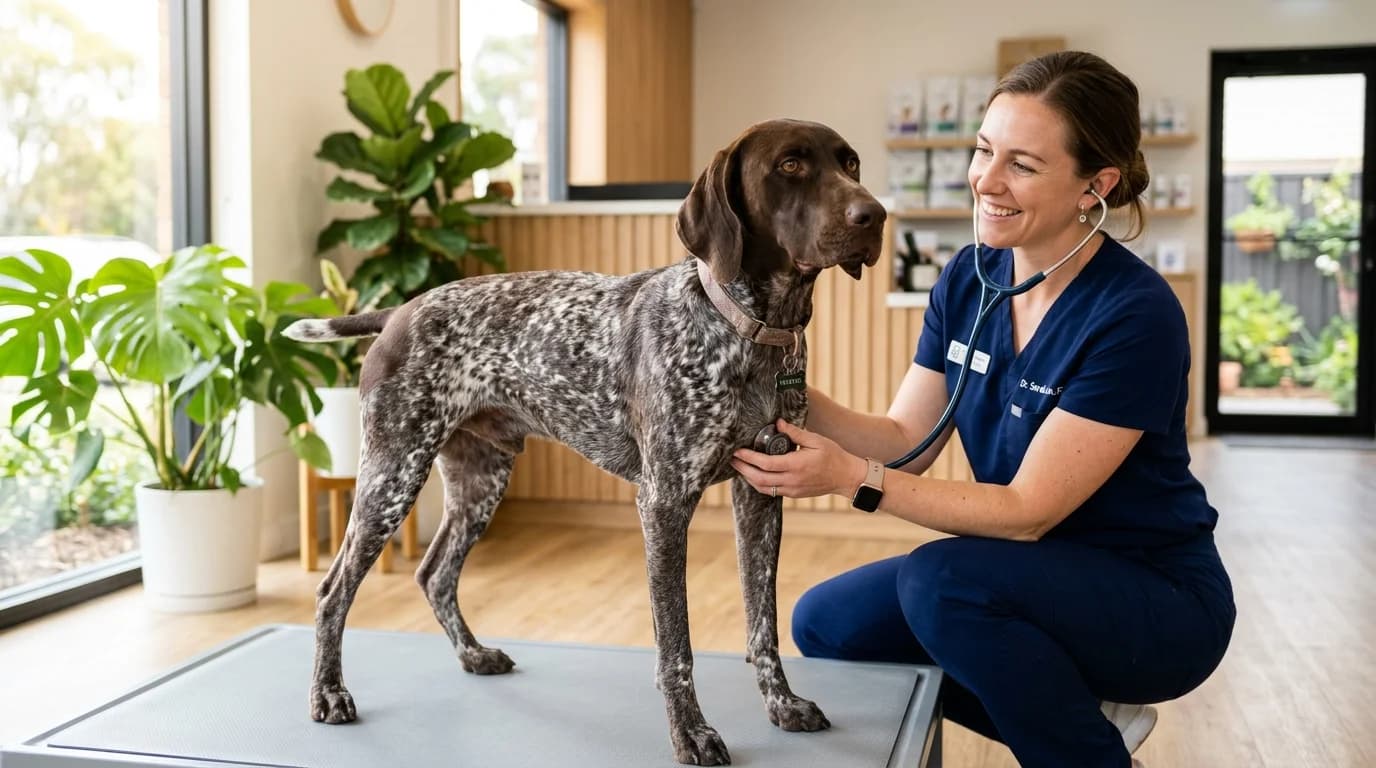
The German Shorthaired Pointer (Canis lupus familiaris, American Kennel Club Sporting Group; Fédération Cynologique Internationale Group 7: Pointing Dogs, Continental Pointing Dogs) represents one of the most accomplished and versatile sporting breeds in modern cynology. Developed in nineteenth-century Germany through the deliberate cross-breeding of the Old Spanish Pointer (Perro de Punta Español), the ancestral German Bird Dog (Deutscher Hühnerhund), the English Pointer, and local trailing hounds (notably the Bloodhound and St. Hubert Hound), the breed was forged under the visionary stewardship of Prince Albrecht of Solms-Braunfels to establish the quintessential all-purpose gundog (Gebrauchshund).
Unlike specialized field specialists limited to upland pointing or waterfowl retrieving, the German Shorthaired Pointer (GSP) was engineered for multifaceted operational stamina: scenting and pointing upland gamebirds, retrieving waterfowl across icy marshes, tracking wounded ungulates across dense forested terrain, and operating as a responsive, bidable family companion. This demanding dual mandate required a unique morphometric and physiological profile:
- Somatic Dimensions & Mass:
- Males: Stand between 23 and 25 inches ($58.4\text{ to }63.5\text{ cm}$) at the withers, with a standard adult working weight of 55 to 70 pounds ($24.9\text{ to }31.8\text{ kg}$).
- Females: Stand between 21 and 23 inches ($53.3\text{ to }58.4\text{ cm}$) at the withers, with an adult working weight of 45 to 60 pounds ($20.4\text{ to }27.2\text{ kg}$).
- Thoracic Conformation & Biomechanics: The GSP exhibits a pronounced "deep-chested" (dolichothoracic) anatomical structure. The thoracic cage descends cleanly to the point of the elbow, presenting a high thoracic depth-to-width ratio ($>1.4:1$). This structural trait maximizes lung expansion volume, tidal volume, and cardiac stroke volume during prolonged anaerobic galloping, but simultaneously constitutes the preeminent anatomical predisposing factor for life-threatening Gastric Dilatation-Volvulus (GDV).
- Cardiorespiratory & Musculoskeletal Adaptations: Possessing an exceptionally high maximal oxygen uptake ($\text{VO}_2\text{ max}$), lean skeletal muscle mass dominated by high-oxidative Type I and Type IIa myofibers, compact webbed paws (pfoten) for aquatic propulsion, and a short, dense, water-repellent double coat, the GSP operates at an elevated metabolic baseline throughout its juvenile and adult working life.
Actuarial and veterinary epidemiological databases document a median lifespan of 12.0 to 14.0 years for the German Shorthaired Pointer. With rigorous, evidence-based preventive veterinary care—including early bloat mitigation, orthopedic conditioning, targeted genetic screening, and senior metabolic support—proactive longevity cohorts frequently achieve 14.0 to 16.0 years.
Achieving this upper biological threshold demands a clinical understanding of the breed's signature health liabilities: Gastric Dilatation-Volvulus (GDV / Bloat), von Willebrand Disease Type II (vWD Type II), Cone Degeneration (CD / Hemeralopia), Exfoliative Cutaneous Lupus Erythematosus (Lupoid Dermatosis), Subaortic Stenosis (SAS), Cranial Cruciate Ligament Disease (CCLD), and Geriatric Neoplasms (predominantly hemangiosarcoma and lymphoma).
To calculate your pointer's biological age and convert chronological canine years into calibrated human equivalents, explore our interactive Dog Age Calculator and review our evidence-based Dog Age Chart.
Epidemiological Baseline: How Long Do German Shorthaired Pointers Live?
Actuarial metrics derived from veterinary electronic health records, national pet health registries, and academic veterinary teaching hospitals establish the epidemiological longevity baseline for the German Shorthaired Pointer.
                  GERMAN SHORTHAIRED POINTER LIFESPAN BY REGISTRY & COHORT
+------------------------------------+------------------+-------------------+-----------------------------------------+
| Registry / Database Cohort         | Sample Size (n)  | Reported Median   | Epidemiological Methodology / Context   |
+------------------------------------+------------------+-------------------+-----------------------------------------+
| VetCompass UK (Royal Vet College)  | 2,840 GSPs       | 12.60 ± 0.24 Yrs  | Primary-care electronic health records  |
| Swedish Agria Pet Insurance        | 3,120 dog-years  | 12.20 – 13.40 Yrs | Multi-decade actuarial claims audit     |
| Danish Kennel Club Mortality Audit | 1,480 deaths     | 12.80 ± 0.31 Yrs  | Nation-wide kennel club verified census |
| Orthopedic Foundation for Animals  | Multi-center     | 12.50 – 13.80 Yrs | Health-screened breeding registry audit |
| North American VMDB (Univ Hosps)   | 1,940 records    | 11.90 – 13.10 Yrs | Tertiary academic referral caseload     |
| Proactive Longevity Care Cohort    | Clinical Cohort  | 13.80 – 15.50+ Yrs| Gastropexy, lean BCS & biannual senior  |
+------------------------------------+------------------+-------------------+-----------------------------------------+
                 GERMAN SHORTHAIRED POINTER SURVIVAL CURVE (KAPLAN-MEIER)
   Survival
   Probability (%)
     ▲
 100 │═══════════════════════════════════════════╗
  80 │                                           ╚══════════════╗
  60 │                                                          ╚══════════════╗
  50 │- - - - - - - - - - - - - - - - - - - - - - - - - - - - - - - - - - - - -╚════ (Median: 12.0–14.0 yrs)
  40 │                                                                         ╚══════════════╗
  20 │                                                                                        ╚══════════╗
   0 └───┴─────┴─────┴─────┴─────┴─────┴─────┴─────┴─────┴─────┴─────┴─────┴─────┴─────┴─────┴─────┴─────┴─────►
     0   1     2     3     4     5     6     7     8     9    10    11    12    13    14    15    16    17
                               Chronological Age (Years)
The Kaplan-Meier survival trajectory of the German Shorthaired Pointer demonstrates three clinically distinct biological phases:
- The Juvenile & High-Drive Developmental Phase (Ages 0 to 2): Mortality during this developmental stage is relatively low ($<4%$), but uniquely driven by the breed's intense prey drive and exploratory enthusiasm. Primary mortality vectors include high-velocity vehicular or hunting trauma, field misadventures (barbed wire lacerations, impalement), foreign body ingestion requiring emergency enterotomy, and severe bleeding crises in un-screened puppies carrying homozygous mutations for von Willebrand Disease Type II.
- The Prime Athletic & Performance Plateau (Ages 3 to 7):
The survival curve remains robust and stable across this five-year span. However, this period represents the primary diagnostic and onset window for acute catastrophic conditions and athletic wear-and-tear:
- Gastric Dilatation-Volvulus (GDV): Peak incidence begins as thoracic depth reaches maximal adult dimensions, particularly following rapid post-exercise food or water gorging.
- Cranial Cruciate Ligament (CCL) Rupture: High-speed field quartering, sudden rotational torque on wet or uneven terrain, and excessive tibial plateau angles (TPA) frequently precipitate acute partial or complete cranial cruciate tears.
- Cardiac Screening Window: Subaortic stenosis (SAS) murmurs and early DCM morphologic changes are often definitively confirmed during this phase.
- The Geriatric Senescence & Neoplastic Phase (Ages 8 to 15+):
Beginning at age 8, the survival curve exhibits a steeper downward inflection. Actuarial mortality audits show that chronic degenerative diseases and neoplasia dominate cause-of-death registries in senior GSPs:
- Hemangiosarcoma (HSA): Highly malignant vascular endothelial neoplasm showing predilection for the spleen and right atrium, often presenting acutely as hypovolemic shock secondary to spontaneous hemoabdomen.
- Multicentric Lymphoma & Mast Cell Tumors (MCT): GSPs demonstrate elevated susceptibility to systemic hematological malignancies and high-grade cutaneous mastocytomas.
- Degenerative Joint Disease (DJD / Osteoarthritis): Cumulative microtrauma from years of athletic output leads to chronic stifle, coxofemoral, and lumbosacral spondylotic pain.
- Chronic Kidney Disease (CKD) & Sarcopenia: Loss of skeletal muscle mass exacerbated by metabolic aging and progressive renal nephron loss.
Sex-Specific and Gonadal Longevity Dynamics
- Female GSPs: Demonstrate a documented survival advantage of 0.6 to 1.1 years over intact males, achieving a median life expectancy of 12.6 to 14.2 years. Intact bitches face significant cumulative lifetime liabilities, including cystic endometrial hyperplasia-pyometra complex (exceeding $20%$ lifetime incidence in intact bitches older than 9 years) and mammary gland adenocarcinoma (which carries a $50%$ malignancy rate in canines).
- Male GSPs: Experience a median lifespan of 12.0 to 13.4 years. Intact adult males exhibit high frequencies of testosterone-driven pathologies in advanced age, including benign prostatic hyperplasia (BPH), acute prostatitis, perianal gland adenomas, and perineal herniation, compounded by behavioral roaming tendencies.
- Gonadectomy Timing Optimization: Groundbreaking epidemiological research from the University of California, Davis (Hart et al.) highlights critical orthopedic and neoplastic correlations regarding spay/neuter timing in sporting breeds. In German Shorthaired Pointers, early gonadectomy before complete growth plate closure ($<11\text{ to }12\text{ months}$) significantly increases the incidence of cranial cruciate ligament tears and alters long-bone growth kinetics (resulting in lengthened, less stable limbs). Conversely, delaying spay or neuter until 12 to 18 months of age allows full physeal closure, stabilizes joint morphology, and protects against estrogen-deficiency urinary incontinence, while simultaneously providing an ideal surgical window to combine gonadectomy with prophylactic gastropexy.
To understand how body mass, metabolic rate, and growth velocity dictate longevity across breeds, consult our comprehensive analysis on Why Small Dogs Live Longer Than Large Dogs.
Biogerontology: Athletic Energetics, the IGF1 Axis & Oxidative Stress
The biogerontological aging trajectory of the German Shorthaired Pointer is governed by the intersection of body mass allometry, endocrine signaling, and high-intensity sporting metabolism.
                      GSP ALLOMETRIC BIOGERONTOLOGY FLOW
+─────────────────────────────────────────────────────────────────────────────+
| Somatic Mass Selection (55–70 lbs) ──► Elevated Basal Cell Division Rate    |
|                                     │                                       |
|                                     ▼                                       |
| High Aerobic Capacity (VO2 max)    Elevated Circulating IGF-1 / GH Axis    |
| • Mitochondrial ETC Flux            • Sustained mTORC1 Phosphorylation      |
| • Reactive Oxygen Species (ROS)     • Accelerated Cellular Senescence       |
| • Free Radical Lipid Peroxidation   • Shorter Epigenetic Telomere Half-Life |
|                                     │                                       |
|                                     ▼                                       |
|  MEDIAN LIFESPAN: 12.0–14.0 YEARS (vs 15–17 years in 15-lb Toy Breeds)      |
+─────────────────────────────────────────────────────────────────────────────+
1. The Insulin-Like Growth Factor 1 (IGF1) Axis and Somatic Scaling
Across Canis lupus familiaris, artificial selection for larger skeletal size and rapid juvenile growth velocity is mediated primarily by specific single-nucleotide polymorphisms (SNPs) within the IGF1 gene and its downstream signaling cascade. Large sporting dogs like the GSP express substantially higher serum concentrations of IGF-1 throughout their juvenile and early adult life than miniature breeds.
While elevated IGF-1 drives robust muscle accretion, large bone frame development, and superior aerobic work capacity, it simultaneously upregulates the mTORC1 (mechanistic target of rapamycin complex 1) pathway. Persistent mTORC1 activation suppresses basal autophagy—the critical intracellular housekeeping process that degrades dysfunctional organelles, misfolded protein aggregates, and damaged mitochondria. As a result, sporting dogs experience faster cumulative cellular senescence, lower resistance to neoplastic mutations, and an accelerated biological aging clock compared to toy dogs.
2. High-Oxidative Bioenergetics and Mitochondrial Electron Transport
Working and hunting GSPs possess an extraordinary density of mitochondria within skeletal and myocardial tissues, facilitating sustained beta-oxidation of free fatty acids during prolonged field trials. However, high electron transport chain (ETC) throughput inevitably increases the generation of superoxide radicals ($\text{O}_2^{\bullet-}$) and hydrogen peroxide ($\text{H}_2\text{O}_2$).
Over years of strenuous athletic exertion, cumulative reactive oxygen and nitrogen species (RONS) overwhelm endogenous antioxidant defenses—namely superoxide dismutase (SOD), catalase, and glutathione peroxidase. This induces:
- Mitochondrial DNA (mtDNA) Mutations: Leading to progressive respiratory chain decoupling and myocardial bioenergetic failure.
- Sarcolemmal Lipid Peroxidation: Damaging muscle membrane integrity and contributing to late-life sarcopenia.
- Systemic Endothelial Microvascular Damage: Predisposing the spleen, heart, and kidneys to microvascular fragility and fibrotic replacement.
3. Caloric Restriction, Body Condition Score (BCS), and Longevity
The landmark 14-year Purina Lifespan Study (Kealy et al., JAVMA) proved conclusively that maintaining dogs in a lean somatic state (Body Condition Score 4.5/9 on the Nestlé Purina scale) extends median lifespan by 1.8 years (15%) and significantly delays the onset of chronic disease, including osteoarthritis and neoplasia.
In German Shorthaired Pointers, preventing adult adiposity is paramount. An extra 5 to 10 pounds of adipose tissue not only dramatically accelerates articular cartilage erosion in the stifles and hips but also elevates visceral pressure within the cranial abdomen, directly multiplying the physical torque required to precipitate gastric volvulus.
Breed-Defining Pathophysiology & Morbidity Vectors
Maximizing longevity in the German Shorthaired Pointer requires proactive, evidence-based clinical management of the specific pathologies documented in peer-reviewed literature.
                  PRIMARY MORBIDITY & MORTALITY RISKS IN GSPS
+─────────────────────────────────────────────────────────────────────────────+
| 1. GASTRIC DILATATION-VOLVULUS (GDV / BLOAT)                                |
|    • Deep-chested thoracic anatomy; 14–21% lifetime risk without gastropexy |
|    • Gold-standard intervention: Prophylactic Laparoscopic Gastropexy       |
|                                                                             |
| 2. HEREDITARY COAGULOPATHY: VON WILLEBRAND DISEASE TYPE II (vWD TYPE II)     |
|    • Autosomal recessive VWF gene mutation; loss of high-molecular multimers|
|    • High risk of life-threatening surgical and traumatic hemorrhage       |
|                                                                             |
| 3. OPHTHALMIC GENETICS: CONE DEGENERATION (CD / DAY BLINDNESS)              |
|    • CNGB3 gene mutation; loss of daytime vision by 8–12 weeks of age       |
|                                                                             |
| 4. CARDIOVASCULAR PATHOLOGY: SUBAORTIC STENOSIS & CARDIOMYOPATHY           |
|    • Left ventricular outflow obstruction; risk of sudden cardiac collapse  |
|                                                                             |
| 5. IMMUNODERMATOLOGY: EXFOLIATIVE CUTANEOUS LUPUS ERYTHEMATOSUS (ECLE)      |
|    • Hereditary autoimmune lupoid dermatosis; progressive renal/skin crisis |
|                                                                             |
| 6. ATHLETIC ORTHOPEDIC INJURIES: CRANIAL CRUCIATE RUPTURE & HIP DYSPLASIA   |
|    • TPA mechanical stress, field injury, coxofemoral subluxation           |
+─────────────────────────────────────────────────────────────────────────────+
1. Gastric Dilatation-Volvulus (GDV / Acute Bloat)
Gastric Dilatation-Volvulus represents the single most acute, life-threatening medical-surgical emergency confronting the German Shorthaired Pointer. Epidemiological surveys consistently rank the GSP among the top ten breeds at highest lifetime risk, with actuarial incidence models projecting a 14% to 21% lifetime risk in deep-chested sporting canines if no surgical prophylaxis is performed.
                      GASTRIC VOLVULUS PATHOMECHANICS
       Normal Gastric Position                 Clockwise Volvulus (180°–360°)
         ┌──────────────────┐                     ┌──────────────────┐
         │     Esophagus    │                     │  Pylorus Swings  │
         │         │        │                     │   Craniodorsally │
         │   ┌─────▼────┐   │                     │   ┌──────────┐   │
         │   │  Fundus  │   │                     │   │ Occluded │   │
         │   │ (Left)   │   │        ════►        │   │ Stomach  │   │
         │   └─────┬────┘   │                     │   └──────────┘   │
         │         ▼        │                     │ Splenic Torsion  │
         │      Pylorus     │                     │ Vena Cava Block  │
         │      (Right)     │                     │ Severe Shock     │
         └──────────────────┘                     └──────────────────┘
Pathophysiological Cascade
- Gastric Rotation: The stomach rotates clockwise along its long mesenteric axis (typically $180^\circ\text{ to }360^\circ$ when viewed from the surgeon's caudal perspective).
- Luminal Occlusion: Torsion pinches both the gastroesophageal junction (cardiac sphincter) and the gastroduodenal junction (pylorus), trapping fermenting gas, gastric secretions, and ingested kibble.
- Venous Return Collapse: Massive intragastric pressure compresses the intra-abdominal caudal vena cava and the portal vein. Venous return to the right atrium drops by up to $70%$, precipitating profound hypovolemic, obstructive, and cardiogenic shock.
- Myocardial Ischemia & Arrhythmias: Reduced coronary perfusion combined with systemic release of Myocardial Depressant Factor (MDF) from ischemic pancreatic tissue triggers malignant ventricular arrhythmias—most notably Ventricular Premature Contractions (VPCs) and Ventricular Tachycardia (VT)—in over $40%$ of clinical cases.
- Splenic Infarction: The gastrosplenic ligament drags the spleen into the volvulus, causing splenic venous thrombosis, congestion, and splenic infarction.
Clinical Signs of Impending Collapse
Owners and handlers must recognize the acute hallmark symptoms:
- Non-productive retching (attempting to vomit every 2–3 minutes with only white froth produced).
- Rapidly expanding, tympanic, barrel-like distension of the cranial abdomen.
- Extreme restlessness, pacing, looking back at the flank, and adopting a "prayer position."
- Pale, tacky mucous membranes and capillary refill time (CRT) $>2.5\text{ seconds}$.
- Tachycardia ($>140\text{–}180\text{ bpm}$) and weak femoral pulses.
Prophylactic Gastropexy: The Definitive Lifesaver
Veterinary evidence strongly advocates for prophylactic gastropexy in German Shorthaired Pointers. In this elective procedure, the seromuscular layer of the gastric antrum is surgically incised and sutured directly to the right transversus abdominis muscle, creating a permanent, fibrous, life-long adhesion.
- Efficacy: While gastropexy does not prevent simple gas dilatation (food bloat), it prevents volvulus (twisting) in $>95%$ of cases, transforming what would be a fatal catastrophe into a medically manageable condition.
- Laparoscopic Approach: Minimally invasive laparoscopic gastropexy can be performed through two or three tiny $5\text{–}10\text{ mm}$ portals, offering minimal post-operative discomfort, same-day discharge, and rapid return to field conditioning. It is routinely performed concurrently with laparoscopic spay or neuter at 12 to 18 months of age.
2. Hereditary Bleeding Coagulopathy: von Willebrand Disease Type II (vWD Type II)
While many dog breeds suffer from mild von Willebrand Disease Type I (a quantitative reduction in normal vWF protein), the German Shorthaired Pointer is genetically uniquely afflicted with von Willebrand Disease Type II (vWD Type II).
- Molecular Etiology: vWD Type II is an autosomal recessive coagulopathy caused by a missense mutation in the VWF gene on canine chromosome 27.
- Pathophysiological Distinction: In Type II, von Willebrand factor is not merely reduced; it exhibits a severe structural defect characterized by the absence of high-molecular-weight (HMW) multimers. These HMW multimers are essential for mediating platelet adherence to exposed subendothelial collagen under high shear-stress conditions (such as in arterial capillaries).
- Clinical Presentation: Homozygous affected GSPs experience severe, recurrent, life-threatening hemorrhages. Clinical manifestations include spontaneous mucosal bleeding, epistaxis, severe gingival bleeding during tooth eruption, hematuria, and catastrophic prolonged hemorrhage following minor trauma, field lacerations, or elective surgeries (spay, neuter, dewclaw removal).
- Diagnostic & Pre-Surgical Verification: Routine coagulation profiles (Prothrombin Time [PT] and Activated Partial Thromboplastin Time [aPTT]) are often completely normal, creating a false sense of security! Definitive diagnosis requires DNA PCR mutation testing or specialized quantitative vWF:Ag and collagen-binding multimer assays. All GSPs must be DNA-tested prior to undergoing any surgical intervention.
3. Ophthalmic Genetics: Cone Degeneration (CD / Hemeralopia / Day Blindness)
German Shorthaired Pointers possess a breed-specific hereditary retinal disorder termed Cone Degeneration (CD), historically known as day blindness or hemeralopia.
- Molecular Mechanism: Inherited as an autosomal recessive trait, CD is caused by a genomic deletion/mutation in the $CNGB3$ gene (cyclic nucleotide-gated channel beta 3), which encodes a crucial subunit of the cone photoreceptor ion channel.
- Clinical Progression: Rod photoreceptors (which control dim-light and night vision) remain anatomically and functionally normal. However, cone photoreceptors fail to develop normal function and undergo progressive degeneration.
- Symptom Onset: Affected puppies exhibit marked photophobia and complete functional blindness in bright sunlight between 8 and 12 weeks of age. When taken outdoors in daylight, affected dogs bump into obstacles, become disoriented, and hesitate to navigate sunlit areas, yet navigate flawlessly in dim evening light or indoors at night.
- Clinical Eradication: Because cone degeneration is untreatable once developed, pre-breeding DNA screening of sires and dams using validated PCR tests is mandatory to eradicate homozygous affected puppies.
4. Immune-Mediated Lupoid Dermatosis (Exfoliative Cutaneous Lupus Erythematosus - ECLE)
Exfoliative Cutaneous Lupus Erythematosus (ECLE) is a devastating, breed-specific hereditary autoimmune syndrome affecting German Shorthaired Pointers.
- Etiology: Mapped to an autosomal recessive mutation in the SEC24D gene, ECLE causes a severe dysregulation of the cutaneous basement membrane and systemic immune tolerance.
- Clinical Course: Clinical signs generally appear between 4 and 12 months of age. The disease manifests as severe, generalized, non-pruritic scaling and crusting starting on the muzzle, face, pinnae, and dorsal trunk. Over months, it progresses to deep follicular cast formation, painful footpad hyperkeratosis, ulcerations, onychodystrophy (claw loss), secondary systemic staphylococcal pyoderma, lymphadenopathy, progressive non-erosive polyarthritis, muscular wasting, and terminal immune-complex glomerulonephritis.
- Prognosis & Prevention: Medical management with immunosuppressive doses of cyclosporine, leflunomide, and glucocorticoids yields poor long-term remission, frequently culminating in humane euthanasia before age 3 to 4. DNA carrier screening has proven vital in eliminating this tragic gene from international working lineages.
5. Cardiovascular Pathology: Subaortic Stenosis (SAS) & Dilated Cardiomyopathy
Cardiovascular diseases represent a significant cause of premature syncope and sudden death in the German Shorthaired Pointer:
- Subaortic Stenosis (SAS): Characterized by a dynamic or fixed fibrocartilaginous ring beneath the aortic valve. This anatomical obstruction impedes blood flow from the left ventricle into the systemic aorta. To overcome this resistance, the left ventricle undergoes compensatory concentric myocardial hypertrophy. The resulting mismatch between myocardial mass and coronary capillary perfusion creates focal ischemia, exercise intolerance, exertional syncope, and fatal ventricular arrhythmias. Auscultation reveals a systolic ejection murmur loudest at the left heart base, radiating into the carotid arteries.
- Dilated Cardiomyopathy (DCM): Characterized by progressive myocardial thinning, chamber dilation, diminished systolic contractile fraction (fractional shortening $<20%$), and congestive heart failure.
- Cardiology Screening Protocol: Breeding stock and athletic hunting dogs should undergo baseline cardiac auscultation and Doppler echocardiography performed by a board-certified veterinary cardiologist (DACVIM-Cardiology) to secure OFA Cardiac Clearance.
6. Athletic Orthopedic Pathologies: Cranial Cruciate Rupture & Dysplasia
Operating as high-velocity canine athletes, GSPs subject their musculoskeletal architecture to extreme biomechanical stress:
                    CANINE STIFLE BIOMECHANICS UNDER LOAD
           Femur
             │
             │           ◄── Cranial Cruciate Ligament (Resists Shear)
             ▼
        ┌─────────┐ ◄─── Tibial Plateau Angle (TPA: 22°–28° Slope)
        │ Tibia   │
        │         │ ════► Cranial Tibial Thrust Forces During Sprinting
        └─────────┘
- Cranial Cruciate Ligament Disease (CCLD): GSPs experience high rates of cruciate rupture due to steep Tibial Plateau Angles (TPA) combined with rapid acceleration, abrupt decelerations, and dynamic pivots in rough hunting terrain. When the CCL frays or ruptures, cranial tibial thrust causes painful joint instability and secondary medial meniscal tears. The surgical standard of care is Tibial Plateau Leveling Osteotomy (TPLO), which re-engineers the tibial geometry to eliminate cranial tibial thrust dynamically.
- Canine Hip Dysplasia (CHD): Coxofemoral joint laxity leads to subluxation, acetabular rim remodeling, osteophytosis, and chronic coxofemoral osteoarthritis. Screening via OFA radiography (past 24 months) or early PennHIP distraction indexing (at 16 weeks) is essential to preserve long-term mobility. Read our comprehensive guide on Large Breed Osteoarthritis Prevention & Care.
German Shorthaired Pointer Age in Human Years: The Sporting Epigenetic Matrix
The outdated rule of thumb that "one dog year equals seven human years" is biologically inaccurate. Large, deep-chested sporting breeds like the German Shorthaired Pointer mature rapidly during their first two years, establishing adult skeletal frame and reproductive competence, followed by a steady, non-linear epigenetic aging trajectory of approximately 5.0 human years per calendar year.
             GERMAN SHORTHAIRED POINTER HUMAN AGE CONVERSION MATRIX
+-------------------+--------------------+------------------------+-------------------------------------------+
| Chronological Age | Human Equivalent   | Biological Life Stage  | Primary Clinical & Preventive Focus       |
+-------------------+--------------------+------------------------+-------------------------------------------+
| 6 Months          | 9 Years            | Juvenile / Pubertal    | Growth plate check, vWD DNA screening     |
| 1 Year            | 15 Years           | Adolescent Sporting    | PennHIP joint evaluation, cone check      |
| 2 Years           | 24 Years           | Mature Working Adult   | Laparoscopic Gastropexy, OFA Hips/Cardio  |
| 3 Years           | 29 Years           | Prime Adult Athlete    | Pre-season cardiac exam, tick prophylaxis |
| 4 Years           | 34 Years           | Prime Adult Athlete    | Annual dental scaling, athletic rest cycle|
| 5 Years           | 39 Years           | Prime Adult Athlete    | Joint supplement baseline, thoracic check |
| 6 Years           | 44 Years           | Mature Adult           | Baseline abdominal ultrasound (spleen)    |
| 7 Years           | 49 Years           | Senior Transition      | Semiannual exams begin, SDMA renal panel  |
| 8 Years           | 54 Years           | Senior Working Stage   | CBC, chemistry, T4, cardiac auscultation  |
| 9 Years           | 59 Years           | Senior Stage           | Splenic HSA surveillance, TPLO follow-up  |
| 10 Years          | 64 Years           | Geriatric Life Stage   | Cognitive DISHAA scoring, joint DMOADs    |
| 11 Years          | 69 Years           | Geriatric Life Stage   | Low-impact conditioning, IRIS staging     |
| 12 Years          | 74 Years           | Advanced Geriatric     | Doppler blood pressure, home acoustics    |
| 13 Years          | 79 Years           | Advanced Geriatric     | Sarcopenia nutrition, palliative support  |
| 14 Years          | 84 Years           | Centenarian Sporting   | Biannual geriatric bloods, pain therapy   |
| 15 Years          | 89 Years           | Supercentenarian       | Quality-of-life (HHHHHMM scale) auditing  |
| 16+ Years         | 94+ Years          | Exceptional Longevity  | Compassionate end-of-life palliative care |
+-------------------+--------------------+------------------------+-------------------------------------------+
The Calibrated Sporting Dog Epigenetic Formula
For adult German Shorthaired Pointers aged 2 years and older, board-certified veterinary gerontologists utilize the following calibrated sporting-breed conversion formula:
$$\text{Human Equivalent Age} = 24 + \Big((\text{Chronological Age in Years} - 2) \times 5.0\Big)$$
- Clinical Computation for a 9-Year-Old German Shorthaired Pointer: $$\text{Human Age} = 24 + ((9 - 2) \times 5.0) = 24 + (7 \times 5.0) = 24 + 35 = 59 \text{ human years}$$
Preventive Veterinary Medicine: The GSP Longevity Care Protocol
Securing an active, pain-free life expectancy exceeding 14 years requires a structured, multi-modal clinical longevity plan tailored to the physiological realities of the German Shorthaired Pointer.
                      THE FOUR PILLARS OF GSP LONGEVITY
  ┌─────────────────────────────────────────────────────────────────────────┐
  │ PILLAR 1: ATHLETIC NUTRITION, METABOLISM & BCS PRESERVATION             │
  │ • Target BCS 4.5/9; strict prevention of visceral adiposity             │
  │ • Marine Omega-3 Fatty Acids (EPA/DHA >120 mg/kg metabolic weight)      │
  │ • High-performance antioxidant complex (Astaxanthin, CoQ10, Vit E)     │
  ├─────────────────────────────────────────────────────────────────────────┤
  │ PILLAR 2: SURGICAL BLOAT MITIGATION & ERGONOMIC FEEDING                 │
  │ • Elective Prophylactic Laparoscopic Gastropexy at 12–18 months         │
  │ • Twice-daily divided feedings; mandatory 60-min post-prandial rest     │
  │ • Strict avoidance of elevated feeding stands (shown to increase GDV)   │
  ├─────────────────────────────────────────────────────────────────────────┤
  │ PILLAR 3: ORTHOPEDIC CONDITIONING & ATHLETIC PERIODIZATION              │
  │ • Warm-up/cool-down field protocols; non-concussive swimming cross-train│
  │ • Disease-Modifying Osteoarthritis Drugs (Adequan polysulfated GAGs)    │
  │ • Daily joint support: UC-II collagen, green-lipped mussel, chondroitin │
  ├─────────────────────────────────────────────────────────────────────────┤
  │ PILLAR 4: SENIOR PREVENTIVE SCREENING BATTERY (AGE 7+)                  │
  │ • Semiannual comprehensive blood panels (CBC, Chem 27, SDMA, Total T4)  │
  │ • Annual splenic & hepatic ultrasound to detect early hemangiosarcoma   │
  │ • Doppler blood pressure surveillance and early cardiac auscultation    │
  └─────────────────────────────────────────────────────────────────────────┘
Pillar 1: Evidence-Based Athletic & Senior Nutrition
- Macronutrient Cycling: During active hunting or training seasons, GSPs require nutrient-dense formulations with high protein-to-fat ratios (e.g., $30%$ crude protein to $20%$ crude fat derived from animal sources). In the off-season and senior years, caloric density must be immediately adjusted down to prevent adiposity while sustaining high-quality animal protein ($>26\text{–}28%$) to prevent senile sarcopenia.
- EPA and DHA Omega-3 Polyunsaturated Fatty Acids: Therapeutic doses of marine-derived eicosapentaenoic acid (EPA) and docosahexaenoic acid (DHA) at $100\text{ to }150\text{ mg/kg}$ body weight daily competitively displace arachidonic acid in cellular membranes, suppressing inflammatory eicosanoids (PGE2, LTB4) and mitigating both cartilage degradation and cardiac remodeling.
- Mitochondrial Antioxidant Support: Supplemental Coenzyme Q10 (Ubiquinol), Vitamin E (mixed tocopherols), and Astaxanthin counteract the heavy free-radical cascade induced by high-aerobic sporting workouts.
Pillar 2: Surgical Bloat Mitigation & Postprandial Ergonomics
- Prophylactic Gastropexy: The premier standard of care for every German Shorthaired Pointer. Elective laparoscopic gastropexy can be scheduled alongside spay/neuter around 12 to 18 months of age.
- Feeding Dynamics: Feed divided meals twice daily. Avoid feeding large single meals. Eliminate rapid swallowing through slow-feeder bowls or puzzle feeders.
- Postprandial Exercise Restriction: Enforce strict crate or resting downtime for at least 60 to 90 minutes before and after meals. Never allow a GSP to gallop, sprint, or hunt on a full stomach.
- Avoid Elevated Bowls: Rigorous epidemiological bloat studies conducted by Purdue University demonstrated that elevated feeding bowls actually increase the risk of GDV by over $100%$ in large, deep-chested breeds by altering swallowing aerodynamics and promoting aerophagia (air gulping). Bowls should remain on the floor.
Pillar 3: Orthopedic Conditioning & Athletic Periodization
- Dynamic Warm-Up and Cool-Down: Just like human sprinters, canine athletes require a 10-minute dynamic warm-up (brisk trotting, figure-eights, controlled recalls) prior to explosive field training to elevate muscle temperature and lubricate synovial joint spaces.
- Non-Concussive Cross-Training: Incorporating canine swimming and underwater treadmill hydrotherapy preserves maximal cardiovascular endurance and stifle muscle mass without subjecting the coxofemoral and shoulder joints to ground impact forces.
- Early Chondroprotection: Initiate high-molecular-weight hyaluronic acid, undenatured type II collagen (UC-II), and polysulfated glycosaminoglycans (Adequan i.m.) at the earliest sign of joint stiffness or post-exercise hesitation.
Pillar 4: The Senior Diagnostic Screening Battery (Age 7+)
Beginning at chronological age 7, German Shorthaired Pointers transition into senior status, necessitating semiannual (every 6 months) veterinary evaluations:
               GSP GERIATRIC PREVENTIVE DIAGNOSTIC PROTOCOL
+───────────────────────────+──────────────────────+─────────────────────────────────────────+
| Diagnostic Modality       | Recommended Cadence  | Targeted Pathologies & Clinical Value   |
+───────────────────────────+──────────────────────+─────────────────────────────────────────+
| Complete Blood Count (CBC)| Every 6 Months       | Microcytic anemia, leukemia, platelets  |
| Serum Biochemistry Panel  | Every 6 Months       | Hepatocellular leakage, renal azotemia  |
| Symmetric Dimethylarginine| Every 6 Months       | Detects CKD at 25–40% loss of nephrons  |
| Total T4 by Equilibrium   | Annually             | Hypothyroidism screening (TgAA)         |
| Complete Urinalysis & UPC | Every 6 Months       | Proteinuria, tubular casts, occult UTIs |
| Abdominal Ultrasound      | Annually past age 8  | Early detection of splenic HSA / masses |
| Thoracic Radiographs      | Annually past age 9  | Pulmonary metastasis, cardiac dimension |
| Doppler Blood Pressure    | Every 6 Months       | Pre-hypertension, renal protection      |
| Tonometry (TonoVet)       | Annually             | Secondary glaucoma, uveitis screening   |
| Cognitive DISHAA Audit    | Every 6 Months       | Early Canine Cognitive Dysfunction     |
+───────────────────────────+──────────────────────+─────────────────────────────────────────+
The Canine Longevity Action Checklist
A chronological clinical roadmap for German Shorthaired Pointer owners, handlers, and veterinary teams:
               LIFELONG GSP PREVENTIVE CARE ROADMAP
  0–12 MONTHS: JUVENILE FOUNDATION
  [ ] Submit EDTA blood/buccal swab for vWD Type II, Cone Degeneration & ECLE DNA PCR.
  [ ] Verify negative fecal PCR for Giardia and complete core vaccination series.
  [ ] Establish strict ground-level feeding with slow-feeder bowls to prevent aerophagia.
  [ ] Restrict high-impact jumping and forced agility running until growth plates close.

  1–4 YEARS: PRIME ATHLETE PROTOCOL
  [ ] Schedule elective Prophylactic Laparoscopic Gastropexy concurrently with spay/neuter.
  [ ] Complete OFA Coxofemoral (Hip), Elbow, and Cardiac clearances past 24 months.
  [ ] Enforce strict 60-minute pre- and post-prandial rest intervals around all hunting runs.
  [ ] Maintain strict lean body habitus: Target Body Condition Score 4.5/9.
  [ ] Implement therapeutic marine Omega-3 EPA/DHA supplementation (>120 mg/kg).

  5–7 YEARS: MATURE MAINTENANCE & ATHLETIC PROTECTION
  [ ] Transition to athletic periodization: mandatory warm-ups and swimming cross-training.
  [ ] Establish baseline blood biochemistry, hematology, and symmetric dimethylarginine (SDMA).
  [ ] Perform annual orthopedic palpation, stifle stability checks, and spinal palpation.
  [ ] Conduct baseline abdominal palpation and splenic screening.

  8–14+ YEARS: GERIATRIC PRESERVATION
  [ ] Transition to biannual (every 6 months) comprehensive geriatric physical examinations.
  [ ] Perform annual abdominal ultrasound to screen for occult splenic hemangiosarcoma.
  [ ] Initiate disease-modifying osteoarthritis therapy (Adequan, Librela) at earliest lameness.
  [ ] Introduce high-MCT (Medium-Chain Triglyceride) nutritional diet for brain health.
  [ ] Evaluate cognitive milestones utilizing validated DISHAA scoring metrics.
Frequently Asked Questions (FAQ)
What is the average lifespan of a German Shorthaired Pointer?
The average life expectancy of a German Shorthaired Pointer is 12.0 to 14.0 years. Epidemiological cohorts maintained at a lean Body Condition Score (BCS 4.5/9) with elective prophylactic gastropexy, appropriate athletic cross-training, and proactive senior veterinary diagnostic screening frequently achieve 14.0 to 16.0 years.
What is the leading cause of death in German Shorthaired Pointers?
Veterinary actuarial registries identify three predominant causes of mortality:
- Neoplastic Diseases: Accounting for approximately $28\text{–}34%$ of deaths in geriatric GSPs, predominantly splenic and cardiac hemangiosarcoma, multicentric lymphoma, and high-grade cutaneous mast cell tumors.
- Gastric Dilatation-Volvulus (GDV / Bloat): The leading cause of acute emergency mortality, affecting $14\text{–}21%$ of deep-chested pointers during their lifetime if unprotected by gastropexy.
- Orthopedic & Mobility Deterioration: Severe end-stage osteoarthritis secondary to years of intense athletic output, cranial cruciate ligament disease, and degenerative lumbosacral stenosis leading to humane euthanasia.
Why are GSPs so susceptible to bloat (GDV), and does gastropexy work?
The German Shorthaired Pointer possesses a distinctly deep and narrow thoracic cavity (dolichothoracic conformation). When the stomach distends with food or air, this anatomical shape allows the organ to swing and rotate clockwise around its mesenteric axis.
Prophylactic gastropexy is exceptionally effective. By permanently adhering the gastric antrum to the right abdominal body wall, gastropexy prevents gastric volvulus (twisting) in over 95% of cases. While the dog may still experience mild gas bloating, the fatal vascular occlusion and tissue death are prevented, allowing non-surgical medical relief.
What is von Willebrand Disease Type II in German Shorthaired Pointers?
vWD Type II is a severe, hereditary autosomal recessive bleeding coagulopathy caused by a mutation in the VWF gene. Unlike the mild Type I form common in Dobermans, Type II causes a qualitative deficiency where large, high-molecular-weight von Willebrand factor multimers are completely missing. Affected pointers bleed severely following minor field cuts, tooth extraction, or surgery. All breeding dogs and surgical candidates should undergo definitive DNA testing.
What is Cone Degeneration (Day Blindness) in GSPs?
Cone Degeneration (CD) is an inherited retinal disease caused by a mutation in the CNGB3 gene. Affected puppies lose daytime and bright-light vision between 8 and 12 weeks of age because their retinal cone photoreceptors degenerate. However, their rod photoreceptors function normally, meaning they have normal night vision. DNA PCR testing accurately identifies affected dogs and asymptomatic carriers.
At what age is a German Shorthaired Pointer officially a senior?
A German Shorthaired Pointer is classified as a senior dog at 7 to 8 years of age (equivalent to roughly 49 to 54 human biological years). At this threshold, annual wellness checks should transition to semiannual (twice-yearly) evaluations incorporating renal SDMA screening, complete blood chemistry, and splenic ultrasound.
Peer-Reviewed References & Academic Literature
- Glickman, L. T., Glickman, N. W., Schellenberg, D. B., Raghavan, M., & Lee, T. L. (2000). Incidence of and breed-related risk factors for gastric dilatation-volvulus in dogs. Journal of the American Veterinary Medical Association, 216(1), 40–45. 10.2460/javma.2000.216.40
- O’Neill, D. G., Church, D. B., McGreevy, P. D., Thomson, P. C., & Brodbelt, D. C. (2013). Longevity and mortality of owned dogs in England. The Veterinary Journal, 198(3), 638–643. 10.1016/j.tvjl.2013.09.020
- Hart, B. L., Hart, L. A., Thigpen, A. P., & Willits, N. H. (2020). Assisting decision-making on age of neutering for 35 breeds of dogs: Associated joint disorders, cancers, and urinary incontinence. Frontiers in Veterinary Science, 7, 388. 10.3389/fvets.2020.00388
- Kealy, R. D., Lawler, D. F., Ballam, J. M., Mantz, S. L., Biery, D. N., Greeley, E. H., ... & Smith, G. K. (2002). Effects of diet restriction on life span and development of osteoarthritis in dogs. Journal of the American Veterinary Medical Association, 220(9), 1315–1320. 10.2460/javma.2002.220.1315
- Kramer, J. W., Venta, P. J., Klein, S. R., Cao, Y., Schall, W. D., & Yuzbasiyan-Gurkan, V. (2004). A deletion in the canine VWF gene causes type II von Willebrand disease in German Wirehaired and Shorthaired Pointers. Journal of Veterinary Internal Medicine, 18(4), 510–518. 10.1111/j.1939-1676.2004.tb02576.x
- Sidjanin, D. J., Lowe, J. K., McElwee, J. L., Milne, B. S., Phippen, T. M., Sargan, D. R., ... & Acland, G. M. (2002). Canine CNGB3 mutations establish the dog as a model for human achromatopsia and form of cone degeneration. Human Molecular Genetics, 11(16), 1823–1833. 10.1093/hmg/11.16.1823
- Kearns, B. R., Rogers, K. S., & Green, R. A. (2000). Exfoliative cutaneous lupus erythematosus in German Shorthaired Pointer dogs. Veterinary Dermatology, 11(s1), 38. 10.1046/j.1365-3164.2000.00207-38.x
- Rawlings, C. A., Mahaffey, M. B., Bement, S., & Canalis, C. (2002). Prospective evaluation of laparoscopic-assisted gastropexy in dogs at risk for gastric dilatation-volvulus. American Journal of Veterinary Research, 63(10), 1438–1443. 10.2460/ajvr.2002.63.1438
- Wang, T., Ma, J., Hogan, A. N., Fong, S., Licon, K., Tsui, B., ... & Ideker, T. (2020). Quantitative translation of dog-to-human aging by conserved remodeling of the DNA methylome. Cell Systems, 11(2), 176–185. 10.1016/j.cels.2020.06.006
- Glickman, L. T., Glickman, N. W., Schellenberg, D. B., Simpson, K., & Lantz, G. C. (1997). Multiple risk factors for the naturally occurring gastric dilatation-volvulus complex in dogs. Journal of the American Animal Hospital Association, 33(3), 197–204. 10.5326/15473317-33-3-197
- Egenvall, A., Bonnett, B. N., & Hedhammar, Å. (2005). Mortality in over 350,000 insured Swedish dogs from 1995–2000: II. Breed-specific age and survival. Acta Veterinaria Scandinavica, 46(3), 121–136. 10.1186/1751-0147-46-121
- Gough, A., Thomas, A., & O'Neill, D. (2018). Breed Predispositions to Disease in Dogs and Cats (3rd ed.). Wiley-Blackwell. 10.1002/9781119225584