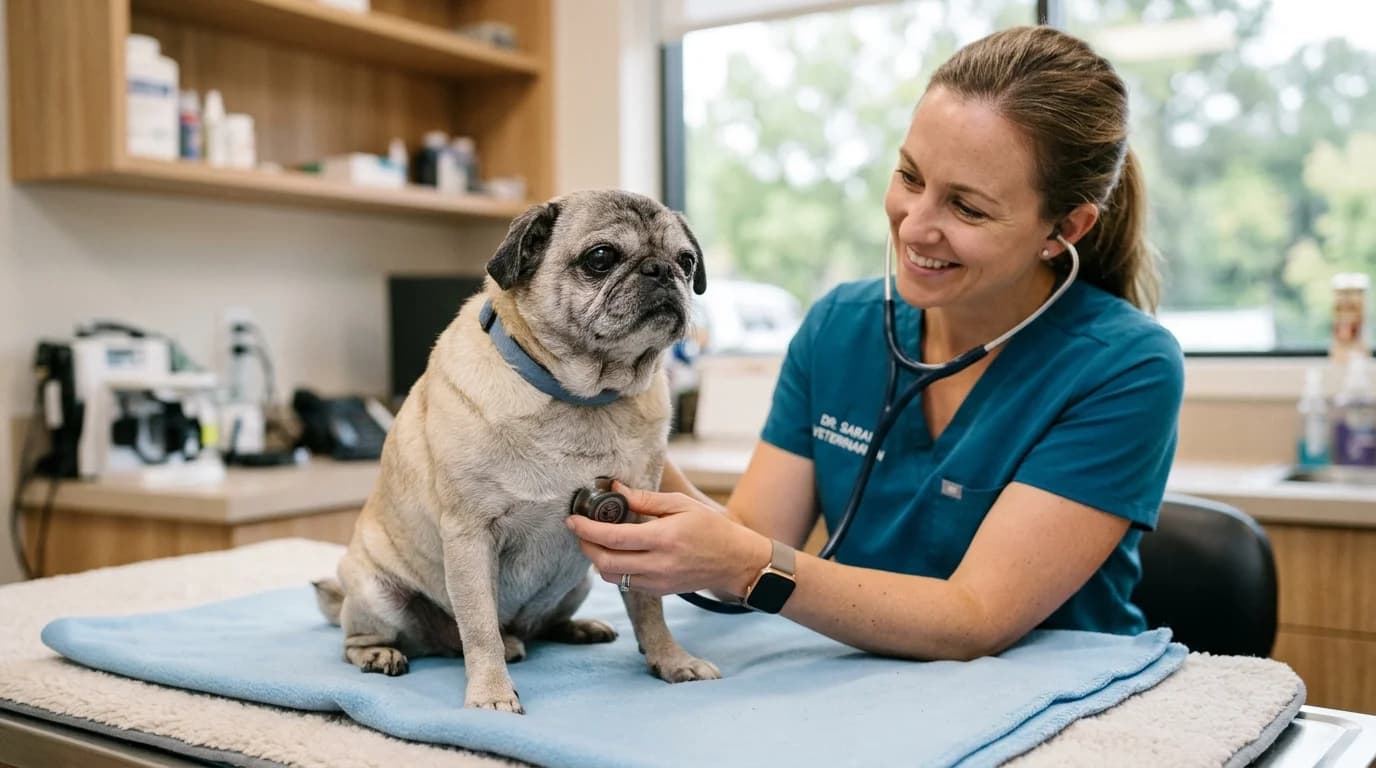
The Pug (Canis lupus familiaris, American Kennel Club Toy Group; Fédération Cynologique Internationale Group 9: Companion and Toy Dogs, Section 11: Small Molossian type Dogs) represents one of humanity's most ancient, celebrated, and morphologically specialized canine lineages. Originating in imperial China during the Song and Han dynasties (pre-400 BCE), where they were cultivated as cherished lapdogs and symbolic temple guardians for Chinese emperors, the breed was systematically selected for their compact, square silhouette, characteristic tightly curled spiral tail, and intricate facial wrinkle pattern—most prized when resembling the Chinese character for "prince" (Wang, 王). Transported to Europe during the sixteenth century by the Dutch East India Company, the Pug became the official mascot of the Dutch Royal House of Orange-Nassau before gaining widespread aristocratic favor across the royal courts of Europe, from William and Mary of England to Empress Joséphine of France and Queen Victoria.
Morphologically and physiologically, the modern Pug is defined by the historic breed standard motto multum in parvo ("much in little"):
- Adult Somatic Mass: Mature males and females ideally weigh between 14 and 18 pounds ($6.35\text{ to }8.16\text{ kg}$), presenting a cobby, muscular, compact torso with a deep chest, level topline, and short, sturdy limbs.
- Cranial and Conformation Architecture: Marked extreme brachycephaly characterized by a short, blunt, square skull with a dramatically shortened maxillary and nasal skeleton, wide-set prominent globoid eyes (macropalpebral fissure), distinct folded nasal skin folds, and a characteristic undershot jaw (mandibular prognathism).
- Caudal Conformation: A high-set tail curled as tightly as possible over the hip, with a double curl representing the historic cynological ideal.
From a comparative biogerontological standpoint, the Pug occupies a compelling and paradoxical position in veterinary medicine:
- The Small Companion Breed Cellular Longevity Advantage: As a toy-sized canine, the Pug benefits from the universal mammalian inverse body-mass rule. Having a low adult body mass ($<10\text{ kg}$) and a modest juvenile growth velocity, Pugs exhibit suppressed circulating concentrations of Insulin-Like Growth Factor 1 (IGF-1) and moderated metabolic demand relative to giant breeds. This biochemical profile delays cellular senescence and yields an innate biological longevity potential exceeding 12 to 15 years.
- The Brachycephalic & Conformation-Associated Mortality Paradox: Counteracting this favorable cellular aging curve is the extreme morphological legacy of intensive artificial selection. Pugs carry profound conformational compromises across four distinct organ systems: upper airway obstruction (Brachycephalic Obstructive Airway Syndrome, or BOAS), complex vertebral dysmorphology (thoracic hemivertebrae and constrictive Pug myelopathy), ocular exposure (brachycephalic ocular syndrome), and an idiopathic, genetically determined central nervous system autoimmune disorder (Pug Dog Encephalitis, or PDE / Necrotizing Meningoencephalitis).
While unmanaged cohorts frequently suffer premature respiratory decompensation, progressive hindlimb paralysis, or fatal neuro-inflammation between 6 and 10 years of age, modern proactive veterinary biogerontology demonstrates that targeted early intervention can dramatically reshape this trajectory. Through early Cambridge Respiratory Function Grading (RFG), pre-emptive airway corrective surgery, rigorous weight optimization, spinal ergonomics, and genetic screening, Pugs routinely achieve 13 to 15+ vibrant years, with exceptional clinical cohorts reaching 16 to 17 years.
To evaluate your Pug's physiological life stage and convert chronological age into human years using multi-breed size algorithms, consult our interactive Dog Age Calculator or reference our comprehensive Dog Age Chart.
Epidemiological Baseline: How Long Do Pugs Live?
Multi-institutional veterinary electronic health record (EHR) registries, academic referral veterinary databases, and canine mortality surveys provide comprehensive survival metrics for the Pug across North America, the United Kingdom, continental Europe, and Australasia.
                      PUG LIFESPAN BY COHORT & REGISTRY
+------------------------------------+------------------+-------------------+-----------------------------------------+
| Registry / Cohort Database         | Sample Size (n)  | Reported Median   | Epidemiological Context / Methodology   |
+------------------------------------+------------------+-------------------+-----------------------------------------+
| VetCompass UK (Royal Vet College)  | 16,218+ dogs     | 12.2 – 12.8 Years | Primary-care electronic veterinary EHR  |
| North American VMDB (Univ Hosps)   | 11,400+ records  | 11.8 – 13.1 Years | Academic tertiary referral hospitals    |
| VetCompass Australia (Sydney Uni)  | 3,850+ dogs      | 12.4 – 13.0 Years | Nationwide companion animal EHR study   |
| Swedish Agria Pet Insurance Cohort | 7,200+ dog-years | 11.9 – 12.7 Years | Insured Scandinavian companion cohort   |
| UK Kennel Club Mortality Census    | 1,120 deaths     | 11.5 – 12.3 Years | Owner-reported pedigree mortality survey|
| Proactive Veterinary Cohort        | Clinical Cohort  | 13.5 – 15.5+ Years| Early BOAS surgery, BCS 4.5/9, PDE test |
+------------------------------------+------------------+-------------------+-----------------------------------------+
                       PUG SURVIVAL CURVE (KAPLAN-MEIER)
   Survival
   Probability (%)
     ▲
 100 │════════════════════════════════════════╗
  80 │                                        ╚════════════════╗
  60 │                                                         ╚══════════════╗
  50 │- - - - - - - - - - - - - - - - - - - - - - - - - - - - - - - - - - - - ╚════ (Median: 12.2–12.8 yrs)
  40 │                                                                        │    ╚═════════╗
  20 │                                                                        │              ╚═════════╗
   0 └───┴──────┴──────┴──────┴──────┴──────┴──────┴──────┴──────┴──────┴─────┴──────┴──────┴──────┴──────►
     0   1      2      3      4      5      6      7      8      9     10    11     12     13     14    15+
                               Chronological Age (Years)
The Kaplan-Meier survival curve for Pugs exhibits three distinct clinical phases:
- The Juvenile & Young Adult Plateau (Ages 0 to 6): Survival remains exceptionally high ($>92%$). However, a critical subclinical inflection point occurs between ages 2 and 4, where dogs genetically homozygous for high-risk Dog Leukocyte Antigen (DLA) class II alleles may manifest acute, catastrophic Pug Dog Encephalitis (PDE).
- The Middle-Age Respiratory & Spinal Divergence (Ages 7 to 10): Survival begins to separate markedly between clinical cohorts. Pugs with untreated Grade II or III BOAS, concurrent obesity, or progressive thoracolumbar constrictive myelopathy experience accelerated functional decline, cardiorespiratory fatigue, and mobility loss.
- The Geriatric Senescence Window (Ages 11 to 15+): Canines that have avoided or surgically remediated upper airway collapse and maintain lean body composition enter an extended geriatric phase, frequently succumbing to chronic kidney disease (CKD), valvular heart disease (MMVD), or neoplasia, rather than acute airway catastrophe.
Sex-Specific and Reproductive Longevity Disparities
Veterinary demographic audits consistently highlight statistically significant differences in longevity influenced by sex and gonadal status:
- Spayed Females: Consistently record the longest median lifespan (12.8 to 13.4 years). Early-to-midlife gonadectomy eliminates the risk of life-threatening pyometra (which occurs in up to $25%$ of intact female canines by age 10) and dramatically curtails mammary carcinoma incidence.
- Neutered Males: Exhibit a median lifespan of 12.2 to 12.9 years, demonstrating reduced behavioral trauma, vehicular injury, and prostatic hyperplasia compared to intact counterparts.
- Intact Cohorts: Experience a median lifespan reduction of approximately 0.9 to 1.4 years, largely driven by reproductive neoplasia, behavioral roaming trauma, and dystocia in breeding females.
Brachycephalic Toy Biogerontology: Cellular Mechanics of Pug Aging
Understanding the longevity biology of the Pug requires dissecting two competing physiological forces: the cellular resilience of toy-sized canines versus the systemic cellular stresses induced by chronic brachycephalic airway resistance.
                      SOMATIC & CELLULAR BIOMARKER COMPARISON
+-----------------------------+---------------------------+---------------------------+
| Physiological Biomarker     | Pug (Brachycephalic Toy)  | Large Breed (e.g. Doberman)|
+-----------------------------+---------------------------+---------------------------+
| Adult Somatic Mass          | 6.3 – 8.2 kg              | 32.0 – 45.0 kg            |
| Juvenile Growth Velocity    | Low (~20–35 g/day)        | Extreme (~110–130 g/day)  |
| Serum Circulating IGF-1     | Suppressed / Low          | High (Hyperactive mTOR)   |
| Basal Macroautophagy Rate   | Enhanced / Preserved      | Downregulated / Exhausted |
| Intracellular Proteostasis  | High Stability            | Rapid Polyubiquitination  |
| Chronic Hypoxemic Load      | Moderate-High (BOAS)      | Baseline / Low            |
| Onset of Cellular Senescence| Chronological Age ~9–10 Yrs| Chronological Age ~6–7 Yrs |
+-----------------------------+---------------------------+---------------------------+
1. The Somatotropic Axis (IGF-1/GH) and Autophagic Flux
Domestic canines display an extraordinary intra-species size disparity spanning two orders of magnitude. Pioneering genomic investigations (Sutter et al., 2007; Greer et al., 2007) pinpointed single nucleotide polymorphisms in the IGF1 (Insulin-Like Growth Factor 1) gene on canine chromosome 15 as the primary driver of body mass reduction in toy and small breeds, including the Pug.
Because Pugs produce lower physiological concentrations of circulating IGF-1, their downstream intracellular signaling networks—specifically the PI3K/Akt/mTOR (mechanistic Target of Rapamycin) axis—operate at a modulated baseline. When mTOR signaling is moderate rather than hyperactivated:
- Macroautophagy is Promoted: Cellular machinery continuously sequesters and degrades damaged organelles, depolarized mitochondria, and misfolded protein aggregates within lysosomes.
- Telomeric Attrition is Decelerated: Slower somatic growth entails fewer cumulative cellular mitotic divisions during the first 12 months of life, preserving critical telomeric repeats in hematopoietic stem cells and vascular endothelial linings.
- Delayed Cellular Senescence: Senescent secretory phenotypes (SASP)—characterized by chronic release of pro-inflammatory cytokines like IL-6 and TNF-α—manifest years later in Pugs than in large sporting or working breeds.
2. Chronic Intermittent Hypoxia (CIH) & Endothelial Oxidative Stress
While cellular growth kinetics favor extended longevity, Pugs with uncorrected BOAS experience an insidious biogerontological handicap: Chronic Intermittent Hypoxia (CIH).
Every respiratory cycle against restricted upper airway passages generates severe sub-atmospheric intra-thoracic pressure swings (reaching $-30\text{ to }-50\text{ cm H}_2\text{O}$, compared to $-5\text{ cm H}_2\text{O}$ in mesocephalic dogs). During sleep, relaxation of pharyngeal tone triggers repetitive micro-obstructive apneas and hypopneas:
- HIF-1α Upregulation: Intermittent oxyhemoglobin desaturations stabilize Hypoxia-Inducible Factor 1-alpha ($\text{HIF-1}\alpha$), stimulating chronic endothelin-1 release and systemic vasoconstriction.
- Mitochondrial ROS Generation: Reoxygenation injury following transient apneas sparks an overproduction of mitochondrial Superoxide ($O_2^{\bullet-}$) and Hydrogen Peroxide ($H_2O_2$), oxidizing vascular nitric oxide (NO) and inducing chronic endothelial dysfunction.
- Secondary Pulmonary Hypertension & Cor Pulmonale: Sustained alveolar hypoxia drives pulmonary arterial vasoconstriction and vascular remodeling. Over years, this imposes severe pressure overload on the right ventricle, culminative in right ventricular hypertrophy and terminal congestive failure.
This pathophysiology explains why eliminating upper airway resistance early in life directly extends cardiovascular healthspan. For additional biogerontological comparisons across canine size classes, review our analysis on Why Small Dogs Live Longer Than Large Dogs.
3. Epigenetic Remodeling: UCSD DNA Methylation Dynamics
Canine DNA methylome profiling conducted by the University of California San Diego (UCSD; Wang et al., 2020) established that domestic dogs and humans share conserved, non-linear epigenetic aging dynamics. This relationship is mathematically expressed by:
$$\text{Human Equivalent Age} = 16 \times \ln(\text{Chronological Canine Age}) + 31$$
While this logarithmic curve accurately models canine biological clocks during the rapid developmental phases of puppyhood, small breeds like the Pug exhibit a decelerated slope of epigenetic degradation during mid-to-late adulthood compared to large canines. Discover the mathematics behind canine epigenetic aging in our Scientific Epigenetic Dog Age Formula.
Pug Human Age Conversion Matrix
The archaic adage asserting that "one dog year equals seven human years" is profoundly inaccurate for the Pug. A 1-year-old Pug has fully traversed human childhood and entered late adolescence (biologically equivalent to an 18-year-old human), whereas an 11-year-old Pug functions biologically as an early 60s human adult.
                         PUG HUMAN AGE CONVERSION MATRIX
+----------------+--------------------+-------------------+----------------------------------------------------+
| Pug Age        | Canine Life Stage  | Human Equivalent  | Physiological, Diagnostic & Clinical Milestones    |
+----------------+--------------------+-------------------+----------------------------------------------------+
| 3 Months       | Early Juvenile     | 4 – 5 Years       | DLA-II DNA swab for PDE risk; screen stenotic nares|
| 6 Months       | Mid Juvenile       | 10 – 12 Years     | Cambridge RFG eval; assess deciduous dental arches |
| 1 Year         | Young Adult        | 18 – 20 Years     | Skeletal maturity; spine baseline X-rays (hemivert)|
| 2 Years        | Prime Adult        | 24 – 26 Years     | Peak PDE onset window; plan elective BOAS rhinoplasty|
| 3 Years        | Prime Adult        | 28 – 30 Years     | Annual Schirmer tear test & fluorescein corneal exam|
| 4 Years        | Prime Adult        | 33 – 35 Years     | Rigid weight control (BCS 4.5/9); dental prophylaxis|
| 5 Years        | Mature Adult       | 38 – 40 Years     | Neurological gait analysis for pelvic limb knuckling|
| 6 Years        | Mature Adult       | 43 – 45 Years     | Cardiopulmonary auscultation; baseline SDMA renal  |
| 7 Years        | Senior Transition  | 48 – 50 Years     | Formal senior transition; bi-annual wellness panel |
| 8 Years        | Senior Stage 1     | 53 – 55 Years     | Screen for constrictive Pug myelopathy & KCS       |
| 10 Years       | Senior Stage 2     | 61 – 63 Years     | Comprehensive geriatric bloods, urinalysis, chest X-rays|
| 12 Years       | Geriatric          | 68 – 70 Years     | Screen for MMVD murmur & cognitive dysfunction (CCDS)|
| 14 Years       | Advanced Geriatric | 75 – 78 Years     | Mobility assistive harness; thermal micro-management|
| 16+ Years      | Super-Centenarian  | 82 – 86+ Years    | Palliative comfort care, tailored home accessibility|
+----------------+--------------------+-------------------+----------------------------------------------------+
The Five Primary Biological Vulnerabilities: Deep Pathophysiological Analysis
To engineer a long, robust lifespan for a Pug, veterinary clinicians and owners must anticipate, monitor, and aggressively manage the breed's five primary anatomical and genetic predispositions.
                      PATHOPHYSIOLOGICAL TARGET ARCHITECTURE
+------------------------------------+----------------------------+-------------------------------------------+
| Vulnerability & Anatomical Target  | Genetic / Conformation Etiology | Clinical Manifestations & Fatal Sequelae |
+------------------------------------+----------------------------+-------------------------------------------+
| 1. Brachycephalic Airway (BOAS)    | *SMOC2* locus; brachycephaly| Hypoxemia, laryngeal collapse, hyperthermia|
| 2. Pug Dog Encephalitis (PDE / NME)| DLA Class II risk haplotype| Cluster seizures, cerebral necrosis, coma |
| 3. Vertebral Malformations / Myelo | *DVL2* screw-tail mutation | Constrictive myelopathy, ataxia, paraplegia|
| 4. Brachycephalic Ocular Syndrome  | Shallow orbits, exophthalmos| Pigmentary keratitis, melting ulcers, KCS |
| 5. Obesity & Metabolic Collapse    | High calorie intake vs BOAS| Aerophagia, GERD, hiatal hernia, early CAD|
+------------------------------------+----------------------------+-------------------------------------------+
1. Brachycephalic Obstructive Airway Syndrome (BOAS) & Poiseuille's Law
Brachycephalic Obstructive Airway Syndrome represents the single most prevalent conformational morbidity compromising Pug longevity. Selective breeding for extreme maxillary shortening without a proportional reduction in internal soft tissue volume forces normal cranial soft structures into a compressed nasopharyngeal space.
Primary Anatomical Obstructions
- Stenotic Nares: Markedly deformed, hyperplastic alar cartilages (wing of the nostrils) that collapse inward during inspiration, closing off the nasal vestibule.
- Elongated & Thickened Soft Palate: The caudal soft palate extends significantly past the epiglottis into the laryngeal opening, mechanically occluding the rima glottidis during every breath.
- Hypertrophied Nasopharyngeal Turbinates (Aberrant Conchae): Nasal conchae (turbinates) are crowded and contact adjacent mucosal walls, obstructing laminar airflow.
- Hypoplastic Trachea: Congenitally reduced tracheal diameter (low Tracheal Diameter to Thoracic Inlet ratio, $<0.16$).
The Biomechanics of Resistance: Hagen-Poiseuille Equation
The physiological severity of upper airway obstruction is governed by the principles of fluid dynamics. For laminar airflow through a conduit, airway resistance ($R$) is dictated by the Hagen-Poiseuille Law:
$$R = \frac{8 \eta L}{\pi r^4}$$
Where:
- $\eta$ represents dynamic fluid viscosity of inspired air.
- $L$ is the length of the airway passage.
- $r$ is the internal radius of the airway lumen.
Because airway resistance is inversely proportional to the fourth power of the radius ($r^4$), a seemingly minor $50%$ reduction in the nostril or laryngeal luminal diameter triggers a 16-fold ($1,600%$) increase in airflow resistance:
$$\left(\frac{1}{0.5}\right)^4 = 2^4 = 16$$
               PROGRESSION OF UNTREATED BRACHYCEPHALIC AIRWAY DISEASE
  +--------------------------------------------------------------------------+
  | PRIMARY LESIONS: Stenotic Nares + Elongated Palate + Aberrant Turbinates |
  +--------------------------------------------------------------------------+
                                       │
                                       ▼ (Intense negative inspiratory pressure: -30 to -50 cm H2O)
  +--------------------------------------------------------------------------+
  | MUCOSAL TRAUMA: Chronic pharyngeal edema, tonsillar eversion             |
  +--------------------------------------------------------------------------+
                                       │
                                       ▼ (Vacuum pulling saccules out of crypts)
  +--------------------------------------------------------------------------+
  | LARYNGEAL SACCULE EVERSION (Stage I Laryngeal Collapse)                  |
  +--------------------------------------------------------------------------+
                                       │
                                       ▼ (Loss of cartilage rigidity; inward deviation of cuneiforms)
  +--------------------------------------------------------------------------+
  | CUNEIFORM PROCESS COLLAPSE (Stage II Laryngeal Collapse)                 |
  +--------------------------------------------------------------------------+
                                       │
                                       ▼ (Medial impingement and fusion of corniculate processes)
  +--------------------------------------------------------------------------+
  | COMPLETE CORNICULATE COLLAPSE (Stage III Laryngeal Collapse - FATAL)     |
  +--------------------------------------------------------------------------+
When left uncorrected, chronic excessive negative pressures stretch and weaken the fibrocartilaginous structures of the larynx. Over years, this transforms reversible soft palate elongation into irreversible Stage II and Stage III Laryngeal Collapse, where the larynx loses all structural integrity, resulting in asphyxiation during heat or exertion.
2. Pug Dog Encephalitis (PDE) / Necrotizing Meningoencephalitis (NME)
Pug Dog Encephalitis (scientifically termed Necrotizing Meningoencephalitis, NME) is an aggressive, fatal, idiopathic autoimmune inflammatory disorder of the central nervous system that preferentially targets Pugs.
Immunogenetic Architecture: The DLA-II Complex
Groundbreaking research led by the University of California, Davis (UC Davis; Greer et al., 2010) demonstrated that susceptibility to PDE is heavily linked to the Dog Leukocyte Antigen (DLA) Class II major histocompatibility complex (MHC) region on canine chromosome 12, specifically involving alleles of DLA-DRB1, DLA-DQA1, and DLA-DQB1.
Veterinary genetic testing categorizes Pugs into three risk strata:
- N/N (Homozygous Normal / Low Risk): Carries two copies of the low-risk marker. Risk of developing PDE is negligible ($<0.1%$).
- N/PDE (Heterozygous / Carrier / Low Risk): Carries one risk allele. These dogs rarely develop clinical PDE but can transmit the allele to offspring.
- PDE/PDE (Homozygous High Risk): Carries two copies of the risk marker. While not every homozygous dog develops the disease due to variable penetrance, approximately $12%$ to $15%$ of PDE/PDE Pugs will develop clinical encephalitis, typically manifesting between 18 months and 5 years of age.
                   PUG DOG ENCEPHALITIS (PDE) GENETIC RISK PROFILES
+-------------------+--------------------+------------------------+------------------------------------------+
| Genotype Status   | Population Freq    | Lifetime PDE Risk      | Clinical & Breeding Management Protocol  |
+-------------------+--------------------+------------------------+------------------------------------------+
| N/N (Clear)       | ~35% of Pugs       | Negligible (<0.1%)     | Standard wellness; safe to breed to any  |
| N/PDE (Carrier)   | ~45% of Pugs       | Extremely Low (<0.5%)  | Safe companion; breed only to N/N mates  |
| PDE/PDE (High)    | ~20% of Pugs       | High (~12.75% lifetime)| Serial neuro exams; DO NOT BREED; low-stress|
+-------------------+--------------------+------------------------+------------------------------------------+
Neuropathology and Clinical Presentation
In affected dogs, auto-reactive CD4+ T-lymphocytes cross the blood-brain barrier, triggering massive lymphocytic perivascular cuffing, microglial activation, and extensive bilateral asymmetrical cavitation and necrosis of cerebral cortical gray and subcortical white matter:
- Hyperacute Signs: Abrupt onset of refractory generalized cluster seizures or status epilepticus.
- Interictal Neurological Deficits: Pacing in circles (frequently toward the side of greater cerebral damage), conscious proprioceptive knuckling, visual loss with preserved pupillary light reflexes (central amaurosis), head pressing, and severe mental obtundation.
- Definitive Diagnostics: Magnetic Resonance Imaging (MRI) demonstrates multifocal asymmetrical forebrain hyperintensities on T2/FLAIR with loss of gray-white matter differentiation. Cerebrospinal fluid (CSF) analysis reveals marked lymphocytic or histiocytic pleocytosis ($>100\text{ to }1,000\text{ WBCs/}\mu\text{L}$) with markedly elevated total protein ($>80\text{ mg/dL}$).
- Prognosis: Untreated dogs frequently succumb within days to weeks. Aggressive multimodal immunosuppression (high-dose dexamethasone or prednisone, cytarabine arabinoside CRI or injections, and cyclosporine) combined with anti-convulsants (levetiracetam, phenobarbital) can induce clinical remission in responsive patients, extending meaningful quality of life.
3. Vertebral Malformations & Constrictive Pug Myelopathy
Pugs possess a distinct genetic vulnerability to severe thoracolumbar spinal disease that differs pathophysiologically from the Hansen Type I disc herniations common in Dachshunds.
The DVL2 Mutation & Thoracic Hemivertebrae
The characteristic screw-tail conformation in Pugs is caused by a conserved frameshift deletion in the Dishevelled 2 (DVL2) gene (Mansour et al., 2018), a core regulator of Wnt-mediated planar cell polarity and embryonic somite segmentation.
While producing the desired curl of the coccygeal tail, this genetic disruption frequently causes developmental failures of cranial and thoracic vertebral bodies:
- Hemivertebrae (Butterfly & Wedge Vertebrae): Incomplete formation of the vertebral centra, most frequently between T7 and T9.
- Progressive Kyphoscoliosis: Wedge-shaped vertebrae alter biomechanical loading, generating focal angular kyphosis that narrows the vertebral canal and pinches the spinal cord.
                      PUG THORACIC VERTEBRAL ANATOMY
    Normal Thoracic Vertebra                     Hemivertebra (Wedge Defect)
        ┌──────────────┐                             ┌──────────────┐
        │  Neural Arch │                             │  Neural Arch │
        └──────┬───────┘                             └──────┬───────┘
               │                                            │
        ┌──────┴───────┐                             ┌──────┴───────┐
        │  Spinal Canal│                             │ Pinched Canal│ ◄── Canal Stenosis
        └──────┬───────┘                             └──────┬───────┘
        ┌──────┴───────┐                             ┌──────┴┐
        │ Cylindrical  │                             │ Wedge │ ◄── Incomplete Body
        │  Vertebral   │                             │ Body  │
        │    Body      │                             └───────┘
        └──────────────┘
Constrictive Pug Myelopathy (Pug Myelopathy / Subarachnoid Diverticula)
In mature and senior Pugs (ages 7 to 11), veterinary neurologists frequently diagnose Pug Myelopathy (Fisher et al., 2013; Rohdin et al., 2018). This condition is characterized by chronic, progressive, non-painful pelvic limb ataxia and spastic paraparesis:
- Etiology: Congenital hypoplasia or complete aplasia of the caudal articular processes (CAP) of the thoracic vertebrae causes chronic microscopic intervertebral instability.
- Pathology: To stabilize this micro-motion, the spinal dura and arachnoid proliferate fibrous connective tissue bands, forming constrictive fibrous rings and secondary spinal arachnoid diverticula (cysts) that strangle the dorsal and lateral spinal tracts at T10–L2.
- Clinical Course: Unlike acute, painful disc rupture, Pug Myelopathy presents as a slow, insidious deterioration: worn dorsal surfaces of the hind claws, scuffing or "knuckling," a drunken swaying pelvic gait, progressing over 12 to 24 months to complete spastic paraplegia and fecal/urinary incontinence.
- Longevity Impact: Because the condition is non-painful, dogs remain mentally alert and cheerful. Euthanasia often occurs prematurely due to hygiene failure or owner caregiver burden, highlighting the vital need for early physical rehabilitation and custom mobility carts.
4. Brachycephalic Ocular Syndrome (BOS) & Pigmentary Keratopathy
Pugs possess exceptionally shallow bony orbital sockets, resulting in extreme exophthalmos (prominent globoid eyes) and a wide eyelid aperture (macropalpebral fissure).
                      PROGRESSION OF PIGMENTARY KERATOPATHY
  +-------------------------------------------------------------------------+
  | ANATOMICAL DEFECT: Shallow Orbit + Lagophthalmos + Entropion + Low Sensation |
  +-------------------------------------------------------------------------+
                                       │
                                       ▼ (Incomplete blinking + nasal fold friction)
  +-------------------------------------------------------------------------+
  | CHRONIC CORNEAL DESICCATION: Central tear film evaporation              |
  +-------------------------------------------------------------------------+
                                       │
                                       ▼ (Vascular endothelial migration across cornea)
  +-------------------------------------------------------------------------+
  | CORNEAL NEOVASCULARIZATION: Capillary growth across clear stroma        |
  +-------------------------------------------------------------------------+
                                       │
                                       ▼ (Melanocytes follow blood vessels)
  +-------------------------------------------------------------------------+
  | PIGMENTARY KERATITIS: Progressive melanin sheet covering pupil          |
  +-------------------------------------------------------------------------+
                                       │
                                       ▼ (Total visual obstruction by senior years)
  +-------------------------------------------------------------------------+
  | COMPLETE CORNEAL BLINDNESS / HIGH RISK OF MELTING ULCERS                |
  +-------------------------------------------------------------------------+
- Lagophthalmos & Exposure Keratopathy: Pugs cannot close their eyelids completely during regular blinking or even during light sleep. The central cornea remains chronically exposed to air, leading to continuous tear film evaporation and desiccation.
- Pigmentary Keratitis (Corneal Melanin Deposition): In response to chronic low-grade friction from medial lower eyelid entropion and rubbing from redundant nasal skin folds, limbal melanocytes migrate across the cornea. Dark melanin pigment deposits across the clear stroma. Studies show that over $80%$ of adult Pugs have corneal pigmentation, with senior dogs frequently experiencing near-total visual obstruction.
- Corneal Ulcer Vulnerability: Reduced corneal trigeminal innervation impairs the protective corneal blink reflex. Minor trauma (from grass blades, cat claws, or eye rubbing) rapidly escalates into deep corneal ulcers, descemetoceles, or enzymatic "melting" ulcers (keratomalacia), risking perforation and emergency enucleation.
5. Obesity, Aerophagia & Gastrointestinal Compromise
Obesity represents the great accelerant of all brachycephalic morbidities. The Pug's sedentary tendencies—often secondary to respiratory fatigue—combined with enthusiastic food drive leads to high rates of clinical overweight and obesity.
- The Mechanical Airway Load: In obese dogs, adipose tissue accumulates within the submucosal space of the pharynx, larynx, and thoracic inlet. An obese Pug has a dramatically narrower airway lumen than a lean Pug of identical skeletal dimensions.
- The Aerophagia Cascade: Chronic inspiratory struggle against closed nares forces the Pug to swallow large boluses of air (aerophagia). This distends the gastric chamber, raises intra-abdominal pressure, and promotes chronic Gastroesophageal Reflux Disease (GERD).
- Hiatal Herniation & Esophagitis: Severe negative intrathoracic pressure swings literally pull the distal esophagus and gastric cardia through the esophageal hiatus into the thoracic cavity, generating sliding hiatal hernias and chronic severe reflux esophagitis.
- Lifespan Impact: Landmark longitudinal canine studies (Kealy et al., 2002) established that maintaining a lean Body Condition Score (BCS 4 to 5 out of 9) extends median canine lifespan by $1.8\text{ years}$ (nearly $15%$) compared to overweight counterparts, while dramatically lowering osteoarthritis scores.
The Five Evidence-Based Longevity Pillars: Clinical Optimization Protocols
Transforming the Pug's genetic and conformational vulnerabilities into a resilient, extended healthspan requires structured, lifelong clinical protocols.
                      THE FIVE PUG LONGEVITY PILLARS
+------------------------------------+---------------------------------------------------------------+
| Longevity Pillar                   | Core Clinical Protocol & Action Items                         |
+------------------------------------+---------------------------------------------------------------+
| Pillar 1: Cambridge RFG & Airway   | RFG test at 6–12 mos; early rhinoplasty & folded palatoplasty |
| Pillar 2: "Lean Pug" Metabolic     | Target BCS 4.5/9; strict kcal dosing via RER/MER; gram scale   |
| Pillar 3: Spinal Ergonomics        | 100% Y-harness (NO COLLARS); ramps; anti-slip indoor flooring  |
| Pillar 4: Ophthalmic Preservation  | Daily artificial tears; topical Tacrolimus/Cyclosporine; folds|
| Pillar 5: Thermal & Senior Care    | 75°F (24°C) heat cutoff; bi-annual geriatric labs; neuro rehab|
+------------------------------------+---------------------------------------------------------------+
Pillar 1: Proactive Airway Intervention & Cambridge RFG Screening
Veterinary medicine has moved beyond waiting for respiratory crisis. Early, prophylactic evaluation and surgical widening of the airway before secondary laryngeal collapse occurs is the foundation of Pug longevity.
Cambridge Respiratory Function Grading (RFG) Scheme
Developed by the Cambridge BOAS Research Group (University of Cambridge; Ladlow, Liu et al.), the RFG scheme objectively assesses respiratory compromise:
- Grade 0: BOAS-free; no respiratory noise, normal respiratory effort before and after a standardized 3-minute exercise test.
- Grade 1: Mild BOAS; audible stertor/stridor under exercise, but no exercise intolerance or respiratory distress.
- Grade 2: Moderate BOAS; clinically significant airway compromise requiring medical or surgical intervention.
- Grade 3: Severe BOAS; loud constant inspiratory stertor/stridor, severe dyspnea, mouth breathing, cyanosis, and exercise intolerance. Immediate surgical intervention required.
                  AIRWAY SURGICAL PROTOCOL TIMELINE (IDEAL: 8–18 MONTHS)
+-------------------------------+-------------------------------------------------------------+
| Surgical Procedure            | Technique & Clinical Longevity Objective                    |
+-------------------------------+-------------------------------------------------------------+
| Alar Fold Rhinoplasty         | Modified Wedge Resection or Trader's Punch to widen nares   |
| Folded Flap Palatoplasty (FFP)| Submucosal resection of excess thickness; rostral reposition|
| Laryngeal Sacculectomy        | Direct excision of everted saccules obstructing the glottis |
| Prophylactic Castration/Spay  | Concurrent anesthesia; prevents hormonal stress on airway   |
+-------------------------------+-------------------------------------------------------------+
Pugs undergoing corrective rhinoplasty and palatoplasty between 8 and 18 months of age exhibit a permanent $60%–80%$ reduction in airflow resistance, protecting the larynx from Stage II/III collapse, attenuating sleep apneas, and preventing downstream cor pulmonale.
Pillar 2: The "Lean Pug" Metabolic Protocol (Target BCS 4.5/9)
Maintaining a strict lean body composition is the most cost-effective and powerful longevity intervention available.
                           BODY CONDITION SCORE (BCS 1–9)
   BCS 1-3: Underweight   BCS 4-5: Ideal (Target 4.5)     BCS 6-7: Overweight   BCS 8-9: Obese
   [Ribs Visible]         [Ribs Easily Felt with Thin     [Ribs Hard to Feel,   [Heavy Fat Layer,
                           Fat Layer; Clear Waistline]     No Waistline]         Distended Belly]
                                     ▲
                           THE PUG LONGEVITY SWEET SPOT
Precise Caloric Budgeting
Do not estimate food portions using volumetric measuring cups; feed according to precise gram weights calculated from the dog's Resting Energy Requirement (RER):
$$\text{RER (kcal/day)} = 70 \times (\text{Body Weight in kg})^{0.75}$$
For a target $7.5\text{ kg}$ adult Pug:
$$\text{RER} = 70 \times (7.5)^{0.75} = 70 \times 4.53 = 317\text{ kcal/day}$$
For an indoor, neutered, adult companion Pug with moderate activity, the Maintenance Energy Requirement (MER) is approximately $1.1\text{ to }1.2 \times \text{RER}$:
$$\text{MER} = 1.1 \times 317 \approx 349\text{ kcal/day}$$
All daily treats, dental chews, and training rewards must be deducted from this 349 kcal allowance and should never exceed $10%$ of daily caloric intake. Fresh, low-calorie vegetables (steamed green beans, zucchini, sliced cucumbers) provide volume and satiety without caloric excess. For specialized dietary strategies, consult our clinical guide on Diet and Exercise for Older Dogs.
Pillar 3: Spinal Biomechanics & The Absolute Collar Ban
The anatomical reality of thoracic hemivertebrae and the vulnerability to Pug Myelopathy make spinal biomechanical protection essential from puppyhood.
                     THE GOLDEN HARNESS RULE: COLLARS ARE STRICTLY PROHIBITED
+------------------------------------------+------------------------------------------+
| Traditional Neck Collar (DANGEROUS)      | Ergonomic Y-Shaped Chest Harness (MANDATORY)|
+------------------------------------------+------------------------------------------+
| ❌ Spikes Intraocular Pressure (IOP) by | ✅ Distributes pull force across sternum |
|    30–40% instantly (corneal ulcer risk) |    and pectoral skeletal frame           |
| ❌ Compresses hypoplastic trachea,       | ✅ 100% free of tracheal, laryngeal,     |
|    exacerbating coughing and stertor     |    or cervical pressure                  |
| ❌ Generates cervical shearing force on  | ✅ Eliminates traction spikes to ocular  |
|    thoracolumbar spine and hemivertebrae |    vascular beds                         |
+------------------------------------------+------------------------------------------+
Home Ergonomic Modifications
- Zero High-Impact Jumping: Jumping down from beds, couches, or vehicle footwells exerts dynamic vertical impact forces of up to $4.5\text{ times body weight}$ upon landing. In a spine with malformed wedge vertebrae, this accelerates disc failure and caudal articular process micro-fractures. Install stable, high-traction foam pet ramps or carpeted stairs.
- High-Traction Indoor Flooring: Hardwood, polished stone, and slick laminate tiles cause repetitive micro-slipping, straining pelvic adductors and spinal stabilizers. Place washable rubber-backed runner rugs along primary walking routes.
- Chondroprotective & Neuroprotective Supplementation:
- High-DHA/EPA Marine Omega-3 Fatty Acids: $100\text{ to }125\text{ mg combined EPA/DHA per kg body weight daily}$ to suppress neuro-inflammatory mediators.
- Collagen Type II (UC-II) & Glucosamine/Chondroitin: Support articular cartilage hydration.
- Palmitoylethanolamide (PEA): Downregulates mast cell and microglial hyperactivity in aging spinal cords.
Pillar 4: Ophthalmic Preservation & Daily Facial Fold Hygiene
Pug eyes require daily proactive medical maintenance to preserve vision into senior years.
                      DAILY PUG EYE & WRINKLE PRESERVATION PROTOCOL
+-----------------------+---------------------+-------------------------------------------------------+
| Intervention          | Clinical Frequency  | Pharmacological Agent & Objectives                    |
+-----------------------+---------------------+-------------------------------------------------------+
| Ocular Lubrication    | 2 to 3 Times Daily  | Preservative-free Sodium Hyaluronate 0.2% drops       |
| Immunomodulation      | Once Daily (Rx)     | Topical Cyclosporine (0.5–1%) or Tacrolimus (0.02%)   |
| Tear Production Check | Every 6 Months      | Schirmer Tear Test (Target: >15 mm/min)               |
| Deep Wrinkle Hygiene  | Daily to Alt Days   | 2% Chlorhexidine / Ketoconazole wipe; wipe completely dry|
+-----------------------+---------------------+-------------------------------------------------------+
- Daily Artificial Tear Supplementation: Because lagophthalmos causes continuous surface desiccation, instilling preservative-free high-viscosity artificial tears (containing sodium hyaluronate or carboxymethylcellulose) creates a protective ocular moisture barrier.
- Arresting Pigmentary Keratitis: At the earliest appearance of brown pigment or corneal vascularization, veterinary ophthalmologists prescribe topical immunomodulators (Cyclosporine 1% or Tacrolimus 0.02% ophthalmic ointment). These agents suppress corneal vascular endothelial growth factor (VEGF) and halt melanocyte migration, preventing pigmentary blindness.
- Facial Skin Fold Hygiene: The deep facial fold resting over the nasal bridge creates a warm, dark, moist environment that harbors Malassezia pachydermatis and Staphylococcus pseudintermedius. Clean the fold gently with an antiseptic wipe, followed immediately by drying with a clean cotton pad. Moisture trapped in the fold leads to severe fold dermatitis (intertrigo) and bacterial corneal contamination.
Pillar 5: Thermal Safety & Senior Surveillance (Ages 7+)
Pugs are poikilothermic-sensitive canines; their compromised upper respiratory tract severely limits evaporative cooling through panting.
                      TEMPERATURE SAFETY MATRIX FOR PUGS
+------------------------------------+---------------------------------------------------------------+
| Ambient Temperature / Humidity     | Safety Classification & Activity Protocol                     |
+------------------------------------+---------------------------------------------------------------+
| Below 68°F (20°C)                  | SAFE: Normal walks, outdoor play, and sniffing enrichment     |
| 69°F – 74°F (21°C – 23°C)          | CAUTION: Limit walks to shaded routes; monitor panting rate   |
| 75°F – 80°F (24°C – 27°C)          | WARNING: High risk of heat exhaustion; short bathroom breaks only|
| Above 80°F (28°C) or Humidity >60% | DANGER / PROHIBITED: Keep indoors in air conditioning (Fatal risk)|
+------------------------------------+---------------------------------------------------------------+
Senior Diagnostic Surveillance Schedule (Ages 7+)
Once a Pug reaches age 7, veterinary evaluations should transition from annual checkups to bi-annual (every 6 months) geriatric surveillance:
                       GERIATRIC PUG SURVEILLANCE PANEL
+-------------------------+----------------------+-----------------------------------------------------+
| Diagnostic Panel        | Clinical Frequency   | Key Biomarkers & Clinical Objectives                |
+-------------------------+----------------------+-----------------------------------------------------+
| Complete Blood Count    | Every 6 Months       | Screen for occult anemia, chronic infection, leukocytosis|
| Serum Biochemistry      | Every 6 Months       | Monitor ALT, ALKP, BUN, Creatinine, Electrolytes    |
| Symmetric Dimethylarginine (SDMA)| Every 6 Months| Detect renal function decline at 25–40% nephron loss|
| Total T4 & Cholesterol  | Annually             | Screen for hypothyroidism (common metabolic culprit)|
| Systolic Blood Pressure | Every 6 Months       | Doppler measurement; target Systolic BP <140 mmHg   |
| Thoracic Radiographs    | Annually             | 3-view films: monitor Vertebral Heart Score (MMVD)  |
| Neurological Assessment | Every 6 Months       | Conscious proprioception, knuckling, spinal reflex testing|
+-------------------------+----------------------+-----------------------------------------------------+
In senior Pugs experiencing progressive hindlimb weakness from constrictive myelopathy, initiate targeted physical rehabilitation:
- Underwater Treadmill Hydrotherapy: Provides buoyancy that offloads body weight while promoting neuromuscular firing and pelvic muscle mass retention.
- Class IV Therapeutic Laser Therapy: Reduces chronic spinal dural inflammation.
- Mobility Support Harnesses & Custom 2-Wheel Carts: Introducing a rear-wheel cart when pelvic limb paresis advances preserves cognitive engagement, prevents pressure sores, and allows senior Pugs to continue daily neighborhood strolls happily.
For a comprehensive evaluation of cognitive decline in aging canines, consult our veterinary guide on Signs of Canine Cognitive Dysfunction.
Structured Clinical FAQs: Pug Longevity
Can a Pug realistically live to be 15, 16, or 17 years old?
Yes, absolutely. While standard epidemiologic registries report a median lifespan of 12.2 to 12.8 years, reaching 15, 16, or even 17 years is clinically attainable when conformation-associated morbidities are proactively managed. Pugs that achieve this super-senior longevity tier almost uniformly share five distinct characteristics:
- They underwent early surgical correction of stenotic nares and elongated soft palate before secondary laryngeal collapse developed.
- They maintained a lean Body Condition Score (BCS 4.5/9) throughout life, avoiding obesity-induced respiratory collapse.
- They were walked exclusively on an ergonomic chest harness, protecting their spine and eyes.
- They tested low-risk (N/N or N/PDE) for the DLA-II Pug Dog Encephalitis genetic marker.
- Their owners enforced strict thermal safety protocols during warm weather and maintained twice-yearly senior veterinary exams from age 7 onward.
What is the single most common cause of premature death in Pugs?
The most frequent causes of premature death in Pugs fall into three primary categories depending on age:
- Young Adults (Ages 1 to 5): Pug Dog Encephalitis (PDE / NME) is the leading fatal neurological disease in young Pugs, causing refractory cluster seizures and cerebral necrosis.
- Adults to Early Seniors (Ages 5 to 9): Severe BOAS-induced acute respiratory failure and hyperthermia / heatstroke, frequently triggered by high ambient temperatures, excitement, or untreated Stage II/III laryngeal collapse.
- Late Seniors (Ages 10+): Chronic systemic diseases including chronic kidney disease (CKD), congestive heart failure secondary to myxomatous mitral valve disease (MMVD), and progressive paralysis from constrictive myelopathy leading to loss of quality of life.
What is Pug Dog Encephalitis (PDE) and is there a reliable genetic test?
Pug Dog Encephalitis is an idiopathic, autoimmune neuro-inflammatory disease causing extensive necrosis of the cerebral cortex and subcortical white matter. It is inherited as a complex trait with a major genetic risk factor mapped to the Dog Leukocyte Antigen (DLA) Class II complex on canine chromosome 12.
A commercial DNA swab test (available through the UC Davis Veterinary Genetics Laboratory) determines whether a Pug is:
- N/N (Normal / Low Risk): Virtually zero risk of developing PDE.
- N/PDE (Carrier / Low Risk): Carrier of one allele; very rarely affected.
- PDE/PDE (Homozygous High Risk): Carries two risk alleles, with approximately a $12.75%$ lifetime probability of developing the disease.
Testing breeding dogs ensures high-risk PDE/PDE puppies are not produced. For family pets, testing provides essential baseline risk awareness.
Why do senior Pugs often drag their back feet or wobble when walking?
This presentation is colloquially termed "Wobbly Pug Syndrome" and is most commonly diagnosed as Constrictive Pug Myelopathy (often accompanied by spinal arachnoid diverticula and thoracic hemivertebrae). Congenital hypoplasia of the caudal articular facets creates microscopic spinal instability, prompting the dural lining to form fibrous bands that compress the thoracolumbar spinal cord at T10–L2.
Because this condition is typically non-painful, the dog remains cheerful while progressively losing conscious proprioception (causing the center dorsal claws to scrape the ground) and pelvic limb motor control. Early diagnosis via high-field MRI or CT myelography, combined with underwater treadmill hydrotherapy, laser therapy, and custom mobility carts, can maintain high quality of life for years.
Does airway surgery really extend a Pug's lifespan, or is it purely for snoring?
Airway surgery is a life-extending medical intervention, not a cosmetic procedure. In addition to eliminating loud snoring and snorting, corrective surgical rhinoplasty (widening stenotic nostrils) and folded flap palatoplasty (thinning and shortening the soft palate):
- Reduces airflow resistance by $60%–80%$ according to Poiseuille's law.
- Halts the cascade toward irreversible Stage II and III laryngeal collapse.
- Relieves chronic intermittent hypoxia, protecting the heart from pulmonary hypertension and cor pulmonale.
- Decreases sub-atmospheric intrathoracic pressure swings, preventing hiatal hernia, aerophagia, and severe acid reflux.
- Dramatically lowers the risk of fatal heatstroke during summer months.
What is the ideal weight and Body Condition Score (BCS) for an adult Pug?
The ideal adult weight for most Pugs spans 14 to 18 pounds (6.35 to 8.16 kg), though individual skeletal frames vary. Rather than focusing solely on the scale, veterinary clinicians evaluate the Body Condition Score (BCS) on a 9-point scale:
- The ideal longevity target for a Pug is BCS 4.5 out of 9.
- At this score, the ribs are easily palpable under a thin layer of subcutaneous tissue without excess pressure.
- An observable waistline is visible behind the ribcage when viewed from above.
- An evident abdominal tuck is present when viewed from the side. Every 10% increase in body weight above ideal significantly accelerates upper airway collapse and places excessive load on malformed spinal vertebrae.
Why are neck collars strictly prohibited for Pugs?
Neck collars are hazardous for Pugs for two biomechanical reasons:
- Ocular Hazard: Veterinary ophthalmology studies demonstrate that leash tension on a neck collar causes an instantaneous $30%–40%$ spike in intraocular pressure (IOP). In a breed predisposed to exophthalmos, lagophthalmos, and glaucoma, this pressure spike can trigger acute corneal damage or worsen optic nerve compromise.
- Respiratory & Cervical Hazard: Leash pressure compresses the hypoplastic trachea, triggers acute paroxysms of coughing and reverse sneezing, and transmits sudden rotational torque to the cervical spine, aggravating vertebral column instability. Pugs should be walked exclusively with a well-fitted, ergonomic Y-shaped chest harness.
How can I prevent my Pug from going blind from dark spots on the eyes?
Those dark spots represent Pigmentary Keratitis, an inflammatory response where melanin pigment migrates across the cornea due to chronic friction (from inward-turning eyelid hairs or nasal fold rubbing) and surface desiccation (from lagophthalmos). To prevent visual impairment:
- Administer daily preservative-free lubricating eye drops (sodium hyaluronate) to protect the corneal surface.
- Have your veterinarian or a veterinary ophthalmologist evaluate your Pug for medial lower lid entropion or trichiasis. Corrective surgery (medial canthoplasty) can eliminate frictional irritation.
- If pigmentation begins, initiate prescription topical Cyclosporine (0.5%–1%) or Tacrolimus (0.02%) ophthalmic ointment once or twice daily to suppress vascularization and halt melanocyte migration.
Peer-Reviewed Scientific References
- O'Neill, D. G., Darwent, E. C., Church, D. B., & Brodbelt, D. C. (2016). "Demography and health of Pugs under primary veterinary care in England." Canine Genetics and Epidemiology, 3(1), 5.
- O'Neill, D. G., Sahota, J., Brodbelt, D. C., Church, D. B., Packer, R. M., & Pegram, C. (2022). "Health of Pug dogs in the UK: disorder predispositions and protections." Canine Medicine and Genetics, 9(1), 4.
- Teng, K. T., Brodbelt, D. C., Pegram, C., Church, D. B., & O'Neill, D. G. (2022). "Life tables of annual life expectancy and mortality for companion dogs in the United Kingdom." Scientific Reports, 12, 6415.
- Liu, N. C., Adams, V. J., Kalmar, L., Ladlow, J. F., & Sargan, D. R. (2016). "Whole-body barometric plethysmography characterizes upper airway obstruction in 3 brachycephalic breeds of dogs." Journal of Veterinary Internal Medicine, 30(3), 853-865.
- Liu, N. C., Troconis, E. L., Kalmar, L., Yoonessi, A., Boursnell, M. E., & Ladlow, J. F. (2017). "Conformational risk factors of brachycephalic obstructive airway syndrome (BOAS) in pugs, French bulldogs, and bulldogs." PLoS ONE, 12(8), e0181928.
- Greer, K. A., Schatzberg, S. J., Porter, B. F., Jones, K. A., Famula, T. R., & Murphy, K. E. (2010). "Heritability and transmission analysis of necrotizing meningoencephalitis in the Pug." Journal of Heredity, 101(5), 627-630.
- Barber, R. M., Schatzberg, S. J., Corneveaux, J. J., Allen, A. N., Porter, B. F., Pruzin, J. J., ... & Huentelman, M. J. (2011). "Identification of multiple genetic loci associated with necrotizing meningoencephalitis in the Pug dog." Journal of Heredity, 102(Suppl_1), S67-S75.
- Mansour, T. A., Lucot, K., Konopelski, S. E., Dickinson, P. J., Sturges, B. K., Vernau, K. M., ... & Bannasch, D. L. (2018). "Whole genome variant association across 100 dogs identifies a frame-shift mutation in DISHEVELLED 2 which contributes to the characteristic morphology of Robinow syndrome-like breeds." PLoS Genetics, 14(12), e1007850.
- Fisher, S. C., Shores, A., & Simpson, S. T. (2013). "Constrictive myelopathy secondary to hypoplasia or aplasia of the caudal articular processes in Pugs: 11 cases (2007–2011)." Journal of the American Veterinary Medical Association, 242(2), 223-229.
- Rohdin, C., Nyman, H. T., Wohlsein, P., Hultin Jäderlund, K., & Lindblad-Toh, K. (2018). "Cervical and thoracolumbar vertebral malformations in Pugs: A retrospective computed tomography study of 127 dogs." Veterinary Radiology & Ultrasound, 59(6), 686-694.
- Kealy, R. D., Lawler, D. F., Ballam, J. M., Mantz, S. L., Biery, D. N., Greeley, E. H., ... & Smith, G. K. (2002). "Effects of diet restriction on life span and age-related changes in dogs." Journal of the American Veterinary Medical Association, 220(9), 1315-1320.
- Wang, T., Ma, J., Hogan, A. N., Fong, S., Licon, K., Tsui, B., ... & Ideker, T. (2020). "Quantitative Translation of Dog-to-Human Aging by Conserved Remodeling of the DNA Methylome." Cell Systems, 11(2), 176-185.