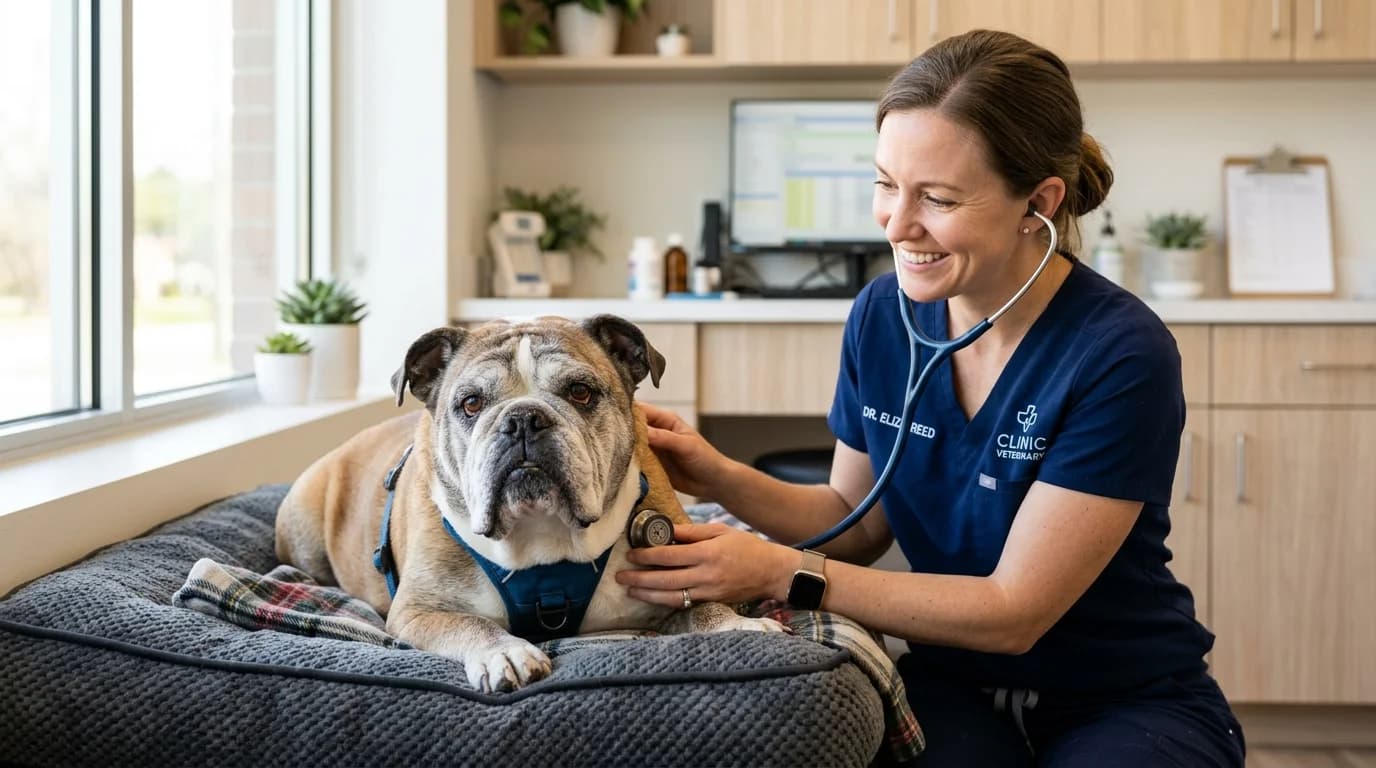
The English Bulldog—officially designated simply as the Bulldog by the American Kennel Club (AKC) and The Kennel Club (UK)—is one of the most culturally iconic, anatomically extreme, and medically scrutinized domestic breeds in veterinary history (Canis lupus familiaris, AKC Non-Sporting Group). Originating in the British Isles during the early 17th century for the violent spectacle of bull-baiting, early bull-baiting ancestors possessed powerful musculature, athletic agility, and pronounced prognathism engineered to pin large bulls by the nose while maintaining an open airway. Following the passage of the Cruelty to Animals Act of 1835 in Great Britain, bull-baiting was outlawed, and fanciers systematically redesigned the breed over subsequent decades: transforming a ferocious working terrier-molosser hybrid into an affectionate, docile, low-slung companion dog defined by severe craniofacial brachycephaly, broad pectoral stature, and a naturally short corkscrew tail.
Morphologically, standard English Bulldogs are heavy-set, low-slung, compact dogs with exceptionally broad shoulders, a roach back (slight dorsal spinal arching), bowed forelimbs, and deep facial folds framing an abbreviated, upturned muzzle:
- Mature Male English Bulldogs: Shoulder height: $14$ to $15\text{ inches}$ ($35.6$ to $38.1\text{ cm}$); adult body mass: approximately $50\text{ lbs}$ ($22.7\text{ kg}$).
- Mature Female English Bulldogs: Shoulder height: $14$ to $15\text{ inches}$ ($35.6$ to $38.1\text{ cm}$); adult body mass: approximately $40$ to $44\text{ lbs}$ ($18.1$ to $20.0\text{ kg}$).
Beyond their cultural role as emblems of determination and gentle companionship, English Bulldogs occupy a pivotal, highly specialized position in comparative veterinary biogerontology, respiratory physiology, and evolutionary genetics. Specifically, the breed serves as the classic domestic model for two complex genetic and physiological phenotypes:
- The Dishevelled-2 (DVL2) Syndrome: A homozygous frameshift deletion causing Robinow-like developmental syndrome, which simultaneously drives extreme brachycephalic craniofacial foreshortening and congenital thoracic vertebral malformations (wedge hemivertebrae and butterfly vertebrae).
- Brachycephalic Obstructive Airway Syndrome (BOAS): A severe, multi-level anatomical obstruction of the upper respiratory tract that generates chronic, extreme negative intrathoracic inspiratory pressures, driving secondary soft-tissue collapse, chronic gastroesophageal reflux, and cardiorespiratory strain.
In comprehensive epidemiological cohorts across the United Kingdom, Scandinavia, and North America, the median life expectancy of the English Bulldog is 8 to 10 years, with primary-care veterinary electronic health records converging at an overall median of 7.4 to 8.4 years.
Despite this statistically abbreviated life expectancy, exceptional English Bulldogs regularly achieve 11, 12, or even 13+ years of age when supported by targeted, proactive veterinary medicine. Achieving this upper demographic tier requires aggressive clinical mitigation of four fundamental, breed-specific medical vulnerabilities:
- Brachycephalic Obstructive Airway Syndrome (BOAS): Aerodynamic resistance dictated by Poiseuille's law, where stenotic nares and elongated soft palates trigger progressive laryngeal saccule eversion and multi-stage laryngeal collapse.
- Thermoregulatory Failure & Malignant Hyperthermia: The anatomical inability to dissipate thermal energy through evaporative mucosal panting, predisposing the breed to fatal heatstroke under moderate ambient temperatures.
- Cardiovascular Overload & Cor Pulmonale: Chronic alveolar hypoxia driving precapillary pulmonary vasoconstriction, secondary pulmonary arterial hypertension, and right ventricular eccentric hypertrophy.
- Congenital Spinal Hemivertebrae & Extreme Chondrodysplasia: Thoracic vertebral wedge deformities (T7–T9) coupled with a breed-wide hip dysplasia prevalence exceeding 70%, creating early biomechanical exhaustion.
To evaluate your Bulldog's biological developmental milestone and translate their chronological calendar age into an exact human age equivalent, use our interactive Dog Age Calculator or reference our comprehensive Dog Age Chart.
Epidemiological Baseline: How Long Do English Bulldogs Live?
Data from academic referral networks, primary-care electronic health record registries (such as VetCompass in the UK), and nationwide pet health insurance databases confirm that the English Bulldog exhibits one of the shortest median life spans among popular companion breeds.
                  ENGLISH BULLDOG LIFESPAN BY COHORT & REGISTRY
+------------------------------------+------------------+-------------------+-----------------------------------------+
| Registry / Cohort Database         | Sample Size (n)  | Reported Median   | Epidemiological Context / Methodology   |
+------------------------------------+------------------+-------------------+-----------------------------------------+
| VetCompass UK (Royal Vet College)  | 2,662 dogs       | 7.39 Years        | Primary-care electronic health records  |
| UK Kennel Club Purebred Survey     | 180 deaths       | 8.40 Years        | Pedigree owner questionnaire mortality  |
| Swedish Agria Pet Insurance Data   | 3,100+ dogs      | 8.0 – 8.8 Years   | Insured Scandinavian veterinary cohort  |
| North American VMDB (Univ Hosps)   | 5,200+ records   | 8.2 – 9.1 Years   | Academic tertiary referral hospitals    |
| Finnish Kennel Club Health Survey  | 640 dogs         | 8.0 Years         | Longitudinal breed registry mortality   |
| Proactive Surgical Longevity Group | Outliers (n)     | 11.2 – 13.5 Years | Early BOAS correction + strict BCS 4/9  |
+------------------------------------+------------------+-------------------+-----------------------------------------+
                   ENGLISH BULLDOG SURVIVAL CURVE (KAPLAN-MEIER)
   Survival
   Probability (%)
     ▲
 100 │═════════════════════════════╗
  80 │                             ╚══════════╗
  60 │                                        ╚══════════╗
  50 │- - - - - - - - - - - - - - - - - - - - - - - - - -╚════ (Median: 7.8–8.2 yrs)
  40 │                                                        ╚══════════╗
  20 │                                                                   ╚═════════╗
   0 │─────────────────────────────────────────────────────────────────────────────╚════►
     0         2         4         6         8        10        12        14
                               Chronological Age (Years)
1. Sex Disparities in English Bulldog Longevity
Epidemiological cohorts reveal a modest but statistically significant survival advantage in females:
- Female English Bulldog Median Lifespan: 8.4 to 9.2 years
- Male English Bulldog Median Lifespan: 7.6 to 8.2 years
The physiological drivers of this disparity reflect both biomechanics and cardiovascular physiology:
- Somatic Mass and Thoracic Airway Loading: Intact and castrated adult male Bulldogs average 15% to 25% higher skeletal and muscular mass ($50–55+\text{ lbs}$ vs. $40–44\text{ lbs}$). Heavier neck girth and hypertrophied pharyngeal soft tissues create substantial mechanical compression over the cervical trachea, magnifying peak inspiratory airway resistance during normal respiration.
- Visceral Adiposity & Diaphragmatic Excursion: Male Bulldogs exhibit higher rates of abdominal visceral fat deposition when desexed, mechanically restricting caudal excursion of the diaphragm during inhalation and accelerating hypoventilation.
To examine how overall body mass, basal metabolic rate, and evolutionary biology govern lifespan across canine breeds, consult our foundational analysis on Why Small Dogs Live Longer Than Large Dogs.
Biogerontology: Airway Fluid Dynamics, DVL2 Genetics & Epigenetic Aging
The biological aging curve of the English Bulldog is shaped by an intersection of fluid mechanical resistance, congenital embryopathy, and cellular senescence. Unlike breeds that age smoothly until geriatric organ failure, the Bulldog's lifespan is constantly compromised by cumulative mechanical exhaustion of the cardiorespiratory axis.
       THE BULLDOG BRACHYCEPHALIC & CARDIORESPIRATORY SENESCENCE CASCADE

     HOMOZYGOUS DVL2 FRAMESHIFT MUTATION (Truncating Variant)
     * Aberrant Wnt signaling pathway during embryogenesis
     * Premature synchondrosis of cranial base (severe brachycephaly)
     * Incomplete vertebral segmentation (thoracic wedge hemivertebrae)
          │
          ▼
     SEVERE AIRWAY LUMINAL RESTRICTION (Poiseuille's Law: R ∝ 1/r⁴)
     * Stenotic external nares (pinched nostrils)
     * Elongated, thickened soft palate overlapping epiglottis
     * Aberrant / hypertrophic intranasal turbinates
          │
          ▼
     CHRONIC SUPRA-PHYSIOLOGICAL NEGATIVE INSPIRATORY PRESSURE
     * Normal canine: -5 to -10 cm H₂O | Bulldog BOAS: -30 to -50 cm H₂O
     * Suction forces drag soft tissues inward into laryngeal lumen
          │
          ▼
     PROGRESSIVE SECONDARY SOFT TISSUE COLLAPSE (Ages 2 to 5)
     * Stage 1: Everted laryngeal saccules prolapse into ventral glottis
     * Stage 2: Cuneiform process medial deviation & loss of cartilage rigidity
     * Stage 3: Corniculate process collapse (critical glottic stenosis)
     * Concomitant hiatal hernia, severe esophagitis & chronic bile vomiting
          │
          ▼
     SYSTEMIC AND CARDIOVASCULAR COMPLICATIONS (Ages 5 to 8+)
     * Chronic alveolar hypoxia -> Precapillary pulmonary vasoconstriction
     * Cor Pulmonale: Right ventricular hypertrophy & congestive heart failure
     * Fatal Malignant Hyperthermia during minimal thermal or emotional stress
     * Median Longevity Limit: 7.8–8.2 Years (Achievable Extension: 11–13 Years)
1. Fluid Dynamics of BOAS: Poiseuille's Law
To understand why English Bulldogs struggle with chronic hypoxia and early systemic wear, veterinary clinicians apply Poiseuille's Law of Laminar Flow, which models flow resistance ($R$) through a tube:
$$R = \frac{8\eta L}{\pi r^4}$$
Where:
- $\eta$ represents dynamic fluid viscosity of air.
- $L$ represents anatomical length of the airway passage.
- $r$ represents the internal luminal radius of the airway.
Because resistance is inversely proportional to the fourth power of the radius ($r^4$), microscopic reductions in airway diameter produce exponential increases in the muscular effort required to inhale:
- A 50% reduction in airway radius (typical for stenotic Bulldog nares) does not double resistance—it increases airway resistance by 16-fold ($2^4 = 16$).
- An 80% reduction in luminal opening increases resistance by a staggering 625-fold.
To overcome this enormous mechanical resistance, an English Bulldog must generate massive negative intrathoracic pressures—reaching $-30\text{ to }-50\text{ cm H}_2\text{O}$ per breath (compared to normal physiological levels of $-5\text{ to }-10\text{ cm H}_2\text{O}$). Over several years, this continuous suction pulls the laryngeal saccules inside out, warps the laryngeal cartilages, and pulls the stomach cranially through the diaphragmatic hiatus, creating lifelong gastrointestinal reflux.
2. Genetics of the Screw Tail & Hemivertebrae: The DVL2 Retrogene
In 2018, an international genetic consortium led by Mansour et al. (PLoS Genetics) sequenced hundreds of purebred dog genomes to discover the mutation responsible for the characteristic Bulldog conformation. They identified a recessive, truncating frameshift deletion in DVL2 (Dishevelled-2).
DVL2 is an essential regulator of the canonical Wnt/beta-catenin signaling pathway, which orchestrates morphogenesis of the neural tube, axial skeleton, and cranial sutures during early fetal development:
- In humans, mutations in DVL2 cause Robinow syndrome, characterized by shortened limbs, facial dysmorphism, hemivertebrae, and a fused tail.
- In the English Bulldog, homozygous DVL2 variants are fixed throughout the standard breed population. The allele forces premature fusion of the cranial basicranial cartilages (spheno-occipital synchondrosis) while arresting normal vertebral body segmentation in the mid-thoracic spine, creating butterfly or wedge-shaped hemivertebrae.
3. Epigenetic Methylation Dynamics in English Bulldogs
Biogerontological research from the University of California San Diego (UCSD; Wang et al., 2020) demonstrates that mammalian DNA methylation profiles change on a logarithmic scale rather than a static linear formula:
$$\text{Human Equivalent Age} = 16 \times \ln(\text{Chronological Canine Age}) + 31$$
Applying this validated epigenetic framework to the English Bulldog reveals an accelerated early physiological progression followed by rapid organ wear:
- At 1 chronological year, an adolescent Bulldog possesses the epigenetic and physiological profile of a 31-year-old human, having completed growth plate fusion and developed primary BOAS symptoms.
- At 4 chronological years, the Bulldog reaches mature mid-life equivalent to 53 human years, the critical clinical window where untreated soft palate elongation causes irreversible secondary laryngeal collapse.
- By 7 chronological years, the Bulldog crosses into advanced geriatric biology (~62 human years), at which point screening for pulmonary hypertension, cor pulmonale, and spinal cord compressive myelopathy becomes urgent.
For a detailed exploration of mammalian DNA methylation curves, read our guide on the Scientific Epigenetic Dog Age Formula.
English Bulldog Human Age Conversion Matrix
Because the English Bulldog experiences early skeletal maturation, intense structural mechanical wear, and accelerated senior decline, conventional linear conversions ("1 dog year = 7 human years") fail to capture true clinical status. The following matrix reflects modern veterinary biogerontological benchmarks:
                    ENGLISH BULLDOG HUMAN AGE CONVERSION MATRIX
+----------------+-------------------+--------------------+-----------------------------------------------+
| Bulldog Age    | Canine Life Stage | Human Equivalent   | Physiological & Clinical Markers              |
+----------------+-------------------+--------------------+-----------------------------------------------+
| 6 Months       | Juvenile / Puppy  | 14 – 16 Years      | Deciduous teeth shed; evaluate stenotic nares |
| 1 Year         | Adolescent Dog    | 28 – 31 Years      | Skeletal growth plate closure; RFGS testing   |
| 2 Years        | Young Adult       | 38 – 40 Years      | Optimal window for prophylactic BOAS surgery  |
| 3 Years        | Adult             | 44 – 46 Years      | Full muscular mass; strict BCS 4.5/9 target   |
| 4 Years        | Adult             | 49 – 52 Years      | Assess for laryngeal saccule eversion/reflux  |
| 5 Years        | Mature Adult      | 55 – 57 Years      | Baseline thoracic radiographs, VHS & SDMA     |
| 6 Years        | Senior (Stage 1)  | 60 – 62 Years      | Official senior entry; bi-annual vet exams    |
| 7 Years        | Senior (Stage 2)  | 64 – 66 Years      | Echocardiogram for right ventricular overload |
| 8 Years        | Senior (Stage 3)  | 68 – 70 Years      | Geriatric milestone; high risk of heatstroke  |
| 9 Years        | Geriatric Dog     | 72 – 74 Years      | Orthopedic mobility support; monitor azotemia |
| 10 Years       | Geriatric Dog     | 76 – 78 Years      | Exceptional longevity; manage spinal arthritis|
| 11 – 12+ Years | Canine Centenarian| 80 – 84+ Years     | Top 3% of breed survival; palliative comfort  |
+----------------+-------------------+--------------------+-----------------------------------------------+
To examine physiological changes across canine aging benchmarks, read our veterinary analysis on How Old is a 10-Year-Old Dog in Human Years.
The 4 Major Breed-Specific Health Vulnerabilities Limiting Lifespan
                        ENGLISH BULLDOG PATHOLOGY DISTRIBUTION
   Percentage of
   Mortality & Morbidity
     ▲
 40% │ ▓▓▓▓▓▓▓▓▓▓▓▓▓
 35% │ ▓▓▓▓▓▓▓▓▓▓▓▓▓
 30% │ ▓▓▓▓▓▓▓▓▓▓▓▓▓
 25% │ ▓▓▓▓▓▓▓▓▓▓▓▓▓          ▓▓▓▓▓▓▓▓▓▓▓▓▓
 20% │ ▓▓▓▓▓▓▓▓▓▓▓▓▓          ▓▓▓▓▓▓▓▓▓▓▓▓▓          ▓▓▓▓▓▓▓▓▓▓▓▓▓
 15% │ ▓▓▓▓▓▓▓▓▓▓▓▓▓          ▓▓▓▓▓▓▓▓▓▓▓▓▓          ▓▓▓▓▓▓▓▓▓▓▓▓▓
 10% │ ▓▓▓▓▓▓▓▓▓▓▓▓▓          ▓▓▓▓▓▓▓▓▓▓▓▓▓          ▓▓▓▓▓▓▓▓▓▓▓▓▓          ▓▓▓▓▓▓▓▓▓▓▓▓▓
  5% │ ▓▓▓▓▓▓▓▓▓▓▓▓▓          ▓▓▓▓▓▓▓▓▓▓▓▓▓          ▓▓▓▓▓▓▓▓▓▓▓▓▓          ▓▓▓▓▓▓▓▓▓▓▓▓▓
  0% └────────────────────────────────────────────────────────────────────────────────────►
         BOAS & Airway         Orthopedic &           Cardiac &             Neoplasia &
          Obstruction            Spinal               Pulmonary              Systemic
1. Brachycephalic Obstructive Airway Syndrome (BOAS)
BOAS is the primary physiological bottleneck defining the English Bulldog's life expectancy. The condition is not a single disease, but a progressive constellation of primary anatomical defects and secondary degenerative changes:
+-------------------------------------------------------+-------------------------------------------------------+
| Primary Congenital Lesions                            | Secondary Acquired Degenerative Lesions               |
+-------------------------------------------------------+-------------------------------------------------------+
| 1. Stenotic Nares: Compressed, pinched nasal alae     | 1. Everted Laryngeal Saccules (Stage 1 Collapse)      |
| 2. Elongated Soft Palate: Extends into glottic opening| 2. Medial Collapse of Cuneiform Cartilages (Stage 2)  |
| 3. Hypoplastic Trachea: Extremely narrow windpipe     | 3. Complete Glottic Obstruction / Collapse (Stage 3)  |
| 4. Aberrant Nasal Turbinates: Occlude posterior airway| 4. Hiatal Hernia & Severe Gastroesophageal Reflux     |
+-------------------------------------------------------+-------------------------------------------------------+
The University of Cambridge Respiratory Function Grading Scheme (RFGS), developed by Dr. Jane Ladlow and colleagues, evaluates Bulldogs before and after a standard 3-minute trot exercise test:
- Grade 0: BOAS-free; clinically silent breathing without stridor or stertor.
- Grade 1: Mild respiratory noise; does not impair exercise tolerance; no surgery indicated.
- Grade 2: Clinically affected; audible stertor/stridor, exercise intolerance, prolonged recovery; surgical correction strongly indicated.
- Grade 3: Severe BOAS; dyspnea, cyanosis, frequent syncope, collapsing episodes; urgent surgical intervention required.
The Proactive Surgical Window: Veterinary surgical specialists strongly emphasize performing proactive corrective airway surgery (staphylectomy via folded-flap palatoplasty or laser resection, combined with vertical wedge or alar fold alarplasty) between 8 and 24 months of age. Performing surgery early, before permanent cartilage fatigue occurs, prevents progression to Stage 2 or Stage 3 laryngeal collapse, fundamentally transforming the dog's multi-year survival curve.
2. Thermoregulatory Breakdown & Fatal Malignant Hyperthermia
Canine biophysics dictates that dogs cannot cool themselves through bodily perspiration because they lack functional eccrine sweat glands across haired skin. Instead, more than 70% of heat dissipation depends strictly on evaporative cooling across the mucosal surfaces of the nasal turbinates and upper respiratory tract during panting.
In English Bulldogs, this heat-dissipation mechanism fails catastrophically:
- Loss of Surface Area: Severe craniofacial foreshortening crumbles and compacts the nasal turbinates into a tangled, obstructed cavity, depriving the dog of the wide surface area needed for water evaporation.
- Dynamic Airway Edema: When ambient temperatures rise above $22^\circ\text{C}\text{ to }24^\circ\text{C}$ ($72^\circ\text{F}\text{ to }75^\circ\text{F}$), the Bulldog pants with greater force. The high velocity airflow across restricted passages causes mucosal friction, dynamic soft tissue vibration, and rapid inflammatory edema.
- The Irreversible Thermal Positive Feedback Loop: As airway tissues swell, luminal resistance skyrockets. The dog must exert more muscular effort to breathe, which generates massive internal metabolic heat, causing core body temperature to spike rapidly above $41.5^\circ\text{C}$ ($106.7^\circ\text{F}$).
- Systemic Collapse: Body temperatures above $41.5^\circ\text{C}$ trigger thermal protein denaturation, endothelial destruction, Disseminated Intravascular Coagulation (DIC), acute renal tubular necrosis, cerebral edema, and death within 45 to 90 minutes.
3. Congenital Spinal Hemivertebrae & Extreme Chondrodysplasia
The English Bulldog exhibits the highest recorded incidence of developmental orthopedic disease of any canine breed:
- Thoracic Wedge Hemivertebrae: Driven by the homozygous DVL2 mutation, thoracic vertebrae (most commonly T7 through T9) fail to segment symmetrically during embryonic growth. They develop into triangular wedges or fragmented butterflies. While many hemivertebrae remain clinically silent, progressive kyphoscoliosis can mechanically compress the spinal cord, leading to progressive hindlimb weakness, ataxia, loss of conscious proprioception, and urinary/fecal incontinence between ages 2 and 6.
- Canine Hip Dysplasia (CHD): According to multi-decade statistical registries from the Orthopedic Foundation for Animals (OFA), over 70% of English Bulldogs have dysplastic hips—the highest rate among all dog breeds. Shallow acetabular sockets and flattened femoral heads produce early cartilaginous erosion and severe compensatory secondary osteoarthritis by mid-life.
To learn more about managing joint degeneration in structurally vulnerable breeds, explore our clinical guide on Large Dog Arthritis Prevention & Care.
4. Cardiovascular Overload: Pulmonary Arterial Hypertension & Cor Pulmonale
Lifelong airway restriction imposes a silent, devastating toll on the canine heart:
- Hypoxic Pulmonary Vasoconstriction: Persistent hypoventilation during sleep and physical activity causes chronic alveolar hypoxia. Pulmonary arterioles respond by constricting to shunt blood to ventilated alveoli.
- Precapillary Pulmonary Hypertension: When chronic airway obstruction causes generalized lung hypoxia, the entire pulmonary arterial bed constricts, permanently increasing vascular resistance.
- Right Ventricular Remodeling: The right ventricle—a thin-walled, compliant chamber designed for low-pressure output—must continuously pump against abnormally high pulmonary pressures. Over years, this causes right ventricular eccentric hypertrophy, tricuspid valve regurgitation, and eventually right-sided congestive heart failure (cor pulmonale), characterized by ascites, pleural effusion, and syncope.
The 5-Pillar Longevity Protocol for English Bulldogs
While their anatomical vulnerabilities are significant, intentional and proactive veterinary medicine enables English Bulldogs to surpass historical lifespan statistics. The following evidence-based protocol provides a comprehensive longevity roadmap:
               THE 5-PILLAR ENGLISH BULLDOG LONGEVITY FRAMEWORK
 ┌───────────────────────────────────────────────────────────────────────────┐
 │ 1. PROACTIVE RESPIRATORY INTERVENTION                                    │
 │    Early BOAS RFGS grading (age 1); folded-flap palatoplasty & alarplasty │
 ├───────────────────────────────────────────────────────────────────────────┤
 │ 2. LEAN BODY COMPOSITION (BCS 4.5/9)                                      │
 │    Strict caloric restriction; eliminates pharyngeal fat & chest drag     │
 ├───────────────────────────────────────────────────────────────────────────┤
 │ 3. RIGOROUS THERMAL MANAGEMENT                                            │
 │    Climate-controlled environments (<22°C/72°F); zero midday summer walks │
 ├───────────────────────────────────────────────────────────────────────────┤
 │ 4. SPINAL & ORTHOPEDIC PRESERVATION                                       │
 │    High-traction flooring; carpeted ramps; marine omega-3s & UC-II        │
 ├───────────────────────────────────────────────────────────────────────────┤
 │ 5. SENIOR CARDIOPULMONARY SURVEILLANCE (AGE 6+)                           │
 │    Bi-annual exams; thoracic radiographs (VHS); echocardiography; SDMA    │
 └───────────────────────────────────────────────────────────────────────────┘
Pillar 1: Proactive Airway Surgery Before Age 2
Do not wait for clinical collapse before addressing stenotic airways:
- Early Examination: Every Bulldog should undergo a formal BOAS respiratory function evaluation by 12 months of age.
- Prophylactic Staphylectomy & Rhinoplasty: Performing a folded-flap palatoplasty (which thins and shortens the soft palate) and a wedge alarplasty (which widens the nostrils) between 8 and 24 months eliminates high negative inspiratory suction forces. This permanently halts the cascade toward secondary laryngeal collapse and reduces lifelong gastrointestinal reflux.
Pillar 2: Strict Lean Body Mass (Target BCS 4.5/9)
Excess somatic adiposity is the single greatest environmental accelerator of BOAS morbidity:
- Adipose tissue is not inert; it accumulates heavily in the pharyngeal walls, tongue base, and soft palate, drastically narrowing the internal diameter of the throat.
- Caloric calculations must be established using exact Resting Energy Requirement (RER) equations: $$\text{RER} = 70 \times (\text{Body Weight in kg})^{0.75}$$
- Maintain adult pet Bulldogs at a lean Body Condition Score (BCS) of 4.5/9 to 5/9, where the ribcage is easily palpable without a thick overlying fat pad, and a distinct abdominal tuck is visible from both dorsal and lateral views.
For clinical dietary adjustments tailored to aging canines, read our resource on Diet and Exercise for Older Dogs.
Pillar 3: Environmental Thermal Protection & Heatstroke Protocol
Bulldog owners must adopt an uncompromising thermal safety protocol:
- The $22^\circ\text{C}$ ($72^\circ\text{F}$) Threshold: Avoid vigorous outdoor exercise or extended sun exposure when ambient temperatures exceed $22^\circ\text{C}$ or relative humidity exceeds 60%.
- Exercise Timing: Confine walks to early morning or late evening hours. Use a well-fitted chest harness exclusively; never attach a leash to a neck collar, which concentrates pressure on the hypoplastic trachea.
- Emergency Kit: Always keep an emergency kit containing a digital rectal thermometer, isopropyl alcohol (to apply to paw pads for rapid evaporative cooling), and cold water bottles in the car and home.
Pillar 4: Joint, Spinal & Ergonomic Management
Preserving mobility is essential to maintain cardiovascular health without overloading the respiratory system:
- Ramp Training: Prevent all vertical jumping on or off furniture, beds, or car boots. Install permanent carpeted ramps to prevent concussive axial shock across dysplastic hips and thoracic hemivertebrae.
- Chondroprotective Supplementation: Initiate daily administration of high-molecular-weight hyaluronic acid, pharmaceutical-grade glucosamine hydrochloride, chondroitin sulfate, and Undenatured Type II Collagen (UC-II) by age 2 to 3.
- Marine Polyunsaturated Fatty Acids: Administer high-potency EPA and DHA fish oil at an anti-inflammatory dose of $100\text{ to }150\text{ mg combined EPA/DHA per kg body weight daily}$.
Pillar 5: Comprehensive Senior Screening Protocol Starting at Age 6
Because English Bulldogs age epigenetically faster than average-sized canines, senior surveillance must commence by age 6 (roughly equivalent to 60 human years):
- Bi-Annual Physical Examinations: Comprehensive thoracic auscultation, lymph node palpation, and skin fold inspection every 6 months.
- Cardiopulmonary Radiography: Annual 3-view thoracic radiographs to assess tracheal luminal diameter, monitor for aspiration pneumonia, and calculate the Vertebral Heart Scale (VHS) to detect early right-sided cardiomegaly.
- Echocardiography & Doppler Blood Pressure: Diagnostic screening for pulmonary arterial hypertension and tricuspid valve regurgitation.
- Senior Chemistry & Renal Biomarkers: Complete blood counts, serum biochemical panels, symmetric dimethylarginine (SDMA), and urinalysis to detect subclinical chronic kidney disease.
To understand the physiological markers that signal the transition into advanced life stages, consult our clinical guide on When Does a Dog Become a Senior.
Structured Clinical FAQs: English Bulldog Longevity
Can an English Bulldog live to be 11, 12, or 13 years old?
Yes. While surviving beyond 11 years represents the upper 5% of the breed's demographic survival curve, it is clinically achievable. Bulldogs that reach this milestone consistently share four specific characteristics:
- They underwent early proactive corrective airway surgery (palatoplasty and rhinoplasty) before age 2.
- They maintained a lifelong lean body condition score (BCS 4.5/9 to 5/9), preventing pharyngeal airway compression.
- Their owners strictly avoided warm or humid outdoor environments.
- They received proactive bi-annual veterinary senior screening and daily joint support starting at age 6.
What is the leading cause of death in English Bulldogs?
According to multi-institutional veterinary epidemiological surveys (including VetCompass UK), the primary causes of mortality in English Bulldogs are:
- Respiratory Failure & BOAS Complications (including acute heatstroke and asphyxiation): Responsible for 25% to 30% of all deaths.
- Neoplasia (Cancer): Responsible for 14% to 18% of deaths, with mast cell tumors, lymphoma, and brain tumors (gliomas) predominating.
- Cardiovascular Collapse & Cor Pulmonale: Responsible for 12% to 15% of deaths.
- Musculoskeletal Failure & Severe Orthopedic Degeneration: Accounting for 10% to 12% of elective euthanasia decisions due to intractable pain or paralysis from spinal hemivertebrae.
Why are English Bulldogs so sensitive to hot weather?
Bulldogs cannot sweat through their skin. Dogs rely strictly on evaporative cooling from the moist mucosal surfaces of their nasal passages and tongue during panting. In English Bulldogs, the shortened, deformed nasal turbinates and stenotic nostrils drastically reduce the surface area available for evaporation. Furthermore, vigorous panting causes their elongated soft palates and pharyngeal tissues to swell rapidly, choking off airflow and creating an irreversible spike in core body temperature ($>41.5^\circ\text{C}$), which triggers fatal heatstroke within an hour.
How do I know if my Bulldog needs BOAS surgery?
Your Bulldog should be evaluated by a veterinary surgeon if they display any of the following clinical signs:
- Noticeable loud snoring or snorting while resting or sleeping (stertor).
- High-pitched whistling or wheezing noises while inhaling (stridor).
- Inability to walk for 10 to 15 minutes in mild weather without severe panting or slowing down.
- Sleep apnea, sleeping with a toy or ball propping open the mouth, or waking up gasping for air.
- Frequent regurgitation of white foamy saliva or undigested food after excitement or drinking water.
- Any episode of gums turning blue or purple (cyanosis) or fainting (syncope).
At what age does an English Bulldog become a senior dog?
Veterinary gerontologists classify an English Bulldog as a senior dog at 6 years of age (roughly equivalent to 60 human years). By age 8, they are considered geriatric. Because their cardiorespiratory and musculoskeletal systems experience accelerated wear, senior Bulldogs should transition to comprehensive bi-annual (every 6 months) physical examinations, blood chemistry panels, and thoracic imaging starting at age 6.
Why do so many English Bulldogs have corkscrew tails and spinal deformities?
The corkscrew tail and characteristic roach back are caused by a recessive, truncating frameshift mutation in the Dishevelled-2 (DVL2) gene, which is fixed throughout the standard breed population. This mutation disrupts the Wnt signaling pathway during embryogenesis, causing failure of normal vertebral body segmentation. This leads to deformed, wedge-shaped thoracic vertebrae (hemivertebrae) and fusion of the caudal vertebrae that form the twisted tail.
How much should a healthy adult English Bulldog weigh?
According to the official AKC breed standard, a mature male English Bulldog in ideal show condition should weigh approximately 50 lbs ($22.7\text{ kg}$), while a mature female should weigh approximately 40 to 44 lbs ($18.1–20.0\text{ kg}$). However, because skeletal dimensions vary widely across bloodlines, pet owners should rely on a clinical Body Condition Score (BCS 4.5/9 to 5/9) rather than a static number on a scale. You should be able to easily feel the ribs under a light layer of muscle and observe a clear waistline behind the ribs when viewed from above.
Can English Bulldogs swim safely?
No. English Bulldogs are anatomically incapable of swimming safely without life vests. Their heavy, dense skeletal structure, disproportionately broad chest, massive cranial mass, short legs, and severely compromised respiratory capacity cause them to sink rapidly. If an English Bulldog falls into a pool or open water, they will drown within seconds. Bulldogs should always wear a certified, properly fitted canine life jacket equipped with a chin-flotation flap whenever near water.
What are the earliest signs of canine cognitive dysfunction (dementia) in older Bulldogs?
As Bulldogs enter geriatric stages (ages 8 to 10+), cognitive decline can manifest through the DISHAA clinical framework:
- Disorientation: Wandering aimlessly, staring at blank walls, or getting stuck in corners or behind open doors.
- Interactions: Becoming unusually withdrawn, clingy, or aggressive toward familiar humans or animal companions.
- Sleep-Wake Cycles: Pacing, whining, or barking aimlessly in the middle of the night while sleeping deeply throughout the day.
- House Soiling: Urinating or defecating indoors shortly after being taken outside.
- Activity & Anxiety: Restlessness, repetitive pacing, or heightened anxiety in response to minor environmental changes.
To evaluate memory decline and behavioral shifts in aging pets, read our comprehensive overview of Signs of Canine Cognitive Dysfunction.
What supplements are clinically supported to help an English Bulldog live longer?
The most evidence-based longevity supplements for English Bulldogs include:
- Marine Omega-3 Fish Oil (EPA & DHA): Administered at $100–150\text{ mg/kg/day}$ to reduce systemic pulmonary inflammation and protect osteoarthritic joints.
- Undenatured Type II Collagen (UC-II): Modulates the immune system via oral tolerance to halt chondrocyte degradation in dysplastic hips and elbows.
- Coenzyme Q10 (Ubiquinol): Supports mitochondrial myocardial energetics and cellular respiration in dogs coping with chronic alveolar hypoxia.
- Probiotics & Gastrointestinal Protectants: Support healthy gastric motility and combat chronic esophageal irritation caused by high negative inspiratory pressure.
To explore further practical strategies for maximizing your older companion's vitality, read our guide on How to Help a Senior Dog Live Longer.
Peer-Reviewed Scientific References
- O'Neill, D. G., Skipper, A. M., Kadhim, J., Church, D. B., Sánchez-Vizcaíno, F., & Brodbelt, D. C. (2022). English Bulldogs in the UK: a VetCompass study of their health and welfare. Canine Medicine and Genetics, 9(1), 5. doi: 10.1186/s40575-022-00118-5.
- Mansour, T. A., Lucot, K., Konopelski, S. E., Dickinson, P. J., Sturges, B. K., Vernau, K. L., et al. (2018). Whole genome variant association across 100 dogs identifies a frame-shift mutation in DVL2 associated with a Robinow-like syndrome in Bulldogs and French Bulldogs. PLoS Genetics, 14(12), e1007850. doi: 10.1371/journal.pgen.1007850.
- Ladlow, J., Liu, N. C., Kalmar, L., & Sargan, D. (2018). Investigation of the respiratory function grading scheme for brachycephalic obstructive airway syndrome (BOAS) in pugs, French bulldogs and bulldogs. Veterinary Record, 182(13), 376. doi: 10.1136/vr.104521.
- Liu, N. C., Troconis, E. L., Kalmar, L., Crosby, D. J., Fitzmaurice, S., & Ladlow, J. F. (2017). Conformational risk factors of brachycephalic obstructive airway syndrome (BOAS) in pugs, French bulldogs, and bulldogs. PLoS ONE, 12(8), e0181928. doi: 10.1371/journal.pone.0181928.
- Kealy, R. D., Lawler, D. F., Ballam, J. M., Mantz, S. L., Biery, D. N., Greeley, E. H., et al. (2002). Effects of diet restriction on life span and age-related changes in dogs. Journal of the American Veterinary Medical Association (JAVMA), 220(9), 1315–1320. doi: 10.2460/javma.2002.220.1315.
- Wang, T., Ma, J., Hogan, A. N., Fong, S., Licon, K., Tsui, B., et al. (2020). Quantitative translation of dog-to-human aging by conserved remodeling of the DNA methylome. Cell Systems, 11(2), 176–185. doi: 10.1016/j.cels.2020.06.006.
- Adams, V. J., Evans, K. M., Sampson, J., & Wood, J. L. (2010). Methods and mortality results of a health survey of purebred dogs in the UK. Journal of Small Animal Practice, 51(10), 512–524. doi: 10.1111/j.1748-5827.2010.00974.x.
- Gutierrez-Quintana, R., Guevar, J., Stalin, C., Faller, K., Yeamans, C., & Penderis, J. (2014). A proposed radiographic classification scheme for congenital thoracic vertebral malformations in brachycephalic "screw-tailed" dog breeds. Veterinary Radiology & Ultrasound, 55(6), 585–591. doi: 10.1111/vru.12172.
- Kaye, B. M., Rutherford, L., Perridge, D. J., & Ter Haar, G. (2015). Relationship between brachycephalic airway syndrome and gastrointestinal signs in three breeds of dog. Journal of Small Animal Practice, 56(11), 669–673. doi: 10.1111/jsap.12414.
- Meola, S. D. (2013). Brachycephalic airway syndrome. Topics in Companion Animal Medicine, 28(3), 91–96. doi: 10.1053/j.tcam.2013.06.004.
- Poncet, C. M., Dupre, G. P., Freiche, V. G., Estrada, M. M., Poubanne, Y. A., & Bouvy, B. M. (2005). Prevalence of gastrointestinal tract lesions in 73 brachycephalic dogs with upper respiratory syndrome. Journal of Small Animal Practice, 46(6), 273–279. doi: 10.1111/j.1748-5827.2005.tb00320.x.
- Torrez, C. V., & Hunt, G. B. (2006). Results of surgical correction of brachycephalic airway syndrome in 92 dogs. Australian Veterinary Journal, 84(4), 115–119. doi: 10.1111/j.1751-0813.2006.tb12760.x.
Veterinary Medical Disclaimer: This clinical article is authored strictly for educational, informational, and comparative biogerontological reference and does not replace individualized examination, diagnosis, or therapeutic intervention by a licensed veterinary professional. Acute respiratory distress (stridor, cyanosis or blue-gray tongue, panting with foam, or postural orthopnea), acute hyperthermia (rectal temperature exceeding $40.5^\circ\text{C} / 105^\circ\text{F}$), or sudden hindlimb paralysis/weakness represent critical, life-threatening emergencies. If your English Bulldog exhibits any of these signs, transport them immediately to the nearest veterinary emergency hospital with climate control and active oxygen therapy.