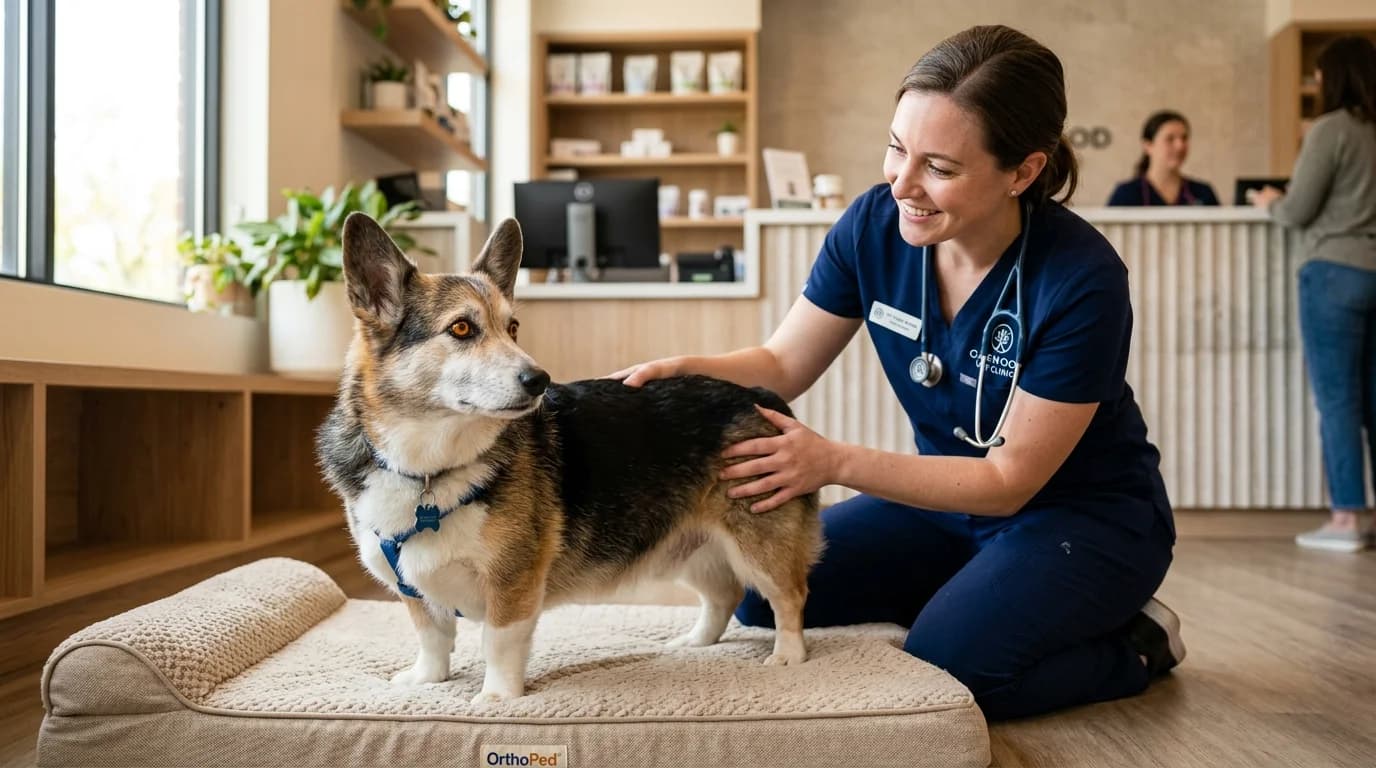
The Pembroke Welsh Corgi (Canis lupus familiaris) is widely celebrated across veterinary medicine, companion animal ethology, and canine genetics as one of the most distinctive, intelligent, and resilient working breeds in history. Developed in Pembrokeshire, southwestern Wales—with documented lineage tracing back through Flemish weavers arriving around 1107 AD under King Henry I—the Pembroke was selectively refined as an indispensable, low-stature drover dog capable of nipping at the heels of cattle while effortlessly ducking beneath retaliatory kicks. Admitted into the American Kennel Club (AKC) Herding Group in 1934, the breed is historically and morphologically distinct from its older cousin, the Cardigan Welsh Corgi (which exhibits a long tail, larger rounded pinnae, heavier skeletal framework, and ancestral ties to Cardiganshire).
Morphologically, standard Pembroke Welsh Corgis are low-set, sturdy, compact herding dogs with fox-like facial contours, erect ears, a naturally short or docked tail, and a thick double coat:
- Male Pembroke Welsh Corgis: Height at the withers: $10$ to $12\text{ inches}$ ($25.4$ to $30.5\text{ cm}$); adult body mass: $27$ to $30\text{ lbs}$ ($12.2$ to $13.6\text{ kg}$).
- Female Pembroke Welsh Corgis: Height at the withers: $10$ to $12\text{ inches}$ ($25.4$ to $30.5\text{ cm}$); adult body mass: $25$ to $28\text{ lbs}$ ($11.3$ to $12.7\text{ kg}$).
Beyond their herding instincts and worldwide cultural status, Pembroke Welsh Corgis occupy a paramount position in comparative veterinary neurology, skeletal genetics, and mammalian biogerontology. In particular, the breed has served as the seminal discovery model for two major mammalian genetic anomalies:
- Chondrodysplastic Dwarfism: Driven by an expressed retrocopy of the Fibroblast Growth Factor 4 (FGF4) gene, which fundamentally remodels the long bones while preserving normal cranial and axial dimensions.
- Canine Degenerative Myelopathy (DM): The foundational canine model for human Amyotrophic Lateral Sclerosis (ALS), linked to a missense mutation in the Superoxide Dismutase 1 (SOD1) gene discovered primarily through genomic sequencing of Pembroke Welsh Corgis.
In large-scale epidemiological cohorts across the United Kingdom, Sweden, and North America, the median life expectancy of the Pembroke Welsh Corgi is 12 to 15 years, with primary-care veterinary registries converging at an overall median of 12.2 to 12.8 years.
Despite this favorable medium-to-long longevity profile, exceptional Corgis regularly achieve 15, 16, or even 17 years of age when supported by targeted, proactive veterinary medicine. Achieving this upper tier of biological longevity requires navigating four profound, breed-specific medical vulnerabilities:
- Intervertebral Disc Disease (IVDD, Hansen Type I): Premature chondroid metaplasia and calcification of the nucleus pulposus driven by FGF4 retrotransposons, exposing an elongated vertebral column to acute compressive rupture under minor biomechanical torque.
- Degenerative Myelopathy (DM): Progressive, adult-onset spinal cord axonopathy caused by toxic SOD1 protein aggregate accumulation, leading to non-painful ascending paraparesis.
- Canine Obesity and Axial Spine Torque: A pronounced genetic and metabolic predisposition to positive energy balance; every single pound of excess adipose tissue creates exponential mechanical shear stress across the thoracolumbar junction (T11–L2).
- Subclinical Hereditary Coagulopathies & Ocular Degeneration: Including type 1 von Willebrand disease (vWD) and progressive retinal atrophy (prcd-PRA), alongside secondary degenerative osteoarthritis.
To evaluate your Corgi's biological life stage and translate their chronological calendar age into an exact human age equivalent, use our interactive Dog Age Calculator or reference our comprehensive Dog Age Chart.
Epidemiological Baseline: How Long Do Corgis Live?
Data from nationwide veterinary primary-care electronic records, insured cohort databases, and academic referral centers reveal that the Pembroke Welsh Corgi exhibits a robust small-to-medium breed survival profile, comfortably outliving larger herding and working breeds.
                  CORGI LIFESPAN BY COHORT & REGISTRY
+------------------------------------+------------------+-------------------+-----------------------------------------+
| Registry / Cohort Database         | Sample Size (n)  | Reported Median   | Epidemiological Context / Methodology   |
+------------------------------------+------------------+-------------------+-----------------------------------------+
| VetCompass UK (Royal Vet College)  | 1,425 dogs       | 12.2 Years        | Primary-care electronic health records  |
| UK Kennel Club Purebred Survey     | 720 deaths       | 12.3 Years        | Pedigree mortality questionnaire        |
| Swedish Agria Pet Insurance Data   | 3,800+ dogs      | 12.1 – 12.6 Years | Insured Scandinavian cohort             |
| North American VMDB (Univ Hosps)   | 4,100+ records   | 12.4 – 12.9 Years | Tertiary academic veterinary clinics    |
| Danish Companion Animal Database   | 580 dogs         | 12.5 Years        | Longitudinal veterinary registry        |
| Exceptional Longevity Cohort       | Outliers (n)     | 15.6 – 17.2 Years | Documented Corgi "centenarians"         |
+------------------------------------+------------------+-------------------+-----------------------------------------+
                     CORGI SURVIVAL CURVE (KAPLAN-MEIER)
   Survival
   Probability (%)
     ▲
 100 │══════════════════════════════════╗
  80 │                                  ╚══════════╗
  60 │                                             ╚══════════╗  (50% Median: 12.4 yrs)
  40 │                                                        ╚══════════╗
  20 │                                                                   ╚═════════╗
   0 │─────────────────────────────────────────────────────────────────────────────╚════►
     0         2         4         6         8        10   12   14   16   18
                               Chronological Age (Years)
1. Sex Disparities in Corgi Longevity
Across multi-institutional epidemiological analyses, female Pembroke Welsh Corgis outlive male Corgis by an average of 6 to 9 months:
- Female Corgi Median Lifespan: 12.6 to 13.2 years
- Male Corgi Median Lifespan: 12.0 to 12.5 years
This phenotypic survival disparity is grounded in biomechanical and physiological factors:
- Somatic Mass and Thoracolumbar Torque: Intact and castrated adult male Corgis carry 10% to 15% more somatic mass ($27–30+\text{ lbs}$ vs. $25–28\text{ lbs}$) with broader thoracic girth. When landing from jumps or ascending stairs, this increased body mass generates significantly higher dynamic compressive loads across the T11–L2 disc spaces, compounding the incidence of high-grade disc extrusions and postoperative morbidity.
- Adipokine and Inflammatory Profiles: Castrated males frequently exhibit faster visceral adiposity accretion post-gonadectomy, shifting serum cytokine balances toward persistent low-grade systemic inflammation that accelerates osteoarthritic joint destruction.
To explore how body mass, metabolic rate, and evolutionary biology dictate life expectancy across different canine demographics, read our foundational analysis on Why Small Dogs Live Longer Than Large Dogs.
Biogerontology: Cellular Energetics, Chondrodysplastic Biomechanics & Epigenetic Aging in Corgis
The longevity clock of the Pembroke Welsh Corgi presents a fascinating dichotomy: while the breed benefits from the cellular metabolic longevity characteristic of smaller dogs, it is constrained by a distinct structural vulnerability in skeletal development and neuroaxonal integrity.
       THE CORGI CHONDRODYSPLASTIC BIOMECHANICS & NEUROLOGICAL CASCADE

    EXPRESSED FGF4 RETROGENE INSERTION (Chromosome 18 & Chromosome 12)
    * Inappropriate local overexpression of Fibroblast Growth Factor 4
    * Premature arrest of chondrocyte proliferation in long bone physes
         │
         ▼
    ANATOMICAL DWARFISM COUPLED WITH EXTENDED VERTEBRAL AXIS
    * Shortened, bowed antebrachii (radius curvature) & valgus alignment
    * High cantilever bending moment across thoracolumbar spine (T11–L2)
    * Early chondroid metaplasia: Nucleus pulposus dehydrates & calcifies by age 1–2
         │
         ▼
    MECHANICAL OR OXIDATIVE STRESS ACCELERATORS
    * Jumping from elevations / stair repetition -> High peak disc shear stress
    * Obesity (BCS ≥ 7/9) -> Adds 30–50% static mechanical burden on discs
    * Concurrent SOD1 mutant genotype -> Spinal cord motor neuron oxidative stress
         │
         ▼
    PHENOTYPIC SENESCENCE MORBIDITIES (Onset Ages 7 to 11+)
    * Acute Hansen Type I IVDD: Dorsal disc herniation, spinal cord compression
    * Degenerative Myelopathy (DM): Progressive, non-painful thoracic/lumbar axonopathy
    * Secondary Coxofemoral & Elbow Osteoarthritis: Compensatory cartilage erosion
    * Median Longevity Gate: 12.4 Years (Achievable Extension: 15–17 Years)
1. The Chondrodysplasia Dilemma: FGF4 Retrotransposons
Unlike breeds whose small size is governed by generalized somatotropic dwarfism (e.g., lower circulating IGF-1 in Chihuahuas or Toy Poodles), the Pembroke Welsh Corgi possesses disproportionate dwarfism. Genomic analyses led by Parker et al. (Science, 2009) and Brown et al. (PNAS, 2017) demonstrated that canine chondrodysplasia is caused by an expressed FGF4 retrogene insertion on chromosome 18 (CFA18), often compounded in chondrodystrophic breeds by an additional FGF4 insertion on chromosome 12 (CFA12).
This ectopic FGF4 signaling alters the normal timing of endochondral ossification. While the long bones of the limbs stop growing prematurely (giving Corgis their beloved short legs), the axial vertebral column continues growing to normal herding-dog length.
Crucially, ectopic FGF4 expression drives accelerated degeneration of the intervertebral discs. In normal non-chondrodystrophic dogs, the gel-like nucleus pulposus retains high proteoglycan and water content well into senior years. In Corgis, chondroid metaplasia occurs before 12 to 24 months of age: the gelatinous core is replaced by dense, calcified hyaline cartilage that lacks shock-absorbing elasticity, transforming each disc into a brittle mechanical fulcrum.
2. Epigenetic Methylation Dynamics in Corgis
Epigenetic biogerontology pioneered by the University of California San Diego (UCSD; Wang et al., 2020) proves that canine chronological age does not align with a static linear multiplier. Instead, targeted DNA methylation profiling across conserved mammalian cytosine-phosphate-guanine (CpG) islands reveals a logarithmic remodeling trajectory:
$$\text{Human Equivalent Age} = 16 \times \ln(\text{Chronological Canine Age}) + 31$$
For a Pembroke Welsh Corgi, epigenetic progression follows this distinct physiological trajectory:
- At 1 chronological year, an adolescent Corgi displays an epigenetic profile comparable to an 18-to-20-year-old human, having completed growth plate closure and sexual maturation.
- By 5 chronological years, the Corgi reaches mature mid-life (~46 to 48 human years), at which point disc calcification is radiographically evident.
- At 10 chronological years, the Corgi crosses into the geriatric threshold (~68 to 70 human years), where vigilance for degenerative myelopathy and renal biomarker changes becomes vital.
For a mathematical examination of canine epigenetic curves, read our in-depth treatise on the Scientific Epigenetic Dog Age Formula.
Corgi Human Age Conversion Matrix
Because the Pembroke Welsh Corgi transitions from rapid juvenile development into an extended, relatively stable adult plateau before entering senior vulnerability, standard linear conversions are clinically inaccurate. The following matrix reflects modern veterinary biogerontological benchmarks:
                      CORGI HUMAN AGE CONVERSION MATRIX
+--------------+-------------------+--------------------+-----------------------------------------------+
| Corgi Age    | Canine Life Stage | Human Equivalent   | Physiological & Clinical Markers              |
+--------------+-------------------+--------------------+-----------------------------------------------+
| 6 Months     | Juvenile / Puppy  | 10 – 12 Years      | Deciduous dentition shed; physeal closure     |
| 1 Year       | Adolescent Dog    | 18 – 20 Years      | Skeletal maturity; early nucleus metaplasia   |
| 2 Years      | Young Adult       | 25 – 27 Years      | Full muscular mass; OFA hip/eye/DM baseline   |
| 3 Years      | Adult             | 31 – 33 Years      | Peak agility; strict weight control required  |
| 4 Years      | Adult             | 37 – 39 Years      | Prime working form; evaluate spinal posture   |
| 5 Years      | Mature Adult      | 43 – 45 Years      | Annual spinal & orthopedic screening window   |
| 6 Years      | Mature Adult      | 48 – 50 Years      | Baseline chemistry panel, SDMA, and urinalysis|
| 7 Years      | Senior (Stage 1)  | 54 – 56 Years      | Earliest muzzle graying; bi-annual vet visits |
| 8 Years      | Senior (Stage 2)  | 60 – 62 Years      | High-risk window for Hansen Type I/II IVDD    |
| 9 Years      | Senior (Stage 3)  | 65 – 67 Years      | Peak onset age for Degenerative Myelopathy    |
| 10 Years     | Geriatric         | 70 – 72 Years      | Proprioceptive reflexes check; renal monitor  |
| 11 Years     | Geriatric         | 75 – 77 Years      | Mobility support; evaluate DISHA score (CCD)  |
| 12 Years     | Geriatric (Median)| 80 – 82 Years      | Median longevity threshold; cardio-renal care |
| 13 Years     | Centenarian       | 85 – 87 Years      | Top 20% survivor; comprehensive comfort care  |
| 14 Years     | Exceptional       | 90 – 92 Years      | Elite 10% survivor; preserved neuro function  |
| 15+ Years    | Super-Centenarian | 95+ Years          | Exceptional genetic longevity outlier         |
+--------------+-------------------+--------------------+-----------------------------------------------+
For developmental milestones during the first year of life, reference our Puppy Growth Stages & Human Age Chart, or see our analysis on How Old is a 10 Year Old Dog in Human Years.
Critical Genetic & Clinical Health Predispositions
Maximizing your Pembroke Welsh Corgi's biological potential requires mastering the breed's major genetic, orthopedic, and neurological predispositions.
                       CORGI CLINICAL VULNERABILITY MATRIX
+-------------------------------------+------------------+-------------------+-----------------------------------------+
| Condition / Pathology               | Genetic / Etiol  | Peak Onset Age    | Clinical Hallmark / Diagnostic Marker   |
+-------------------------------------+------------------+-------------------+-----------------------------------------+
| Intervertebral Disc Disease (IVDD)  | *FGF4* (CFA18/12)| 3 – 8 Years       | Acute back pain, arched spine, paresis  |
| Degenerative Myelopathy (DM)        | *SOD1* (E40K) hom| 8 – 12 Years      | Non-painful hindlimb ataxia, knuckling  |
| Canine Obesity & Satiety Defect     | Polygenic / diet | 2 – 7 Years       | Loss of waistline, BCS ≥ 6/9, lethargy  |
| Hip Dysplasia (Canine HD)           | Polygenic laxity | 1 – 5 Years       | "Bunny-hopping" gait, morning stiffness |
| von Willebrand Disease (vWD Type I) | *vWF* deficiency | Any (Subclinical) | Prolonged mucosal bleeding, low vWF:Ag  |
| Progressive Retinal Atrophy (PRA)   | *prcd* mutation  | 4 – 8 Years       | Nyctalopia (night blindness), tapetal hyper|
| Canine Cognitive Dysfunction (CCD)  | Neurodegeneration| 11 – 15+ Years    | Disorientation, nocturnal wandering, DISHA|
+-------------------------------------+------------------+-------------------+-----------------------------------------+
1. Intervertebral Disc Disease (IVDD, Hansen Type I)
Intervertebral Disc Disease represents the single most prevalent emergency condition threatening mobility and life expectancy in Corgis.
                   HANSEN TYPE I IVDD PATHOPHYSIOLOGY

    CHONDROID METAPLASIA (Age 1–2 Years, Accelerated by *FGF4*)
    * Glycosaminoglycans replaced by collagen fibers
    * Progressive calcification and micro-fracturing of nucleus pulposus
                                  │
                                  ▼
    BIOMECHANICAL SHEAR FAILURE (Jumping, Stair Landing, Axial Torsion)
    * Dorsal annulus fibrosus tears under acute cantilever compression
    * Extrusion of calcified nuclear material into spinal canal
                                  │
                                  ▼
    ACUTE MECHANICAL CONTUSION & SPINAL CORD ISCHEMIA
    * Direct compression of ascending sensory & descending motor tracts
    * Secondary vascular spasm, local hemorrhage, and edema
                                  │
                                  ▼
    CLINICAL MANIFESTATION (Graded 1 through 5)
    * Grade 1: Spinal hyperpathia, arched back, abdominal guarding
    * Grade 2: Ambulatory paraparesis, hindlimb ataxia, delayed proprioception
    * Grade 3: Non-ambulatory paraparesis (motor function present, cannot stand)
    * Grade 4: Paraplegia with intact deep pain perception (nociception)
    * Grade 5: Paraplegia with LOSS of deep pain perception (Surgical Emergency!)
A. Clinical Grading and the Critical 24–48 Hour Window
When a disc extrudes into the vertebral canal, secondary spinal cord injury begins instantly. The prognosis for functional recovery depends directly on the initial neurological grade and the speed of veterinary intervention:
- Grade 1 to 2: Often managed conservatively with strict cage rest (4 to 6 weeks), multimodal analgesia (gabapentin, anti-inflammatory agents), and physical rehabilitation.
- Grade 4 to 5: Represents a decompressive surgical emergency. Studies demonstrate that dogs presenting with Grade 5 IVDD (loss of deep nociception) who receive emergency surgical decompression (hemilaminectomy) within 24 to 48 hours have a 50% to 60% chance of walking again. Delay beyond 48 hours dramatically increases the risk of irreversible paraplegia or fatal ascending progressive myelomalacia (softening and necrosis of the spinal cord).
B. Diagnostics and Prevention
Traditional radiographs (X-rays) can reveal narrowed intervertebral disc spaces or calcified discs within the invertebral foramen, but Magnetic Resonance Imaging (MRI) is the unquestioned gold standard. MRI reveals the exact volume of extruded disc material, precise vertebral localization (most commonly T12–L1 or L1–L2 in Corgis), and the degree of internal spinal cord edema.
2. Canine Degenerative Myelopathy (DM)
Canine Degenerative Myelopathy is a progressive neurodegenerative disease of the spinal cord that holds deep scientific significance: Pembroke Welsh Corgis were the primary breed that enabled veterinary geneticists to unlock its molecular pathology.
                   DEGENERATIVE MYELOPATHY (SOD1) PROGRESSION

     HOMOZYGOUS MUTATION IN SUPEROXIDE DISMUTASE 1 GENE (*SOD1* E40K)
                                  │
                                  ▼
     MISFOLDED SOD1 PROTEIN AGGREGATION IN SPINAL CORD NEURONS
     * Impaired axonal transport, mitochondrial failure, and microglial activation
     * Demyelination and axonal loss in dorsolateral and ventrolateral funiculi
                                  │
                                  ▼
     STAGE 1: ASYMMETRICAL PELVIC LIMB ATAXIA (Ages 8 to 11)
     * "Drunken" sway in hindquarters; scuffing of dorsal toenails (worn center claws)
     * Delayed proprioceptive placing (slow to correct knuckled paws)
     * COMPLETELY NON-PAINFUL (Key differentiator from acute IVDD)
                                  │
                                  ▼
     STAGE 2: PARAPLEGIA & URINARY/FECAL INCONTINENCE (6–12 Months Post-Onset)
     * Loss of weight-bearing motor function in rear limbs; reflex flaccidity
     * Loss of voluntary sphincter control; transition to canine mobility cart
                                  │
                                  ▼
     STAGE 3: ASCENDING TETRAPARESIS & BRAINSTEM INVOLVEMENT (14–24 Months)
     * Weakness extends to thoracic limbs, intercostal musculature, and cranial nerves
     * Respiratory compromise; humane euthanasia indicated to prevent asphyxiation
A. The SOD1 Mutation and OFA Testing
In 2009, a collaborative team from the University of Missouri and the Broad Institute (Awano et al., PNAS) established that DM in dogs is caused by a transition mutation (c.118G>A, p.E40K) in the Superoxide Dismutase 1 (SOD1) gene on canine chromosome 31. This mutation mirrors the classic familial ALS mutation found in human patients.
Through the Orthopedic Foundation for Animals (OFA), all Corgis should be DNA-screened:
- Clear (Normal/Normal): Two copies of the normal gene; extremely low risk of developing DM.
- Carrier (Normal/Mutant): Carries one copy; will not develop clinical disease, but passes the allele to 50% of offspring.
- At-Risk (Mutant/Mutant): Carries two copies of the mutant allele. Crucially, not all genetically At-Risk Corgis develop clinical DM, indicating that unknown epigenetic, environmental, or secondary modifier genes modulate disease penetrance.
B. Crucial Differential: DM vs. IVDD
A critical clinical error in geriatric Corgi care is confusing DM with IVDD:
- IVDD is PAINFUL: Dogs present with paraspinal muscle spasms, guarding, vocalization, and acute onset (hours to days).
- DM is ENTIRELY PAINLESS: Dogs display slow, insidious, painless ataxia over months. A Corgi that cries out when touched does not have DM as the primary cause of pain.
While there is currently no cure for DM, intensive physical therapy (hydrotherapy, underwater treadmill, proprioceptive balancing exercises) has been scientifically proven to nearly double the duration of ambulatory mobility in affected dogs (Kathmann et al., 2006).
3. Obesity: The Silent Biomechanical Accelerator
In companion animal practice, obesity is the single most lethal modifiable threat to Corgi longevity. Due to their deep pectoral cage and extremely short humerus and femur lengths, excess adiposity alters their center of mass, transforming the spine into a sagging bridge under unsustainable tension.
                     IMPACT OF BODY CONDITION ON CORGI SPINAL HEALTH
  Ideal BCS (4.5 to 5 / 9)                Obese BCS (7 to 9 / 9)
  ─────────────────────────               ──────────────────────
  • Visible abdominal tuck                • Loss of waist; flat or sagging lumbar spine
  • Ribs easily palpable under light skin • Ribs buried under thick subcutaneous fat
  • Minimal biomechanical sag             • Severe downward gravitational pull on T10–L2
  • Low baseline systemic cytokines       • Adipose tissue continuously secretes TNF-α & IL-6
  • Median Lifespan: 13.5–15+ Years       • Median Lifespan: 10.5–11.8 Years (2–3 Yr Loss!)
Landmark canine longevity research (Kealy et al., JAVMA, 2002) conducted over a 14-year period proved that dogs maintained on a 25% diet restriction to maintain lean body condition outlived their ad-libitum-fed littermates by an average of 1.8 to 2.0 years, while significantly delaying the onset of chronic joint diseases. For a Corgi, maintaining a lean Body Condition Score (BCS 4.5/9) can quite literally mean the difference between walking into old age or suffering an early paralyzed demise.
4. von Willebrand Disease (vWD Type I) and Ocular Conditions
- Type I von Willebrand Disease: An inherited autosomal incomplete dominant bleeding disorder characterized by a quantitative deficiency of von Willebrand factor (vWF)—the plasma protein required for normal platelet adhesion to damaged vascular endothelium. Affected Corgis may appear clinically normal until undergoing spay/neuter surgery, spinal hemilaminectomy, or dental extractions, where life-threatening hemorrhage can occur. Pre-surgical buccal mucosal bleeding time (BMBT) or quantitative vWF antigen testing (vWF:Ag) is standard veterinary protocol.
- Progressive Retinal Atrophy (prcd-PRA): An inherited bilateral retinal photoreceptor degeneration. Rods degenerate first (causing night blindness or nyctalopia), followed by cones, leading to complete blindness between 4 and 8 years of age. DNA testing allows complete eradication through selective breeding.
To read more about joint care and preventing systemic inflammatory cascades in older dogs, see our guide on Large Dog Arthritis Prevention & Care.
The 5-Pillar Veterinary Longevity Protocol for Corgis
To help your Pembroke Welsh Corgi surpass the median baseline and reach 14 to 17 years of age in comfort and vigor, follow this evidence-based 5-Pillar Longevity Protocol:
                  THE 5-PILLAR CORGI LONGEVITY PROTOCOL

    [ PILLAR 1: SPINAL ERGONOMICS & ENVIRONMENTAL MODIFICATION ]
    * Pet ramps for all furniture; strict ban on free jumping from beds/cars
    * Non-slip runner rugs across hardwood/tile floors to eliminate splay injuries
    * Harness-only leash walking (zero cervical neck collars)

    [ PILLAR 2: STRICT BCS 4.5/9 & SATIETY-FOCUSED NUTRITION ]
    * Daily caloric computation (Resting Energy Requirement: 70 * BW_kg^0.75)
    * High-protein (≥ 26-28% DM), moderate-fat, high-fiber formulation
    * Green bean / vegetable substitution to maintain gastric fullness

    [ PILLAR 3: EARLY NEUROLOGICAL & GENETIC BASELINE TESTING ]
    * OFA DNA screening for SOD1 (DM) and vWF (bleeding disorder) in puppyhood
    * Baseline orthomedical spinal evaluation by 24 months of age
    * Annual proprioceptive reflex assessments (knuckling latency test)

    [ PILLAR 4: TARGETED JOINT & NEUROPROTECTIVE SUPPLEMENTATION ]
    * Marine Omega-3 Fatty Acids (EPA + DHA: 100–150 mg/kg daily)
    * Undenatured Type II Collagen (UC-II) + Glucosamine / Chondroitin sulfate
    * Neuro-antioxidants: Alpha-lipoic acid, CoQ10, Vitamin E, and L-carnitine

    [ PILLAR 5: BI-ANNUAL SENIOR WELLNESS PROTOCOLS (AGE 7+) ]
    * Every 6 months: Comprehensive CBC, Chem-24, SDMA renal panel, and Urinalysis
    * Annual indirect Doppler blood pressure and abdominal ultrasound screening
    * Cognitive decline tracking using the clinical DISHA scoring rubric
Pillar 1: Spinal Ergonomics & Home Environmental Modification
Because chondrodystrophic discs are vulnerable to mechanical shear forces, preventing trauma is paramount:
- Ramps, Never Stairs: Eliminate jumping off high beds, sofas, or vehicle tailgates. Train your Corgi to use angled, non-slip indoor ramps from puppyhood.
- Floor Traction: Smooth hardwood, laminate, or tile flooring causes hindlimb slippage ("splaying"), which exerts severe rotational torque on the lumbar spine. Install non-slip rubber-backed runner rugs throughout primary traffic corridors.
- Ergonomic Harnesses: Never attach a leash to a neck collar for walking. A sudden pull on a collar transfers acute torque straight down the cervical and thoracolumbar spine. Use a well-fitted, Y-shaped chest harness that distributes tension evenly across the sternum.
Pillar 2: Strict Body Condition Score (BCS 4.5/9) & Targeted Nutrition
To keep an adult Corgi lean:
- Calculate Precise RER: Do not rely on generic feeding charts on kibble bags. Compute exact Resting Energy Requirements: $$\text{RER (kcal/day)} = 70 \times (\text{Body Weight in kg})^{0.75}$$
- Factor in Activity Multipliers: For a neutered adult companion Corgi, daily caloric needs are typically $1.2 \times \text{RER}$. If your 27-lb Corgi requires ~550 kcal/day, every dog biscuit (often 40–80 kcal) represents a massive 10% to 15% caloric surplus.
- Satiety Tactics: Corgis are notorious for insatiable appetites. Incorporate steamed green beans, pureed pumpkin, or veterinary satiety diets rich in insoluble dietary fiber to promote gastric distension without excess calories.
For complete nutritional protocols across life stages, see our guide on Diet and Exercise for Older Dogs.
Pillar 3: Early Neurological & Genetic Baseline Testing
Every Corgi owner should know their dog's genetic status:
- Verify SOD1 status through OFA or an accredited genetic laboratory. While being "At-Risk" does not guarantee clinical DM, it establishes the need for early baseline neurological monitoring.
- Have your veterinarian perform proprioceptive placing tests at every routine checkup. The earliest sign of DM or occult spinal compression is a delayed return to normal paw positioning after the foot is placed dorsum-down on the floor.
Pillar 4: Targeted Joint & Neuroprotective Supplementation
- High-Dose Marine Omega-3s (EPA & DHA): Administer cold-water fish oil or concentrated marine lipid supplements at a veterinary anti-inflammatory dosage of $100\text{ to }150\text{ mg combined EPA+DHA per kg of body weight}$. Omega-3s competitively displace arachidonic acid in cell membranes, reducing the synthesis of inflammatory prostaglandins and leukotrienes.
- Cartilage Matrix Substrates: Combine glucosamine hydrochloride ($500\text{ mg}$), chondroitin sulfate ($400\text{ mg}$), and Undenatured Type II Collagen (UC-II) ($40\text{ mg/day}$). UC-II works through oral tolerance to downregulate inflammatory T-cell responses in articular cartilage.
- Neuro-Antioxidants: For aging Corgis, supplementation with Vitamin E, coenzyme Q10 (CoQ10), and acetyl-L-carnitine helps combat mitochondrial reactive oxygen species in the spinal cord and central nervous system.
Pillar 5: Bi-Annual Senior Surveillance (Starting Promptly at Age 7)
Because dogs age significantly faster than humans, an annual checkup for a senior Corgi is the biological equivalent of a human seeing a doctor once every 4 to 5 years. Starting at age 7, transition to bi-annual (every 6 months) comprehensive wellness exams:
- Complete Blood Count (CBC) & Serum Chemistry: Screening for hepatic enzyme elevation, glucose dysregulation, and electrolyte shifts.
- Symmetric Dimethylarginine (SDMA): A sensitive biomarker of renal clearance that detects chronic kidney disease (CKD) when only 25% to 40% of nephron function is lost, long before traditional serum creatinine rises.
- Indirect Doppler Blood Pressure: Identifying occult systemic hypertension, which causes progressive damage to renal, retinal, and cerebral microvasculature.
- Cognitive Function Assessment: Evaluate cognitive function using the standardized DISHA framework:
- D - Disorientation: Getting trapped behind doors, staring at walls.
- I - Interactions: Changes in social attachment or irritability.
- S - Sleep-wake cycles: Pacing and vocalizing at 2 AM while sleeping heavily during the day.
- H - Housetraining: Inappropriate indoor elimination without medical cause.
- A - Activity changes: Apathy or repetitive behaviors.
For more details on navigating canine cognitive aging, explore our dedicated resource on Signs of Canine Cognitive Dysfunction, and learn more about age transitions in When Does a Dog Become a Senior.
Frequently Asked Questions
What is the average lifespan of a Pembroke Welsh Corgi?
Large-scale veterinary epidemiological registries (such as the UK VetCompass database and Swedish pet insurance registries) establish that the median lifespan of a Pembroke Welsh Corgi is 12 to 15 years, with population medians converging between 12.2 and 12.8 years. When provided with exceptional spinal care, weight management, and preventative senior wellness screenings, well-cared-for Corgis regularly reach 14 to 15 years, with documented outliers reaching 16 or 17 years.
Can a Pembroke Welsh Corgi live to be 15, 16, or 17 years old?
Yes. While dogs surviving beyond 15 years represent the upper 5% to 10% of the breed's demographic survival curve (canine "centenarians"), it is biologically achievable. Universal traits observed among Corgis that reach 15–17 years include lifelong lean body condition (BCS 4.5/9), avoidance of high-impact spinal trauma (no vertical jumping), non-carrier or carrier (non-penetrant) SOD1 genetic status, rigorous dental hygiene, and proactive bi-annual veterinary monitoring after age 7.
What is the leading cause of death in Pembroke Welsh Corgis?
The leading causes of mortality in Pembroke Welsh Corgis are neoplasia (cancer), accounting for approximately 28% to 32% of all deaths, followed closely by neurological conditions (specifically fatal IVDD complications and Degenerative Myelopathy) accounting for 18% to 22%, and kidney or cardiovascular failure in advanced geriatric years.
How do I know if my Corgi has IVDD or Degenerative Myelopathy (DM)?
The fundamental clinical distinction between IVDD and DM is pain:
- IVDD is acute and painful: Dogs exhibit muscle tremors, an arched back, tucked abdomen, whining or crying when lifted, and may suddenly lose the ability to move their back legs within hours.
- DM is chronic, insidious, and completely painless: Dogs typically begin dragging one rear paw or showing a wobbly, swaying gait over months without any sign of distress or discomfort. Any Corgi in acute pain is suffering from IVDD, spinal trauma, or discospondylitis—not DM.
Can Degenerative Myelopathy (DM) in Corgis be cured or slowed down?
Currently, there is no curative medical therapy or gene therapy for canine DM. However, peer-reviewed clinical research (Kathmann et al., 2006) proves that early, intensive physical therapy and hydrotherapy (underwater treadmill exercise, passive range-of-motion, active balancing) significantly extends the ambulatory period—often keeping dogs mobile for nearly double the time compared to inactive dogs. Custom canine mobility carts also provide exceptional quality of life during intermediate disease stages.
Why are Corgis so prone to back and spine problems?
Corgis possess disproportionate chondrodysplastic dwarfism caused by an expressed Fibroblast Growth Factor 4 (FGF4) retrogene insertion on chromosome 18. This genetic alteration stunts long bone growth while leaving the vertebral column normal length. Ectopic FGF4 expression also accelerates chondroid metaplasia in the intervertebral discs: by age 1 to 2, the gelatinous shock-absorbing center of their discs calcifies and dehydrates, making the discs brittle and highly prone to rupture under normal mechanical bending forces.
How much should an adult Pembroke Welsh Corgi weigh?
According to the official AKC breed standard, an adult male Pembroke Welsh Corgi in show condition should not weigh more than 30 lbs ($13.6\text{ kg}$), with an ideal working weight between 27 and 30 lbs ($12.2–13.6\text{ kg}$). Adult females should weigh between 25 and 28 lbs ($11.3–12.7\text{ kg}$). However, many pet Corgis with smaller skeletal frames should weigh between 22 and 26 lbs. Always rely on a clinical Body Condition Score (BCS 4.5/9, where ribs are easily felt and a distinct waistline is visible) rather than a static number on a scale.
Should Corgis be allowed to use stairs or jump on couches?
No. Veterinary orthopedic surgeons and neurologists strongly recommend prohibiting Corgis from jumping on or off furniture (couches, beds, vehicles) and minimizing daily stair climbing. The downward landing impact generates high dynamic compressive and shear forces across the calcified thoracolumbar disc spaces, representing the most common mechanical trigger for acute disc rupture. Install dog ramps with high-traction carpeting next to all elevated surfaces.
When does a Pembroke Welsh Corgi officially become a "senior" dog?
A Pembroke Welsh Corgi officially enters the senior life stage at 7 to 8 years of age (roughly equivalent to 54 to 60 human years). By age 10 to 11, they are considered geriatric. Because spinal conditions, renal changes, and cognitive decline accelerate rapidly during this phase, senior Corgis should transition to bi-annual (every 6 months) veterinary examinations starting at age 7.
What are the best supplements to extend a Corgi's healthy lifespan?
The most clinically supported longevity supplements for Corgis include:
- Marine Omega-3 Fish Oil (EPA & DHA): Administered at $100–150\text{ mg/kg/day}$ to reduce systemic and articular inflammation.
- Chondroprotective Joint Agents: High-purity glucosamine hydrochloride, chondroitin sulfate, and Undenatured Type II Collagen (UC-II) to nourish joint cartilage.
- Mitochondrial Antioxidants: CoQ10, Vitamin E, and L-carnitine to protect motor neurons and support myocardial energetics.
For further actionable insights on maximizing your older companion's vitality, read our guide on How to Help a Senior Dog Live Longer.
Peer-Reviewed Scientific References
- Awano, T., Johnson, G. S., Wade, C. M., Katz, M. L., Johnson, G. C., Taylor, J. F., et al. (2009). Genome-wide association analysis reveals a SOD1 mutation in canine degenerative myelopathy that resembles amyotrophic lateral sclerosis. Proceedings of the National Academy of Sciences (PNAS), 106(8), 2794–2799. doi: 10.1073/pnas.0812297106.
- Parker, H. G., VonHoldt, B. M., Quignon, P., Margulies, E. H., Shao, S., Mosher, D. S., et al. (2009). An expressed Fgf4 retrogene on chromosome 18 is associated with canine chondrodysplasia. Science, 325(5943), 995–998. doi: 10.1126/science.1173275.
- Brown, E. A., Dickinson, P. J., Mansour, T., Frattini, S., Aguilar, M., Rebhun, R. B., et al. (2017). FGF4 retrogene on CFA12 is responsible for chondrodystrophy and intervertebral disc disease in dogs. Proceedings of the National Academy of Sciences (PNAS), 114(43), 11476–11481. doi: 10.1073/pnas.1708871114.
- O'Neill, D. G., Church, D. B., McGreevy, P. D., Thomson, P. C., & Brodbelt, D. C. (2013). Longevity and mortality of owned dogs in England. The Veterinary Journal, 198(3), 638–643. doi: 10.1016/j.tvjl.2013.09.020.
- Kealy, R. D., Lawler, D. F., Ballam, J. M., Mantz, S. L., Biery, D. N., Greeley, E. H., et al. (2002). Effects of diet restriction on life span and age-related changes in dogs. Journal of the American Veterinary Medical Association (JAVMA), 220(9), 1315–1320. doi: 10.2460/javma.2002.220.1315.
- Kathmann, I., Cizinauskas, S., Doherr, M. G., Steffen, F., & Jaggy, A. (2006). Daily controlled physiotherapy increases survival time in dogs with suspected degenerative myelopathy. Journal of Veterinary Internal Medicine, 20(4), 927–932. doi: 10.1111/j.1939-1676.2006.tb01807.x.
- Coates, J. R., & Wininger, F. A. (2010). Canine degenerative myelopathy. Veterinary Clinics of North America: Small Animal Practice, 40(5), 929–950. doi: 10.1016/j.cvsm.2010.05.001.
- Brisson, B. A. (2010). Intervertebral disc disease in dogs. Veterinary Clinics of North America: Small Animal Practice, 40(5), 829–858. doi: 10.1016/j.cvsm.2010.06.001.
- Wang, T., Ma, J., Hogan, A. N., Fong, S., Licon, K., Tsui, B., et al. (2020). Quantitative translation of dog-to-human aging by conserved remodeling of the DNA methylome. Cell Systems, 11(2), 176–185. doi: 10.1016/j.cels.2020.06.006.
- Adams, V. J., Evans, K. M., Sampson, J., & Wood, J. L. (2010). Methods and mortality results of a health survey of purebred dogs in the UK. Journal of Small Animal Practice, 51(10), 512–524. doi: 10.1111/j.1748-5827.2010.00974.x.
- Hart, B. L., Hart, L. A., Thigpen, A. P., & Willits, N. H. (2020). Assisting decision-making on age of neutering for 35 breeds of dogs: associated joint disorders, cancers, and urinary incontinence. Frontiers in Veterinary Science, 7, 388. doi: 10.3389/fvets.2020.00388.
- Matteson, K. J., et al. (1998). Canine von Willebrand disease: Mutation analysis and carrier detection in Pembroke Welsh Corgis. Journal of Veterinary Internal Medicine, 12(3), 188–194.
Veterinary Medical Disclaimer: This clinical article is authored strictly for educational, informational, and comparative biogerontological reference and does not replace individualized examination, diagnosis, or therapeutic management by a licensed veterinary professional. Acute vocalization or crying out in pain, sudden hindlimb weakness or paralysis, dragging of the rear feet, or loss of bladder/bowel control represent acute neurological emergencies (suspected high-grade IVDD or spinal cord compromise). If your Corgi demonstrates any of these signs, transport them immediately to an emergency veterinary hospital.