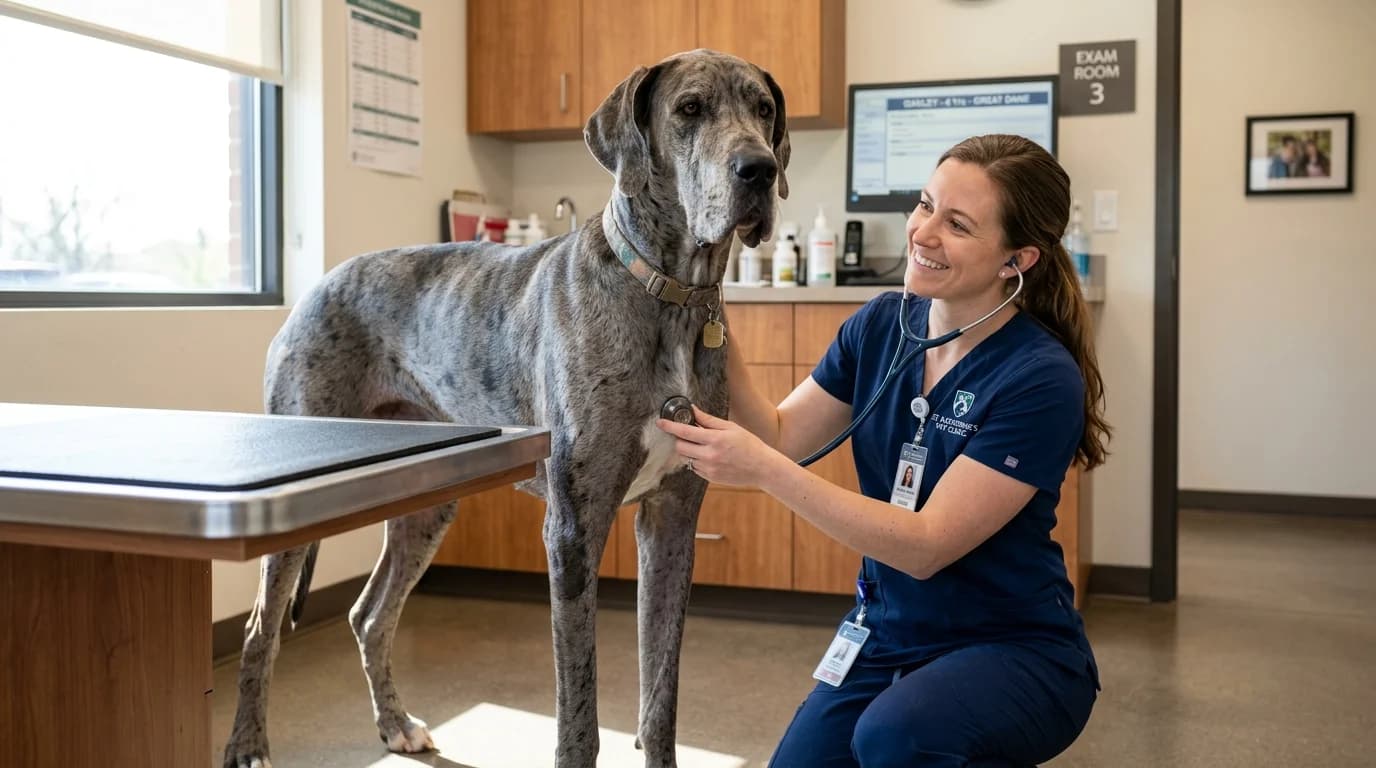
The Great Dane—historically designated the Deutsche Dogge or German Mastiff and heralded across veterinary literature as the "Apollo of Dogs"—is an imposing, elegant giant breed (Canis lupus familiaris, American Kennel Club Working Group). Originally bred in 16th- and 17th-century central Europe to track, corner, and pin Eurasian wild boars (Sus scrofa) and European stags, early boarhound ancestors combined the sheer muscular power and bone density of English mastiffs with the rapid galloping speed, deep thoracic volume, and predatory endurance of Celtic sighthounds. Over centuries of selective breeding, fanciers systematically tempered the fierce predatory drive of these hunting hounds into an exceptionally patient, gentle, and family-bonded domestic companion known for dignity and peaceful equilibrium.
Morphologically, standard Great Danes are towering, muscular, squarish dogs defined by great height, immense skeletal frame, deep thoracic depth, and an expressive, rectangular head:
- Mature Male Great Danes: Height at withers: $32$ to $35+\text{ inches}$ ($81$ to $89+\text{ cm}$); adult somatic mass: approximately $140$ to $175+\text{ lbs}$ ($63.5$ to $79.4+\text{ kg}$).
- Mature Female Great Danes: Height at withers: $30$ to $33\text{ inches}$ ($76$ to $84\text{ cm}$); adult somatic mass: approximately $110$ to $140\text{ lbs}$ ($49.9$ to $63.5\text{ kg}$).
Beyond their cultural presence as affectionate "gentle giants," Great Danes occupy a cornerstone position in comparative veterinary biogerontology, cardiovascular genomics, and evolutionary biology. Specifically, the breed represents the ultimate domestic model for the profound evolutionary trade-off between massive somatic scale and biological longevity:
- The Somatotropic Axis & Accelerated Cellular Senescence: Driven by polymorphic single nucleotide variations in the Insulin-like Growth Factor 1 (IGF1) gene and downstream mammalian target of rapamycin (mTOR) signaling cascades, Great Danes achieve explosive juvenile growth, increasing birth weight by more than 100-fold in under twelve months. This rapid cellular replication accelerates telomere attrition, elevates oxidative phosphorylation byproducts, and shortens the biological clock.
- Extreme Anatomical & Biomechanical Vulnerabilities: A narrow, deep thorax creates extreme mechanical predisposition to Gastric Dilatation-Volvulus (GDV), while massive somatic loading concentrates intense compressive stresses across long bones and cervical spinal motion segments, accelerating orthopedic degeneration and oncogenesis.
In broad epidemiological cohorts across the United States, the United Kingdom, and Scandinavia, the median lifespan of the Great Dane is 7 to 10 years, with primary-care veterinary electronic health records demonstrating an overall breed median of 6.5 to 8.2 years.
Despite this statistically abbreviated lifespan, proactive veterinary medicine and targeted genetic risk mitigation enable conscientious owners to support Great Danes to 10, 11, or even 12+ years of age. Extending survival into this exceptional demographic tier requires aggressive clinical management of five core breed vulnerabilities:
- Gastric Dilatation-Volvulus (GDV): The single leading acute surgical killer of the breed, carrying an unmitigated lifetime risk approaching 42% due to severe thoracic depth-to-width ratios.
- Dilated Cardiomyopathy (DCM): Progressive myocardial thinning, ventricular dilation, and malignant ventricular arrhythmias that demand occult-phase diagnostic screening.
- Appendicular Osteosarcoma: Highly aggressive primary bone neoplasia concentrated in distal radial and proximal humeral growth plates under heavy mechanical shock.
- Cervical Spondylomyelopathy (Wobbler Syndrome): Progressive spinal canal stenosis and disc degeneration causing chronic spinal cord compression and ataxia.
- Severe Osteoarthritis & Biomechanical Exhaustion: Early cartilage wear across hip, stifle, and elbow joints secondary to rapid skeletal development and massive somatic mass.
To evaluate your Great Dane's biological developmental milestones and translate their chronological calendar age into an exact human age equivalent, use our interactive Dog Age Calculator or reference our comprehensive Dog Age Chart.
Epidemiological Baseline: How Long Do Great Danes Live?
Data compiled from national pet health insurance databases (such as Agria in Sweden), academic tertiary referral registries (the Veterinary Medical Database in North America), and primary-care electronic health surveillance systems (VetCompass in the UK) consistently establish that the Great Dane exhibits one of the shortest average life expectancies among purebred dogs.
                    GREAT DANE LIFESPAN BY COHORT & REGISTRY
+------------------------------------+------------------+-------------------+-----------------------------------------+
| Registry / Cohort Database         | Sample Size (n)  | Reported Median   | Epidemiological Context / Methodology   |
+------------------------------------+------------------+-------------------+-----------------------------------------+
| VetCompass UK (Royal Vet College)  | 1,324 dogs       | 6.0 – 7.1 Years   | Primary-care electronic health records  |
| UK Kennel Club Purebred Survey     | 171 deaths       | 6.50 Years        | Pedigree owner questionnaire mortality  |
| Swedish Agria Pet Insurance Data   | 2,800+ dogs      | 7.2 – 8.1 Years   | Insured Scandinavian veterinary cohort  |
| North American VMDB (Univ Hosps)   | 4,100+ records   | 7.5 – 8.4 Years   | Academic tertiary referral hospitals    |
| Danish Kennel Club Health Survey   | 480 dogs         | 7.5 Years         | Longitudinal national breed mortality   |
| Proactive Longevity / Gastropexy   | Clinical Cohort  | 9.8 – 11.5 Years  | Prophylactic pexy + occult DCM therapy  |
+------------------------------------+------------------+-------------------+-----------------------------------------+
                     GREAT DANE SURVIVAL CURVE (KAPLAN-MEIER)
   Survival
   Probability (%)
     ▲
 100 │═════════════════════════╗
  80 │                         ╚══════════╗
  60 │                                    ╚══════════╗
  50 │- - - - - - - - - - - - - - - - - - - - - - - -╚════ (Median: 7.2–7.8 yrs)
  40 │                                                    ╚══════════╗
  20 │                                                               ╚═════════╗
   0 │─────────────────────────────────────────────────────────────────────────╚════►
     0         2         4         6         8        10        12        14
                               Chronological Age (Years)
1. Sex Disparities in Great Dane Longevity
Comparative epidemiological investigations demonstrate a modest yet statistically significant lifespan advantage in female Great Danes over males:
- Female Great Dane Median Lifespan: 7.8 to 8.8 years
- Male Great Dane Median Lifespan: 6.8 to 7.8 years
The biological drivers of this sexual dimorphism encompass both allometric biomechanics and sex hormone endocrinology:
- Somatic Mass and Structural Skeletal Loading: Mature male Great Danes carry 20% to 35% higher somatic body mass ($140–175+\text{ lbs}$ vs. $110–140\text{ lbs}$) and stand 2 to 4 inches taller at the shoulder. This additional weight magnifies ground reaction forces on articular cartilage by thousands of newtons per stride, predisposing males to accelerated joint breakdown, cruciate ligament failure, and osteosarcoma.
- Cardiomyopathic Susceptibility: Clinical cardiology registries show that male Great Danes suffer a higher prevalence of early-onset Dilated Cardiomyopathy (DCM), often manifesting occult ventricular premature complexes (VPCs) 12 to 18 months earlier than females. Estrogens exert a known cardioprotective effect on myocardial extracellular matrix remodeling in females prior to neutering.
To examine how overall body mass, basal metabolic rate, and evolutionary biology govern lifespan across canine breeds, consult our foundational analysis on Why Small Dogs Live Longer Than Large Dogs.
Biogerontology: Cellular Senescence, the IGF1 Somatotropic Axis & Epigenetic Aging
The shortened lifespan of the Great Dane is not a random evolutionary accident; it is the physiological manifestation of hyper-accelerated allometric scaling. When humans selectively bred domestic dogs for giant stature over short evolutionary intervals, they altered the core endocrinological pathways that regulate growth, cellular repair, and somatic senescence.
          THE GREAT DANE SOMATOTROPIC & CELLULAR SENESCENCE CASCADE

     POLYMORPHIC IGF1 VARIANTS ON CANINE CHROMOSOME 15
     * High circulating Insulin-like Growth Factor 1 (IGF-1)
     * Massive activation of downstream PI3K/Akt/mTOR pathway
          │
          ▼
     EXPLOSIVE JUVENILE SOMATIC GROWTH (0 to 14 Months)
     * Birth weight increases >100-fold in ~1 year (1 lb -> 120+ lbs)
     * Unprecedented osteoblast and chondrocyte replication rates
          │
          ▼
     MOLECULAR CELLULAR SENESCENCE & GENOMIC STRESS
     * Rapid telomeric shortening during repeated cell division cycles
     * Elevated reactive oxygen species (ROS) from mitochondrial flux
     * Downregulated autophagic repair and reduced DNA damage surveillance
          │
          ▼
     ANATOMICAL & BIOMECHANICAL STRESS CONCENTRATION
     * Extremely deep, narrow thoracic cavity -> High GDV susceptibility
     * Gigantic long bone mechanical strain -> Distal radial osteosarcoma
     * Cervical dynamic canal compression -> Wobbler Syndrome (DA-CSM)
     * Myocardial volume overload -> Left ventricular dilation & systolic failure
          │
          ▼
     ACCELERATED GERIATRIC ONSET (Ages 5 to 6)
     * Giant breed entry into biological senescence: Age 5
     * Unmanaged Median Longevity Limit: 7.2–7.8 Years
     * Clinically Managed Extension Goal: 10–12+ Years
1. The Somatotropic Axis: IGF1 and mTOR Signaling
In landmark genomic investigations led by Sutter et al. (Science, 2007) and Greer et al. (Mammalian Genome, 2007), researchers discovered that variation in a single gene—Insulin-like Growth Factor 1 (IGF1) on canine chromosome 15—is the primary genetic architecture dividing toy breeds from giant breeds.
While toy dogs such as Chihuahuas and Toy Poodles express an ancestral IGF1 allele that limits circulating growth hormone cascades, Great Danes carry derived alleles that sustain supra-physiological levels of circulating IGF-1 throughout puppyhood and adolescence:
- The mTOR Hyperactivation Dilemma: High circulating IGF-1 binds to transmembrane IGF-1 receptors (IGF-1R), triggering intense intracellular signaling via the PI3K / Akt / mTOR (mammalian target of rapamycin) pathway. While this drives rapid protein synthesis, skeletal elongation, and somatic hypertrophy, it actively suppresses cellular autophagy—the vital biological housekeeping process where cells break down damaged mitochondria, misfolded proteins, and mutated DNA fragments.
- The Disposable Soma Theory: Evolutionary biologist Thomas Kirkwood's "disposable soma theory" perfectly models the Great Dane: because immense biological resources are devoted to explosive early growth and reproduction, metabolic investment in long-term cellular maintenance and genomic repair is compromised, leading to premature multi-organ senescence.
2. Allometric Metabolic Scaling: Kleiber's Law
Metabolic rate does not scale linearly with body weight; it scales allometrically according to Kleiber's Law:
$$\text{BMR} \propto M^{0.75}$$
Where $M$ represents canine body mass. While a $70\text{ kg}$ Great Dane produces less heat and consumes less oxygen per gram of tissue than a $3\text{ kg}$ Chihuahua, the total systemic metabolic flux across vital organs is massive:
- The heart of a Great Dane must pump approximately 5 to 6 liters of blood per minute at rest (compared to less than $300\text{ mL/min}$ in a toy breed), subjecting cardiac myocytes to tremendous hemodynamic shear stress and continuous mechanical volume loads over millions of contractions.
- The kidneys must filter thousands of liters of blood through glomerular capillaries daily. When hyperfiltration continues unabated, it accelerates nephron sclerosis by mid-life.
3. Epigenetic Methylation Dynamics in Great Danes
Research from the University of California San Diego (UCSD; Wang et al., 2020) established that mammalian DNA methylation profiles change on a logarithmic scale rather than a static linear formula:
$$\text{Human Equivalent Age} = 16 \times \ln(\text{Chronological Canine Age}) + 31$$
However, comparative veterinary biogerontologists note that while the logarithmic curve accurately models canine epigenetics up to skeletal maturity, giant breeds exhibit a secondary accelerated slope of biological senescence past age 4:
- At 1 chronological year, an adolescent Great Dane has completed primary longitudinal growth, aligning epigenetically with a 28- to 31-year-old human.
- At 3 chronological years, the Great Dane reaches muscular maturity, matching a 44- to 46-year-old human.
- By 5 chronological years, due to cumulative cellular wear, the Great Dane crosses the official threshold into senior veterinary status (~60 human years).
- At 8 chronological years, a surviving Great Dane occupies the biological bracket of an 80- to 83-year-old human, where proactive geriatric monitoring is vital to preserve quality of life.
For a detailed exploration of mammalian DNA methylation curves, read our guide on the Scientific Epigenetic Dog Age Formula.
Great Dane Human Age Conversion Matrix
Because the Great Dane experiences unprecedented juvenile somatic expansion followed by accelerated senior decline, conventional linear conversions ("1 dog year = 7 human years") are dangerously inaccurate. A 6-year-old Great Dane is not equivalent to a healthy 42-year-old person—they are an advanced senior experiencing geriatric organ vulnerability. The following matrix reflects modern veterinary biogerontological benchmarks:
                      GREAT DANE HUMAN AGE CONVERSION MATRIX
+----------------+-------------------+--------------------+-----------------------------------------------+
| Great Dane Age | Canine Life Stage | Human Equivalent   | Physiological & Clinical Benchmarks           |
+----------------+-------------------+--------------------+-----------------------------------------------+
| 6 Months       | Rapid Growth / Pup| 12 – 14 Years      | Explosive bone growth; monitor Ca:P ratio     |
| 1 Year         | Adolescent Giant  | 25 – 28 Years      | Growth plates closing; schedule gastropexy    |
| 2 Years        | Skeletal Adult    | 36 – 38 Years      | Full height achieved; complete baseline ECG   |
| 3 Years        | Mature Adult      | 44 – 46 Years      | Muscular bulk set; annual DCM echo screening  |
| 4 Years        | Mature Adult      | 52 – 54 Years      | Check for occult arrhythmias (Holter ECG)     |
| 5 Years        | Senior (Stage 1)  | 60 – 62 Years      | Official senior entry; bi-annual vet exams    |
| 6 Years        | Senior (Stage 2)  | 66 – 69 Years      | Screen for Wobbler ataxia & joint osteophytes |
| 7 Years        | Geriatric Entry   | 73 – 76 Years      | Average lifespan milestone; monitor renal SDMA|
| 8 Years        | Geriatric Dog     | 80 – 83 Years      | High risk for osteosarcoma & cardiac failure  |
| 9 Years        | Advanced Geriatric| 87 – 90 Years      | Cognitive dysfunction check; pain titration   |
| 10 Years       | Giant Centenarian | 94 – 97 Years      | Top 5% longevity; palliative orthopedic care  |
| 11 – 12+ Years | Super-Centenarian | 100 – 108+ Years   | Top 1% of breed survival; clinical outlier    |
+----------------+-------------------+--------------------+-----------------------------------------------+
To examine physiological changes across canine aging benchmarks, read our veterinary analysis on How Old is a 10-Year-Old Dog in Human Years.
The 5 Major Breed-Specific Health Vulnerabilities Limiting Lifespan
                         GREAT DANE PATHOLOGY DISTRIBUTION
   Percentage of
   Mortality & Morbidity
     ▲
 35% │ ▓▓▓▓▓▓▓▓▓▓▓▓▓
 30% │ ▓▓▓▓▓▓▓▓▓▓▓▓▓
 25% │ ▓▓▓▓▓▓▓▓▓▓▓▓▓          ▓▓▓▓▓▓▓▓▓▓▓▓▓
 20% │ ▓▓▓▓▓▓▓▓▓▓▓▓▓          ▓▓▓▓▓▓▓▓▓▓▓▓▓          ▓▓▓▓▓▓▓▓▓▓▓▓▓
 15% │ ▓▓▓▓▓▓▓▓▓▓▓▓▓          ▓▓▓▓▓▓▓▓▓▓▓▓▓          ▓▓▓▓▓▓▓▓▓▓▓▓▓
 10% │ ▓▓▓▓▓▓▓▓▓▓▓▓▓          ▓▓▓▓▓▓▓▓▓▓▓▓▓          ▓▓▓▓▓▓▓▓▓▓▓▓▓          ▓▓▓▓▓▓▓▓▓▓▓▓▓
  5% │ ▓▓▓▓▓▓▓▓▓▓▓▓▓          ▓▓▓▓▓▓▓▓▓▓▓▓▓          ▓▓▓▓▓▓▓▓▓▓▓▓▓          ▓▓▓▓▓▓▓▓▓▓▓▓▓
  0% └────────────────────────────────────────────────────────────────────────────────────►
        GDV & Gastric          Dilated Cardio-        Appendicular           Neurological &
           Torsion               myopathy (DCM)       Osteosarcoma             Orthopedic
1. Gastric Dilatation-Volvulus (GDV) / Gastric Torsion
Gastric Dilatation-Volvulus represents the single most lethal acute surgical emergency in veterinary medicine, and the Great Dane possesses the highest breed-specific lifetime risk of any domestic canine—estimated between 37% and 42% in unpexied dogs:
- The Anatomical Predisposition: Great Danes exhibit an exceptionally deep and narrow thoracic cavity (high thoracic depth-to-width ratio). This spatial geometry leaves substantial empty volume within the craniodorsal abdomen, allowing the stomach significant laxity along its hepatogastric and gastrosplenic ligaments.
- The Pathophysiological Cascade: When the stomach fills with gas, fermenting fluid, or food and fails to empty normally, it distends (dilatation). In GDV, the distended stomach rotates—most commonly in a $180^\circ\text{ to }360^\circ$ clockwise direction along the longitudinal mesenteric axis. The pylorus traverses ventrally from the right body wall across to the left, trapping gastric contents and occluding both the gastroesophageal junction and the duodenum.
- Vascular Collapse & Tissue Necrosis: As intragastric pressure rises above $30\text{ mmHg}$, it compresses the caudal vena cava and portal vein, reducing venous return to the heart by up to 70%. The dog plunges into acute obstructive and hypovolemic shock. Concurrently, the short gastric arteries stretch and rupture, causing severe gastric wall ischemia, mucosal sloughing, and splenic infarction.
- Cardiac Arrhythmias: Myocardial ischemia and the release of toxic inflammatory mediators (such as tumor necrosis factor-alpha and free radicals from the ischemic pancreas) precipitate malignant ventricular premature complexes (VPCs) and ventricular tachycardia in up to 40% of cases, which can be fatal even after successful surgical decompression.
+---------------------------------------------------------------------------------------------------------+
|                                    THE GDV EMERGENCY TIMELINE                                           |
+------------------------------------+--------------------------------------------------------------------+
| 0 to 30 Minutes                    | Severe restlessness, non-productive retching, hyper-salivation.     |
| 30 to 90 Minutes                   | Visible tympanic abdominal distension, tachycardia, weak pulses.   |
| 90 to 180 Minutes                  | Obstructive shock, cyanosis, gastric wall necrosis, splenic avulsion|
| > 180 Minutes (Without Surgery)    | Multi-organ dysfunction syndrome (MODS), ventricular fibrillation. |
+------------------------------------+--------------------------------------------------------------------+
2. Dilated Cardiomyopathy (DCM) & Cardiac Arrhythmias
Dilated Cardiomyopathy is the primary chronic cardiological cause of mortality in Great Danes, affecting approximately 15% to 25% of the breed:
- Pathophysiology: DCM is a primary disease of the myocardium characterized by progressive thinning of the left ventricular free wall and interventricular septum, accompanied by dilation of the cardiac chambers and impaired systolic pump function (loss of myocardial inotropy).
- The Occult Phase: DCM develops silently over 2 to 4 years. During this subclinical or "occult" phase, the dog appears outwardly vibrant, but echocardiography reveals reduced fractional shortening ($FS < 20%$), increased left ventricular end-systolic diameter (LVIDs), and elevated circulating biomarkers.
- The PROTECT Study Breakthrough: Landmark veterinary cardiology clinical trials (the PROTECT Study, Summerfield et al., JVIM, 2012) proved that initiating targeted inodilator therapy with pimobendan ($0.25–0.3\text{ mg/kg BID}$) during the preclinical occult phase significantly delays the onset of congestive heart failure and extends median survival by 462 days.
- Ventricular Arrhythmias: Great Danes with DCM frequently present with ventricular premature complexes (VPCs) arising from ischemic fibrotic foci in the ventricular myocardium. Malignant ventricular tachycardia can trigger sudden cardiac death (syncope or fatal arrest) during physical exertion, even before overt signs of congestive heart failure (pulmonary edema, coughing) emerge.
3. Appendicular Osteosarcoma (Primary Bone Cancer)
Osteosarcoma accounts for approximately 18% to 22% of all cancer diagnoses in Great Danes, representing one of the most heartbreaking malignancies encountered by giant breed owners:
- Cellular Turnover in Long Bones: Primary osteosarcoma has a strong predilection for the metaphyseal regions of long bones—classically summarized by the clinical adage "away from the elbow, toward the knee" (distal radius, proximal humerus, distal femur, proximal tibia). During the explosive puppyhood growth phase, osteoblasts in these growth plates divide at unprecedented rates, increasing the probability of spontaneous somatic mutations in tumor suppressor genes such as p53.
- Biomechanical Stress Concentration: Continuous mechanical loading and micro-fractures in dogs weighing over 130 lbs create localized chronic inflammatory cascades that facilitate neoplastic transformation and osteolytic matrix destruction.
- Clinical Course: Osteosarcoma is a systemic disease; at the time of initial radiographic diagnosis, over 90% of dogs possess microscopic metastatic lesions in the pulmonary parenchyma, even if chest radiographs appear normal. Proactive multimodal therapy—consisting of surgical amputation or stereotactic body radiation therapy (SBRT) combined with adjuvant carboplatin chemotherapy and bisphosphonates (such as zoledronate)—extends median survival from 2–3 months to 10 to 14 months.
4. Cervical Spondylomyelopathy (Wobbler Syndrome)
Cervical Spondylomyelopathy (CSM), commonly referred to as Wobbler Syndrome, is a debilitating neurological disorder affecting the cervical spine (neck) in approximately 4% to 6% of Great Danes:
- Pathological Subtypes: Great Danes primarily suffer from Osseous-Associated Cervical Spondylomyelopathy (OA-CSM) during young adulthood (ages 1 to 4) due to bony vertebral canal stenosis and articular facet hypertrophy, or Disc-Associated Cervical Spondylomyelopathy (DA-CSM) in mature dogs (ages 5 to 8) secondary to chronic intervertebral disc protrusion (most commonly at C5–C6 and C6–C7).
- Clinical Manifestation: Chronic compression of the cervical spinal cord disrupts the long ascending sensory and descending upper motor neuron pathways. Dogs develop an insidious, progressive gait abnormality characterized by a wide-based pelvic limb ataxia (a "drunken," swaying walk), spasticity, scuffing of the toenails, and a characteristically floating, hyperextended thoracic limb stride.
- Management: Advanced diagnostic imaging (cervical MRI and dynamic traction myelography) is required to differentiate static from dynamic spinal cord compression. Management ranges from decompressive neurosurgery (cervical distraction-stabilization or ventral slot) to medical therapy (corticosteroids, non-steroidal anti-inflammatory drugs, and physical rehabilitation using a chest harness rather than a neck collar).
5. Severe Orthopedic Biomechanical Wear & Hip Dysplasia
Because Great Danes carry massive skeletal weight over an extended lever arm, their joints endure intense daily biomechanical stress:
- Canine Hip Dysplasia (CHD): Data from the Orthopedic Foundation for Animals (OFA) reveals that approximately 12% to 15% of Great Danes suffer from confirmed hip dysplasia, with an even higher percentage exhibiting subclinical joint laxity. Shallow acetabular development allows the heavy femoral head to subluxate during locomotion, grinding away articular cartilage and producing secondary osteoarthritis by ages 3 to 5.
- Cruciate Ligament Ruptures: The steep cranial tibial plateau angle in large breeds, coupled with high body mass, places excessive biomechanical tensile stress on the cranial cruciate ligament (CCL), making acute or chronic degenerative tears frequent causes of sudden pelvic limb lameness.
To learn more about managing joint degeneration in structurally vulnerable breeds, explore our clinical guide on Large Dog Arthritis Prevention & Care.
The 5-Pillar Longevity Protocol for Great Danes
While the Great Dane faces formidable genetic and biomechanical hurdles, proactive, evidence-based veterinary medicine can transform the breed's survival curve. Clinicians specializing in giant breed longevity implement the following 5-Pillar Longevity Framework:
                 THE 5-PILLAR GREAT DANE LONGEVITY FRAMEWORK
 ┌───────────────────────────────────────────────────────────────────────────┐
 │ 1. PROPHYLACTIC INCISIONAL GASTROPEXY                                     │
 │    Elective laparoscopic or open pexy; permanently halts GDV stomach twist│
 ├───────────────────────────────────────────────────────────────────────────┤
 │ 2. ANNUAL CARDIOLOGICAL SURVEILLANCE (STARTING AGE 3)                     │
 │    Echocardiogram + 24-hr Holter ECG; detect occult DCM before symptoms   │
 ├───────────────────────────────────────────────────────────────────────────┤
 │ 3. CONTROLLED JUVENILE GROWTH & PRECISION NUTRITION                       │
 │    Strict Ca:P ratio (1.1:1–1.3:1); slow growth curve prevents OCD & HOD  │
 ├───────────────────────────────────────────────────────────────────────────┤
 │ 4. JOINT & ERGONOMIC PRESERVATION PROTOCOL                                │
 │    High-traction floors; 7-inch orthopedic memory foam; marine EPA/DHA    │
 ├───────────────────────────────────────────────────────────────────────────┤
 │ 5. COMPREHENSIVE SENIOR GERIATRIC SURVEILLANCE (AGE 5+)                   │
 │    Bi-annual physicals; SDMA renal screening; NT-proBNP; chest imaging    │
 └───────────────────────────────────────────────────────────────────────────┘
Pillar 1: Prophylactic Incisional Gastropexy
The single most effective surgical intervention to safeguard a Great Dane's lifespan is prophylactic gastropexy:
- Surgical Mechanism: In an incisional gastropexy, the surgeon creates a controlled incision through the seromuscular layer of the gastric antrum and suturing it securely to the right ventrolateral abdominal wall. As the tissues heal, they form a permanent, fibrous, vascular adhesion that physically anchors the stomach in its correct anatomical orientation.
- Clinical Efficacy: Prophylactic gastropexy reduces the lifetime risk of fatal gastric volvulus by more than 90% (Ward, Patronek, & Glickman, JAVMA, 2003). While the stomach can still occasionally distend with gas (dilatation), it is physically incapable of rotating into a lethal volvulus, converting a fatal catastrophe into a medically manageable condition.
- Optimal Timing: Gastropexy is most commonly performed as a minimally invasive laparoscopic-assisted procedure at the time of spay or neuter, typically between 12 and 18 months of age once growth plates have reached maturity.
Pillar 2: Proactive Cardiological Screening Starting at Age 3
Never wait for clinical signs of heart failure (exercise intolerance, coughing, fainting) before evaluating a Great Dane's heart:
- Echocardiography: Complete annual Doppler echocardiogram starting at age 3. The examination measures left ventricular end-diastolic diameter (LVIDd), end-systolic diameter (LVIDs), and fractional shortening ($FS$).
- 24-Hour Ambulatory Holter ECG: An in-clinic 1-minute electrocardiogram frequently misses intermittent arrhythmias. A 24-hour Holter monitor recorded during the dog's normal daily routine detects occult ventricular premature complexes (VPCs). Finding $>100\text{ VPCs per 24 hours}$ or couplets/runs of ventricular tachycardia indicates occult DCM requiring intervention.
- Early Medical Intervention: Initiating pimobendan therapy during the preclinical occult phase preserves myocardial contractility, reduces left ventricular chamber remodeling, and adds 1 to 2 years of quality life.
Pillar 3: Precision Juvenile Nutrition & Growth Rate Moderation
Feeding a Great Dane puppy is an exercise in restraint. The goal is not maximum growth, but optimal, controlled skeletal growth:
- Calcium and Phosphorus Balance: Giant breed puppies lack the biological ability to protect themselves against excessive dietary calcium absorption. Diets containing supra-physiological calcium levels trigger disturbed endochondral ossification, leading to Osteochondrosis Dissecans (OCD), Hypertrophic Osteodystrophy (HOD), and hip dysplasia. Ensure puppy food contains an exact calcium-to-phosphorus ratio between $1.1:1$ and $1.3:1$, with absolute calcium content restricted between $0.8%$ and $1.2%$ on a dry matter basis.
- Caloric Restriction: Keep growing puppies lean (Body Condition Score 4/9). Avoid high-calorie supplements or free-choice feeding. Caloric targets must be calculated using exact Resting Energy Requirement (RER) equations: $$\text{RER} = 70 \times (\text{Body Weight in kg})^{0.75}$$
- Delayed Gonadectomy: Veterinary orthopedic studies confirm that desexing giant breeds prior to growth plate closure (before 12 to 18 months) removes circulating testosterone and estrogen, which are necessary to signal growth plate fusion. Dogs desexed too early grow taller, develop disproportionate limb lengths, and exhibit significantly higher incidences of cranial cruciate ligament tears and osteosarcoma.
For clinical dietary adjustments tailored to aging canines, read our resource on Diet and Exercise for Older Dogs.
Pillar 4: Joint, Spinal & Ergonomic Management
Preserving musculoskeletal mobility is crucial to prevent secondary euthanasia due to immobility:
- The Elevated Feeder Controversy Clarified: For decades, breeders recommended elevated food bowls for giant breeds. However, the landmark Purdue University epidemiological study (Glickman et al., JAVMA, 2000) revealed that feeding from significantly elevated food bowls actually increased GDV risk by 110% in giant dogs due to altered esophageal swallowing dynamics and increased aerophagia (air gulping). Veterinary clinicians recommend feeding Great Danes at floor level or using specialized slow-feeder bowls to slow consumption and prevent aerophagia.
- Orthopedic Bedding: Provide thick, medical-grade orthopedic memory foam bedding (at least 6 to 8 inches dense) to distribute pressure away from large bony protuberances (greater trochanter, olecranon, lateral malleolus), preventing painful hygromas, pressure sores, and bursitis.
- Nutraceutical Joint Therapy: Initiate daily administration of high-molecular-weight hyaluronic acid, pharmaceutical-grade glucosamine hydrochloride, chondroitin sulfate, and Undenatured Type II Collagen (UC-II) by age 2 to 3.
- Marine Polyunsaturated Fatty Acids: Administer high-potency EPA and DHA fish oil at an anti-inflammatory dose of: $$100\text{ to }150\text{ mg combined EPA/DHA per kg body weight daily}$$
Pillar 5: Comprehensive Senior Screening Protocol Starting at Age 5
Because Great Danes enter senescence at age 5, senior screening must begin early:
- Bi-Annual Physical Examinations: Comprehensive cardiopulmonary auscultation, peripheral lymph node palpation, spinal palpation, and orthopedic range-of-motion assessments every 6 months.
- Biomarker Panels: Complete blood counts, serum biochemical panels, Symmetric Dimethylarginine (SDMA) to detect early nephron loss, and high-sensitivity cardiac troponin I (hs-cTnI) or N-terminal pro-B-type natriuretic peptide (NT-proBNP) to detect active cardiomyocyte injury.
- Orthogonal Thoracic & Abdominal Radiographs: Annual 3-view thoracic imaging to screen for occult pulmonary nodules (metastatic osteosarcoma or hemangiosarcoma) and assess the Vertebral Heart Scale (VHS) for progressive cardiomegaly.
To understand the physiological markers that signal the transition into advanced life stages, consult our clinical guide on When Does a Dog Become a Senior.
Structured Clinical FAQs: Great Dane Longevity
Can a Great Dane live to be 10, 11, or 12 years old?
Yes. While surviving beyond 10 years represents the top 5% of the breed's demographic survival curve, it is clinically achievable. Great Danes that achieve double-digit longevity consistently share four fundamental traits:
- They underwent prophylactic incisional gastropexy during young adulthood, eliminating fatal GDV.
- They received annual echocardiographic and Holter ECG screening starting at age 3, catching subclinical DCM early.
- They maintained a lean body condition score (BCS 4.5/9 to 5/9) throughout life, preventing joint failure.
- They were fed a controlled-growth juvenile diet that prevented developmental orthopedic disease.
What is the single most common cause of death in Great Danes?
According to multi-institutional veterinary epidemiological surveys (including the VMDB and VetCompass), the two leading causes of mortality in Great Danes are:
- Gastric Dilatation-Volvulus (GDV): Responsible for approximately 25% to 30% of deaths in unpexied dogs.
- Dilated Cardiomyopathy (DCM) & Sudden Cardiac Arrest: Responsible for approximately 20% to 25% of deaths. Together with Appendicular Osteosarcoma (18% to 22%), these three conditions account for over 70% of all Great Dane fatalities.
Should every Great Dane have a prophylactic gastropexy?
Yes, unequivocally. Veterinary surgical specialists and the American College of Veterinary Surgeons (ACVS) strongly recommend prophylactic incisional gastropexy for all Great Danes. With a lifetime GDV risk approaching 42% in unpexied dogs, the procedure is the single most cost-effective, life-saving preventive surgery available. When performed laparoscopically during elective neutering or spaying, post-operative recovery is rapid, and it virtually eliminates the risk of gastric rotation for life.
Should Great Danes eat from elevated food bowls?
No, current veterinary evidence advises against elevated feeders. While previously believed to reduce bloat, rigorous epidemiological research conducted by Purdue University (Glickman et al., JAVMA, 2000) demonstrated that giant-breed dogs fed from elevated platforms had more than double the incidence of GDV compared to dogs fed at ground level. Elevated feeding increases the volume of air swallowed during rapid eating (aerophagia). Clinicians recommend feeding at floor level using slow-feeder mazes or puzzle bowls, dividing meals into 2 to 3 portions daily, and enforcing 60 minutes of quiet rest before and after eating.
At what age does a Great Dane become a senior dog?
Veterinary biogerontologists classify a Great Dane as a senior dog at 5 years of age (roughly equivalent to 60 human years). By age 7, they are considered geriatric. Because their cardiorespiratory and musculoskeletal systems experience accelerated cellular wear, Great Danes should transition to comprehensive bi-annual (every 6 months) veterinary examinations, blood chemistry panels, and cardiac imaging starting at age 5.
When should a Great Dane be spayed or neutered to maximize lifespan?
Current veterinary literature strongly supports delaying gonadectomy until skeletal maturity—between 14 and 20 months of age. Early desexing (before 12 months) removes gonadal steroid hormones (testosterone and estrogen) responsible for signaling growth plate closure, causing dogs to develop abnormally elongated limbs, higher angles of the tibial plateau, and a 2- to 4-fold increased incidence of cranial cruciate ligament (CCL) rupture and bone cancer (osteosarcoma). Performing the procedure at 14–18 months allows concurrent prophylactic laparoscopic gastropexy under a single anesthetic event.
What are the earliest signs of Dilated Cardiomyopathy (DCM) in a Great Dane?
In the early "occult" phase of DCM, dogs show zero external symptoms; only an echocardiogram or 24-hour Holter monitor can detect the disease. As the condition advances toward overt congestive heart failure, owners may observe:
- Subtle reduction in stamina on routine walks.
- Unexplained slowing down or reluctance to climb stairs.
- Soft, dry coughing, particularly at night or when resting on their side.
- Increased resting respiratory rate exceeding 30 breaths per minute while asleep.
- Sudden fainting or collapsing episodes (syncope) during excitement.
What is Wobbler Syndrome and how is it treated?
Wobbler Syndrome (Cervical Spondylomyelopathy) is a condition where the spinal cord in the neck is chronically compressed by malformed cervical vertebrae (common in young Danes) or bulging intervertebral discs (common in older Danes). It manifests as a wide-based, wobbling gait in the hindlimbs, scuffing toenails, and neck stiffness. Mild cases are managed medically with anti-inflammatory medications (prednisone or NSAIDs), exercise restriction, and strict use of a chest harness instead of a neck collar. Severe cases require decompressive spinal surgery performed by a board-certified veterinary neurosurgeon.
What supplements are clinically proven to improve Great Dane joint and cardiac longevity?
The most evidence-based longevity supplements for Great Danes include:
- Marine Omega-3 Fish Oil (EPA & DHA): Administered at $100–150\text{ mg/kg/day}$ to reduce systemic inflammatory cytokines, protect articular cartilage, and stabilize cardiac myocyte membranes against arrhythmias.
- Undenatured Type II Collagen (UC-II): Modulates oral immune tolerance to halt inflammatory chondrocyte breakdown in heavy weight-bearing joints.
- L-Carnitine & Taurine: Amino acid precursors essential for myocardial energy production and myocardial calcium homeostasis; supplementation is strongly recommended for giant breeds predisposed to DCM.
- Coenzyme Q10 (Ubiquinol): Supports mitochondrial bioenergetics in aging cardiac and renal tissues.
To explore further practical strategies for maximizing your older companion's vitality, read our guide on How to Help a Senior Dog Live Longer.
How do I know if my older Great Dane is experiencing cognitive decline (DISHAA)?
As Great Danes enter geriatric stages (ages 7 to 9+), cognitive senescence can manifest through the DISHAA clinical framework:
- Disorientation: Getting stuck behind open doors, staring into corners, or confusion navigating familiar rooms.
- Interactions: Becoming unusually detached, aloof, or excessively needy toward human family members.
- Sleep-Wake Cycles: Nighttime restlessness, wandering, and vocalizing while sleeping heavily during the day.
- House Soiling: Loss of previous house-training habits without an underlying urinary tract infection.
- Activity & Anxiety: Pacing restlessly, displaying new phobias to common household sounds, or trembling without an orthopedic cause.
To evaluate memory decline and behavioral shifts in aging pets, read our comprehensive overview of Signs of Canine Cognitive Dysfunction.
Peer-Reviewed Scientific References
- Glickman, L. T., Glickman, N. W., Schellenberg, D. B., Simpson, K., & Lantz, G. C. (2000). Non-dietary risk factors for gastric dilatation-volvulus in large and giant breed dogs. Journal of the American Veterinary Medical Association (JAVMA), 217(10), 1492–1499. doi: 10.2460/javma.2000.217.1492.
- Ward, M. P., Patronek, G. J., & Glickman, L. T. (2003). Benefits of prophylactic gastropexy for dogs at risk of gastric dilatation-volvulus. Preventive Veterinary Medicine, 60(4), 319–329. doi: 10.1016/s0167-5877(03)00142-9.
- Summerfield, N. J., Boswood, A., O'Grady, M. R., Vollmar, A. C., Minors, S. L., Luis Fuentes, V., et al. (2012). Efficacy of pimobendan in the prevention of congestive heart failure or sudden death in Doberman Pinschers and Great Danes with preclinical dilated cardiomyopathy (The PROTECT Study). Journal of Veterinary Internal Medicine (JVIM), 26(6), 1337–1349. doi: 10.1111/j.1939-1676.2012.01026.x.
- Sutter, N. B., Bustamante, C. D., Chase, K., Gray, M. M., Zhao, K., Zhu, L., et al. (2007). A single IGF1 allele is a major determinant of small size in dogs. Science, 316(5821), 112–115. doi: 10.1126/science.1137045.
- Greer, K. A., Canterberry, S. C., & Murphy, K. E. (2007). Statistical analysis regarding the effects of height and weight on life span of the domestic dog. Mammalian Genome, 18(4), 268–275. doi: 10.1007/s00335-007-9018-8.
- O'Neill, D. G., Pegram, C., Crocker, P., Brodbelt, D. C., Church, D. B., & Packer, R. M. A. (2024). Longevity and mortality of purebred and crossbred dogs in the UK: a VetCompass study. Canine Medicine and Genetics, 11(1), 3. doi: 10.1186/s40575-024-00139-8.
- Martin, M. W. S., Stafford Johnson, M. J., & Celona, B. (2010). Dilated cardiomyopathy in the Great Dane: retrospective study of 42 cases (2001–2007). Journal of Small Animal Practice, 51(8), 416–422. doi: 10.1111/j.1748-5827.2010.00959.x.
- De Risio, L., Muñana, K., Murray, M., Olby, N., Inzana, K. D., & Sharp, N. J. H. (2014). Cervical spondylomyelopathy in dogs. Veterinary Clinics of North America: Small Animal Practice, 44(6), 1155–1169. doi: 10.1016/j.cvsm.2014.07.009.
- Cooley, D. M., Beranek, B. C., Schlittler, D. L., Glickman, N. W., Glickman, L. T., & Waters, D. J. (2002). Endogenous gonadal hormone exposure and bone sarcoma risk. Cancer Epidemiology, Biomarkers & Prevention, 11(11), 1434–1440. PMID: 12433723.
- Wang, T., Ma, J., Hogan, A. N., Fong, S., Licon, K., Tsui, B., et al. (2020). Quantitative translation of dog-to-human aging by conserved remodeling of the DNA methylome. Cell Systems, 11(2), 176–185. doi: 10.1016/j.cels.2020.06.006.
- Kealy, R. D., Lawler, D. F., Ballam, J. M., Mantz, S. L., Biery, D. N., Greeley, E. H., et al. (2002). Effects of diet restriction on life span and age-related changes in dogs. Journal of the American Veterinary Medical Association (JAVMA), 220(9), 1315–1320. doi: 10.2460/javma.2002.220.1315.
- Phillips, J. C., Lembcke, L. M., & Chamberlin, B. D. (2009). A retrospective study of appendicular osteosarcoma in 43 giant breed dogs. Journal of the American Animal Hospital Association, 45(4), 168–174. doi: 10.5326/0450168.
Veterinary Medical Disclaimer: This clinical article is authored strictly for educational, informational, and comparative biogerontological reference and does not replace individualized examination, diagnosis, or therapeutic intervention by a licensed veterinary professional. Acute non-productive retching, severe abdominal enlargement with tympany, sudden collapse, respiratory distress (panting with cyanotic or pale mucous membranes), or sudden paralysis represent immediate, life-threatening veterinary emergencies. If your Great Dane displays any of these symptoms, transport them immediately to the nearest veterinary emergency hospital equipped for critical care and emergency surgery.