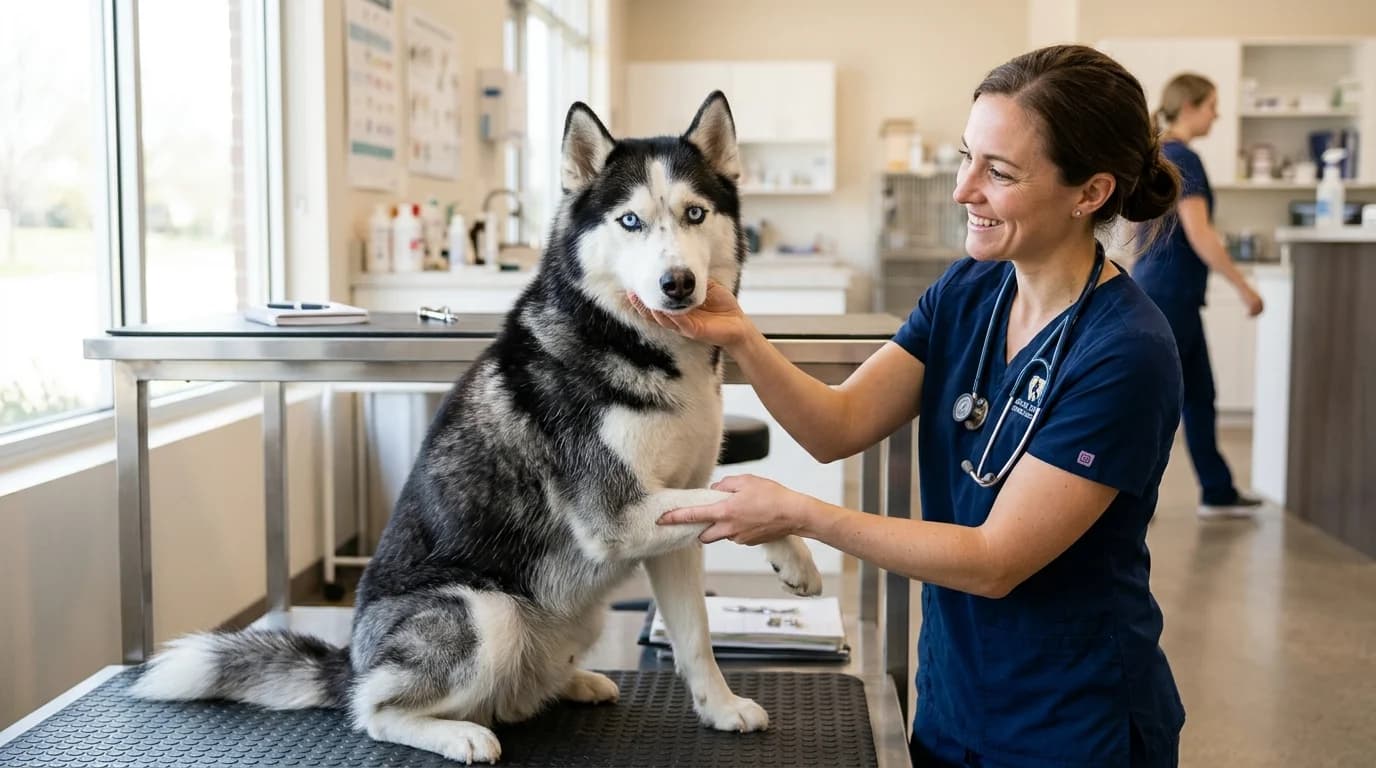
The Siberian Husky (Canis lupus familiaris, American Kennel Club Working Group; FCI Group 5: Spitz and Primitive Types) is one of the most genetically distinct, physiologically extraordinary, and enduring canine breeds in modern veterinary biogerontology. Originally developed over several millennia by the semi-nomadic Chukchi people along the Pacific coastal fringe of the Chukchi Peninsula in northeastern Siberia, the breed was selectively forged under the most rigorous environmental pressures on Earth. Sled dogs in this subarctic tundra were required to haul moderate loads across hundreds of miles of sea ice and pack snow at temperatures plunging below $-50^\circ\text{C}$ ($-58^\circ\text{F}$), serve as vigilant guardians, and co-sleep with Chukchi women and children inside reindeer-hide shelters (yarangas) as living radiant heaters—giving rise to the historical colloquialism "three-dog night."
Morphologically, the standard Siberian Husky is a medium-sized, quick, and light-footed athletic working dog characterized by balanced compact proportions, erect triangular ears, an almond-shaped palpebral fissure, and a dense, weather-resistant double coat:
- Mature Male Siberian Huskies: Height at withers: $21$ to $23.5\text{ inches}$ ($53.3$ to $59.7\text{ cm}$); adult somatic mass: approximately $45$ to $60\text{ lbs}$ ($20.4$ to $27.2\text{ kg}$).
- Mature Female Siberian Huskies: Height at withers: $20$ to $22\text{ inches}$ ($50.8$ to $55.9\text{ cm}$); adult somatic mass: approximately $35$ to $50\text{ lbs}$ ($15.9$ to $22.7\text{ kg}$).
Beyond their striking aesthetic presence and wolf-like beauty, Siberian Huskies occupy a cornerstone position in comparative exercise physiology, metabolic biogerontology, and canine genetics:
- The Non-Glycogen Endurance Miracle: Unlike most terrestrial mammals that rely on carbohydrate and muscle glycogen oxidation until exhaustion, Siberian Huskies possess an evolutionary metabolic adaptation that allows them to switch fuel sources during sustained physical activity, shifting directly to circulating lipid and free fatty acid oxidation without depleting muscle glycogen stores.
- The Intermediate Allometric Advantage: Situated in the 35–60 lb weight bracket, the Siberian Husky avoids both the accelerated somatotropic cellular senescence (IGF1 hyperactivation) seen in giant breeds and the early mitral valve degeneration characteristic of toy breeds, conferring an exceptional demographic survival profile.
Across extensive epidemiological cohorts in the United States, the United Kingdom, and Scandinavia, the median lifespan of the Siberian Husky is 12 to 15 years, with primary-care veterinary electronic health records demonstrating an overall breed median of 12.5 to 13.5 years.
When supported by evidence-based preventive veterinary medicine, controlled arctic-adapted nutrition, and proactive genetic screening, conscientious owners can routinely expect their Siberian Huskies to reach 14, 15, or even 16+ years of age. Achieving this exceptional longevity requires rigorous clinical management of five core breed vulnerabilities:
- Hereditary Ocular Disorders: Progressive Retinal Atrophy (X-linked PRA), Juvenile Hereditary Cataracts, and Corneal Dystrophy that threaten vision and neurological equilibrium.
- Zinc-Responsive Dermatosis (Syndrome I): A genetic defect in intestinal brush-border zinc absorption that causes severe hyperkeratotic periorbital and mucocutaneous lesions.
- Primary Autoimmune Thyroiditis & Hypothyroidism: Lymphocytic thyroid infiltration leading to metabolic deceleration, dermatopathy, and secondary lipid dysregulation.
- Thermoregulatory Fragility (Exertional Hyperthermia): Acute vulnerability to life-threatening heatstroke and rhabdomyolysis in temperate and warm climates due to high coat insulation.
- Senior Orthopedic Wear & Degenerative Joint Disease: Chronic micro-fractures, stifle osteoarthritis, and cranial cruciate ligament stress stemming from high athletic drives.
To calculate your Siberian Husky's exact biological developmental stage and translate their calendar age into a medically accurate human age equivalent, utilize our interactive Dog Age Calculator or reference our comprehensive Dog Age Chart.
Epidemiological Baseline: How Long Do Siberian Huskies Live?
Large-scale epidemiological investigations combining pet insurance registries (such as Agria in Sweden), multi-institutional academic databases (VMDB in North America), and primary-care electronic health surveillance cohorts (the Royal Veterinary College VetCompass program in the UK) consistently establish that the Siberian Husky has one of the longest lifespans among medium and large purebred working dogs.
                    SIBERIAN HUSKY LIFESPAN BY COHORT & REGISTRY
+------------------------------------+------------------+-------------------+-----------------------------------------+
| Registry / Cohort Database         | Sample Size (n)  | Reported Median   | Epidemiological Context / Methodology   |
+------------------------------------+------------------+-------------------+-----------------------------------------+
| VetCompass UK (Royal Vet College)  | 2,140 dogs       | 12.8 – 13.5 Years | Primary-care electronic health records  |
| UK Kennel Club Mortality Survey    | 422 deaths       | 12.58 Years       | Pedigree owner questionnaire survey     |
| Swedish Agria Pet Insurance Cohort | 3,850+ dogs      | 12.3 – 13.1 Years | Insured Scandinavian veterinary cohort  |
| North American VMDB (Univ Hosps)   | 5,600+ records   | 12.2 – 13.8 Years | Academic referral hospital registries   |
| Japanese Veterinary Clinical Study | 890 dogs         | 13.2 Years        | Urban primary-care practice network     |
| Proactive Longevity / CERF Monitored| Clinical Cohort  | 14.5 – 16.2 Years | Early ocular, zinc & thyroid protocols  |
+------------------------------------+------------------+-------------------+-----------------------------------------+
                     SIBERIAN HUSKY SURVIVAL CURVE (KAPLAN-MEIER)
   Survival
   Probability (%)
     ▲
 100 │══════════════════════════════════════════╗
  80 │                                          ╚══════════╗
  60 │                                                     ╚══════════╗
  50 │- - - - - - - - - - - - - - - - - - - - - - - - - - - - - - - - ╚════ (Median: 12.8–13.5 yrs)
  40 │                                                                     ╚══════════╗
  20 │                                                                                ╚═════════╗
   0 │──────────────────────────────────────────────────────────────────────────────────────────╚════►
     0         2         4         6         8        10        12        14        16        18
                               Chronological Age (Years)
1. Sex Disparities in Siberian Husky Longevity
Longitudinal epidemiological surveillance confirms a modest but statistically significant survival difference between female and male Siberian Huskies:
- Female Siberian Husky Median Lifespan: 13.1 to 14.0 years
- Male Siberian Husky Median Lifespan: 12.2 to 13.2 years
The underlying biological mechanisms governing this sexual dimorphism encompass anatomical, hormonal, and behavioral variables:
- Somatic Mass & Biomechanical Loading: Mature males carry roughly 20% to 25% more lean muscle mass and skeletal frame ($45–60\text{ lbs}$ vs. $35–50\text{ lbs}$). This additional somatic load concentrates greater ground reaction forces across tarsal, stifle, and hip joints over hundreds of thousands of lifetime strides, marginally accelerating late-life articular wear.
- Behavioral Predation & Escapism Risk: Male Siberian Huskies possess elevated territorial roaming drives and prey instincts, resulting in higher historical mortality from external accidental trauma (vehicular strikes, lost in wilderness) unless securely contained.
- Endocrine Protection: Intact females benefit from estrogenic regulation of vascular elasticity and anti-inflammatory pathways during early adult life, while neutered females display reduced metabolic rates that must be actively balanced through caloric control to prevent secondary obesity.
To understand how body mass, metabolic rate, and evolutionary genetics dictate lifespan across breeds, consult our foundational analysis on Why Small Dogs Live Longer Than Large Dogs.
Arctic Biogerontology: Non-Glycogen Metabolism, Mitochondrial Flux & Epigenetic Aging
The prolonged median lifespan of the Siberian Husky relative to other working breeds is deeply intertwined with their specialized evolutionary physiology. Centuries of selection in the Siberian Arctic shaped a canine genome optimized for metabolic efficiency, cellular endurance, and resilience against oxidative collapse.
           THE SIBERIAN HUSKY METABOLIC & BIOGERONTOLOGICAL CASCADE

     ANCESTRAL CHUKCHI SELECTION UNDER SUBARCTIC PACK ICE PRESSURES
     * Extreme endurance locomotion under freezing temperatures (<-50°C)
     * High dietary reliance on marine mammals, seal blubber, and dried fish
          │
          ▼
     NON-GLYCOGEN ENDURANCE METABOLISM (DR. DAVIS SLED DOG STUDIES)
     * Rapid switch within 24h from carbohydrate/glycogen to fatty acid beta-oxidation
     * Muscle glycogen sparing halts severe lactic acidosis and tissue exhaustion
     * High circulating non-esterified fatty acids (NEFA) burned with zero cellular deficit
          │
          ▼
     MITOCHONDRIAL CRISTAE DENSITY & ENZYMATIC ANTIOXIDANT DEFENSE
     * Exceptional muscular mitochondrial volume density (>30% higher than sedentary breeds)
     * Upregulated superoxide dismutase (SOD) & glutathione peroxidase cascades
     * Attenuated reactive oxygen species (ROS) damage to nuclear and mitochondrial DNA
          │
          ▼
     OPTIMAL ALLOMETRIC SOMATIC SCALING (KLEIBER'S LAW: BMR ∝ M^0.75)
     * 35–60 lb weight bracket: Avoids gigantism IGF-1 mTOR senescence
     * Avoids toy-breed microvascular mitral endocardiosis
     * High cardiac output with low resting myocardial strain
          │
          ▼
     EXTENDED GERIATRIC ONSET (Ages 9 to 10)
     * Senior veterinary life stage delayed until Age 9
     * Standard Baseline Longevity: 12.8–13.5 Years
     * Clinically Managed Potential: 15–17+ Years
1. The Non-Glycogen Metabolic Shift
The standard mammalian model of physical exertion dictates that sustained strenuous exercise burns intra-muscular glycogen until stores are depleted, precipitating acute physical exhaustion, anaerobic lactic acid accumulation, and systemic cellular fatigue.
In groundbreaking comparative exercise biogerontology research conducted by Dr. Michael S. Davis and colleagues at Oklahoma State University (Journal of Applied Physiology, 2005; Comparative Biochemistry and Physiology, 2002), sled dogs demonstrated an unprecedented physiological adaptation:
- The 24-Hour Fuel Transition: During the initial phase of strenuous pulling, huskies consume muscle glycogen like normal canines. However, within 24 hours of sustained exertion, their cellular machinery undergoes a complete metabolic reprogram. They transition almost entirely to consuming circulating plasma non-esterified fatty acids (NEFA) and triglycerides, while their intra-muscular glycogen levels actually recover back to pre-exercise baseline levels.
- Mitochondrial Beta-Oxidation Efficiency: This continuous lipid-burning state requires ultra-dense mitochondrial networks equipped with heightened carnitine palmitoyltransferase (CPT-1) activity. By avoiding glycogen depletion, Siberian Huskies avoid the massive inflammatory cytokine surges (interleukin-6, TNF-alpha) and free radical cascades that normally degrade cellular membranes during extreme exercise in non-adapted dogs.
2. Allometric Metabolic Scaling: Kleiber's Law
Metabolic rate across mammals scales allometrically rather than linearly with body mass, described by Kleiber's Law:
$$\text{BMR} \propto M^{0.75}$$
Where $M$ represents canine somatic mass in kilograms:
- A $22\text{ kg}$ ($48.5\text{ lb}$) Siberian Husky has a basal metabolic rate that creates an optimal balance between cellular turnover and mechanical wear.
- Unlike giant breeds ($70+\text{ kg}$) whose cardiovascular systems must pump 5–6 liters of blood per minute under high pressure, the heart of an adult husky pumps approximately 1.5 to 2.2 liters per minute at rest, minimizing hemodynamic shear stress and preventing premature eccentric left ventricular dilation.
- Concurrently, their glomeruli filter circulating solutes without the glomerular hyperfiltration injuries commonly seen in giant canines.
3. Epigenetic Methylation Dynamics in Siberian Huskies
Research from the University of California San Diego (UCSD; Wang et al., 2020) established that mammalian epigenetic remodeling follows a conserved logarithmic progression rather than a static linear formula:
$$\text{Human Equivalent Age} = 16 \times \ln(\text{Chronological Canine Age}) + 31$$
While the UCSD logarithmic formula accurately reflects early methylome remodeling, veterinary biogerontologists divide canine breeds into distinct kinetic tiers past maturity:
- Puppyhood (0 to 12 Months): Extremely rapid cellular division and growth plate maturation; at 1 year, a husky is biologically aligned with a 31-year-old human.
- Young Adult (1 to 4 Years): Robust athletic prime; cellular repair mechanisms are operating at peak fidelity.
- Mature Adult (5 to 8 Years): Steady somatic maintenance; biological age advances incrementally from 48 to 60 human years.
- Senior Transition (Age 9): Unlike giant dogs that become seniors at age 5 or large retrievers at age 7, Siberian Huskies do not cross into official senior veterinary status until age 9 (~63 human years).
- Geriatric Stage (Ages 11 to 13): Organ reserve begins to decline, requiring active biochemical and renal monitoring (~71 to 78 human years).
- Centenarian Outlier (Ages 14 to 16+): Equivalent to 82 to 92+ human years, representing exceptional biogerontological vitality.
To review the mathematical principles behind DNA methylation modeling in companion animals, read our clinical analysis on the Scientific Epigenetic Dog Age Formula.
Siberian Husky Human Age Conversion Matrix
The following matrix provides an authoritative veterinary cross-reference between chronological Siberian Husky calendar years, life stages, human equivalent biological age, and corresponding clinical monitoring milestones:
                     SIBERIAN HUSKY HUMAN AGE CONVERSION MATRIX
+----------------+-------------------+--------------------+-----------------------------------------------+
| Husky Age      | Canine Life Stage | Human Equivalent   | Clinical & Biogerontological Milestones       |
+----------------+-------------------+--------------------+-----------------------------------------------+
| 6 Months       | Juvenile Pup      | 14 – 16 Years      | Teething complete; evaluate iridocorneal angle|
| 1 Year         | Young Adult       | 30 – 31 Years      | Skeletal growth plates fuse; OFA eye clearance|
| 2 Years        | Prime Adult       | 40 – 42 Years      | Full athletic mass; OFA hip radiographic cert |
| 3 Years        | Prime Adult       | 46 – 48 Years      | Baseline thyroid panel (Free T4 + TgAA)       |
| 4 Years        | Mature Adult      | 51 – 53 Years      | Screen for zinc-responsive dermatosis lesions |
| 5 Years        | Mature Adult      | 55 – 57 Years      | Annual dental prophylaxis to prevent bacteremia|
| 6 Years        | Mature Adult      | 58 – 60 Years      | Evaluate corneal clarity & slit-lamp biomicro |
| 7 Years        | Pre-Senior        | 61 – 63 Years      | Establish baseline renal biomarker (SDMA)     |
| 8 Years        | Mature Pre-Senior | 64 – 66 Years      | Monitor for early stifle/tarsal osteoarthritis|
| 9 Years        | Senior (Stage 1)  | 67 – 69 Years      | Official senior entry; bi-annual examinations |
| 10 Years       | Senior (Stage 2)  | 70 – 72 Years      | Thoracic radiography; cardiac auscultation    |
| 11 Years       | Geriatric Entry   | 73 – 75 Years      | Assess DISHAA canine cognitive dysfunction    |
| 12 Years       | Geriatric Dog     | 76 – 78 Years      | Average lifespan milestone; blood pressure    |
| 13 Years       | Advanced Geriatric| 79 – 82 Years      | Palliative joint comfort & kidney monitoring  |
| 14 Years       | Husky Centenarian | 83 – 86 Years      | Top 10% survivorship; high-digestibility diet |
| 15 Years       | Super-Centenarian | 87 – 90 Years      | Top 3% survivorship; hospice & comfort care   |
| 16 – 17+ Years | Biological Outlier| 91 – 96+ Years     | Extraordinary longevity; palliative titration |
+----------------+-------------------+--------------------+-----------------------------------------------+
To examine physiological changes across canine aging benchmarks, read our veterinary analysis on How Old is a 10-Year-Old Dog in Human Years.
The 5 Major Breed-Specific Health Vulnerabilities Limiting Lifespan
While the Siberian Husky enjoys superior biological longevity compared to most large purebred dogs, their unique gene pool carries specific hereditary and physiological vulnerabilities that can truncate life expectancy if unrecognized:
                        SIBERIAN HUSKY PATHOLOGY DISTRIBUTION
   Percentage of
   Morbidity & Mortality
     ▲
 30% │ ▓▓▓▓▓▓▓▓▓▓▓▓▓
 25% │ ▓▓▓▓▓▓▓▓▓▓▓▓▓          ▓▓▓▓▓▓▓▓▓▓▓▓▓
 20% │ ▓▓▓▓▓▓▓▓▓▓▓▓▓          ▓▓▓▓▓▓▓▓▓▓▓▓▓          ▓▓▓▓▓▓▓▓▓▓▓▓▓
 15% │ ▓▓▓▓▓▓▓▓▓▓▓▓▓          ▓▓▓▓▓▓▓▓▓▓▓▓▓          ▓▓▓▓▓▓▓▓▓▓▓▓▓          ▓▓▓▓▓▓▓▓▓▓▓▓▓
 10% │ ▓▓▓▓▓▓▓▓▓▓▓▓▓          ▓▓▓▓▓▓▓▓▓▓▓▓▓          ▓▓▓▓▓▓▓▓▓▓▓▓▓          ▓▓▓▓▓▓▓▓▓▓▓▓▓
  5% │ ▓▓▓▓▓▓▓▓▓▓▓▓▓          ▓▓▓▓▓▓▓▓▓▓▓▓▓          ▓▓▓▓▓▓▓▓▓▓▓▓▓          ▓▓▓▓▓▓▓▓▓▓▓▓▓
  0% └────────────────────────────────────────────────────────────────────────────────────►
        Ophthalmic &           Exertional Heatstroke   Endocrine & Zinc       Orthopedic & CCL
        Genetic Eye            & Thermoregulatory      Dermatosis             Degenerative Joint
1. Ophthalmic Genetic Disorders: Cataracts, PRA & Glaucoma
Ophthalmic conditions represent the most prevalent hereditary pathology encountered in Siberian Husky clinical practice:
- Juvenile Hereditary Cataracts (HC): Affecting approximately 8% to 15% of the breed, hereditary cataracts in Siberian Huskies typically manifest between 6 and 18 months of age as posterior cortical or posterior subcapsular opacities. Unlike age-related nuclear sclerosis (which is benign), hereditary cataracts disrupt the crystalline lens structure, progressing toward mature total cataracts with secondary lens-induced uveitis and total blindness unless surgically addressed via phacoemulsification.
- X-Linked Progressive Retinal Atrophy (XL-PRA): Siberian Huskies are uniquely susceptible to an X-linked form of PRA caused by a mutation in the Retinitis Pigmentosa GTPase Regulator (RPGR) gene. Because it is sex-linked, hemizygous male dogs express severe disease, exhibiting early rod photoreceptor degeneration that manifests initially as night blindness (nyctalopia) between 2 and 4 years of age, progressing inevitably to complete retinal atrophy and daytime blindness by middle age.
- Corneal Dystrophy: Siberian Huskies exhibit a high incidence of bilateral, symmetrical corneal stromal dystrophy. Characterized by crystalline lipid (cholesterol and fatty acid) deposits within the anterior stroma, it typically presents as grayish, oval opacities. While often non-ulcerative and non-inflammatory, severe deposits can weaken the corneal epithelium, causing recurring epithelial erosions.
- Primary Open-Angle Glaucoma (POAG) & Goniodysgenesis: Abnormal development of the pectinate ligament fibers at the iridocorneal filtration angle can impair aqueous humor outflow, creating dangerous spikes in intraocular pressure ($IOP > 30\text{ mmHg}$) that destroy optic nerve axons and cause irreversible blindness within 24 to 48 hours.
+---------------------------------------------------------------------------------------------------------+
|                                  SIBERIAN HUSKY EYE SCREENING PROTOCOL                                  |
+------------------------------------+--------------------------------------------------------------------+
| Age 8 to 12 Weeks                  | Baseline puppy ophthalmic examination; check for microphthalmia.   |
| Age 12 to 24 Months                | Full CERF/OFA slit-lamp exam + gonioscopy for iridocorneal angle.   |
| Annually (Ages 2 to 9)             | Indirect ophthalmoscopy for XL-PRA and posterior cortical cataract.|
| Senior (Ages 10+)                  | Applanation tonometry for intraocular pressure (IOP) & uveitis.    |
+------------------------------------+--------------------------------------------------------------------+
2. Zinc-Responsive Dermatosis (Syndrome I)
Siberian Huskies have a well-documented genetic metabolic defect known as Zinc-Responsive Dermatosis Syndrome I:
- Molecular Mechanism: Dogs inherit a subnormal capacity for intestinal mucosal transport of elemental zinc across the brush border of enterocytes. Even when fed a commercially complete diet that meets standard AAFCO nutritional requirements, the Siberian Husky cannot absorb adequate quantities of dietary zinc.
- Exacerbating Dietary Factors: Diets high in plant phytates (soy, corn, high-fiber grains) or over-supplemented with calcium severely aggravate the condition. Phytates and divalent calcium ions bind tightly to dietary zinc within the intestinal lumen, forming insoluble, non-absorbable chelates.
- Clinical Presentation: The disorder manifests as severe erythema, crusting, scaling, alopecia, and hyperkeratosis around the periocular margins (creating a "raccoon eye" appearance), perioral folds, nasal planum, ear pinnae, and footpads. Lesions frequently develop secondary Malassezia pachydermatis or Staphylococcus pseudintermedius infections and are frequently misdiagnosed as allergic dermatitis or demodicosis.
- Systemic Biogerontological Impact: Zinc is an obligate cofactor for over 300 enzymatic reactions, including DNA polymerase, RNA polymerase, and thymulin (vital for cell-mediated T-cell immunity). Unresolved zinc deficiency leads to chronic immunosuppression, skin barrier collapse, and recurrent systemic infections that reduce longevity.
3. Autoimmune Lymphocytic Thyroiditis & Hypothyroidism
Endocrine disorders, specifically primary hypothyroidism, affect approximately 5% to 8% of the Siberian Husky population:
- Pathophysiology: The disease is predominantly autoimmune, characterized by progressive lymphocytic and plasmacytic infiltration of the thyroid gland follicles, accompanied by circulating Thyroglobulin Autoantibodies (TgAA). Over several years, functional thyroid tissue is replaced by fibrous connective tissue.
- Clinical Manifestations: Because thyroid hormones (triiodothyronine [$T_3$] and thyroxine [$T_4$]) regulate baseline cellular metabolic rates, affected huskies exhibit insidious metabolic decline: lethargy, exercise intolerance, bilateral symmetrical non-pruritic flank alopecia, hyperpigmentation, a tragic facial expression ("myxedema facies"), hypothermia, and hypercholesterolemia.
- Cardiovascular & Longevity Consequences: Untreated hypothyroidism leads to chronic dyslipidemia, atherosclerosis, reduced myocardial contractility, and secondary cognitive dullness. Daily replacement therapy with synthetic levothyroxine restores metabolic equilibrium and normal lifespan.
4. Thermoregulatory Fragility & Exertional Heatstroke
The Siberian Husky’s dense double coat is an evolutionary marvel designed for sub-zero temperatures, consisting of a dense, plush, woolly undercoat that traps air and an outer coat of straight, water-repellent guard hairs:
- The Thermal Trapping Hazard: In warm or humid environments, this dense insulation prevents efficient convective and conductive heat dissipation. Because dogs dissipate heat primarily through evaporation via the respiratory tract (panting), huskies subjected to strenuous physical exertion in ambient temperatures exceeding $22^\circ\text{C}$ ($72^\circ\text{F}$) or high relative humidity ($>60%$) can experience rapid core hyperthermia.
- Pathophysiological Collapse: Once core body temperature exceeds $41^\circ\text{C}$ ($105.8^\circ\text{F}$), widespread cellular denaturation occurs. Endothelial cell death triggers Disseminated Intravascular Coagulation (DIC), acute tubular necrosis causing oliguric renal failure, severe rhabdomyolysis, cerebral edema, and sudden mortality.
- The Coat-Shaving Fallacy: A dangerous misconception among pet owners is shaving a husky's double coat during summer. Shaving strips the guard hairs that reflect radiant solar heat, exposes unpigmented skin to solar UV-induced thermal burns and squamous cell carcinoma, and frequently causes follicular arrest (Alopecia X / post-clipping alopecia), where the coat fails to regrow for months or years.
5. Orthopedic Biomechanics & Cranial Cruciate Ligament (CCL) Disease
Compared to German Shepherds or Rottweilers, Siberian Huskies have a remarkably low prevalence of Canine Hip Dysplasia (OFA evaluates the breed's dysplastic rate at under $3%$, ranking them among the structurally soundest purebreds):
- The Athletic Wear Factor: However, because Siberian Huskies possess extraordinary athletic drive and explosive sprinting habits, their stifle (knee) and tarsal joints endure significant cumulative mechanical shear.
- Cranial Cruciate Ligament Tears: Degenerative rupture of the cranial cruciate ligament (CCL) is a frequent mid-to-late life orthopedic crisis. The steep cranial tibial plateau angle combined with sudden rotational torques during off-leash running can cause partial micro-tears that progress to complete rupture, joint instability, and rapid onset of secondary osteoarthritis.
To learn more about preserving joint integrity across athletic and working breeds, explore our clinical guide on Large Dog Arthritis Prevention & Care.
The 5-Pillar Longevity Protocol for Siberian Huskies
To maximize the Siberian Husky's natural genetic longevity and support survival into the 15–17+ year bracket, veterinary clinicians recommend the following 5-Pillar Siberian Husky Longevity Framework:
                THE 5-PILLAR SIBERIAN HUSKY LONGEVITY FRAMEWORK
 ┌───────────────────────────────────────────────────────────────────────────┐
 │ 1. ANNUAL OFA/CERF OPHTHALMIC SURVEILLANCE                                │
 │    Slit-lamp & indirect exam; early cataract & XL-PRA gene screening      │
 ├───────────────────────────────────────────────────────────────────────────┤
 │ 2. PRECISION ZINC & ARCTIC METABOLIC NUTRITION                            │
 │    Chelated zinc methionine (1–2 mg/kg); avoid high phytate/excess Ca     │
 ├───────────────────────────────────────────────────────────────────────────┤
 │ 3. THERMAL SAFETY & CARDIOVASCULAR CONDITIONING                           │
 │    Strict temp-humidity cutoff (<20°C); never shave double coat           │
 ├───────────────────────────────────────────────────────────────────────────┤
 │ 4. COMPREHENSIVE ENDOCRINE & THYROID SURVEILLANCE                         │
 │    Annual Free T4 by dialysis, TSH, and TgAA autoantibodies starting age 4 │
 ├───────────────────────────────────────────────────────────────────────────┤
 │ 5. GERIATRIC COGNITIVE, ORTHOPEDIC & DENTAL PRESERVATION                  │
 │    Bi-annual senior exams; marine EPA/DHA; ultrasonic dental scaling       │
 └───────────────────────────────────────────────────────────────────────────┘
Pillar 1: Annual OFA/CERF Ophthalmic Examination
Vision loss profoundly impairs a Siberian Husky’s mental wellbeing and spatial confidence, often leading to secondary behavioral anxiety or euthanasia:
- Early Genetic Screening: Breeding and companion huskies should undergo DNA testing for the RPGR gene mutation to identify carriers or affected dogs before XL-PRA manifests clinically.
- Annual Slit-Lamp Biomicroscopy: Starting at 12 months of age, an annual examination by a board-certified veterinary ophthalmologist (ACVO) allows detection of pinpoint juvenile cataracts or corneal dystrophy. Early detection of cataracts enables prompt medical management with anti-inflammatory ocular drops (flurbiprofen, diclofenac) to prevent lens-induced phacolytic uveitis and preserves the option for curative phacoemulsification with intraocular lens (IOL) implantation.
- Tonometry Monitoring: Annual intraocular pressure measurement using an applanation tonometer (Tono-Pen) detects subclinical pressure elevations before glaucomatous damage becomes permanent.
Pillar 2: Bioavailable Zinc & Precision Arctic Nutrition
Nutritional management of the Siberian Husky must respect their unique metabolic heritage:
- Dietary Composition: Siberian Huskies thrive on high-protein, moderate-fat diets with restricted simple carbohydrates, mimicking their ancestral working diet of fish, marine blubber, and game. A macronutrient profile of $28%–32%$ crude protein and $16%–20%$ crude fat on a dry matter basis supports steady lipid beta-oxidation.
- Zinc Bioavailability Protocol: For huskies exhibiting early periorbital crusting or dull fur, administer organic chelated zinc methionine or zinc gluconate at a therapeutic dose of: $$1.0\text{ to }2.0\text{ mg elemental zinc per kg body weight daily}$$ Administer zinc supplements with food to prevent gastric nausea, and strictly avoid concurrent administration with high-calcium supplements or grain-heavy meals that interfere with absorption.
- Marine Polyunsaturated Fatty Acids (PUFAs): Daily supplementation with concentrated marine fish oil (EPA and DHA) reduces cutaneous inflammation, stabilizes cardiac cell membranes, and preserves ocular photoreceptor integrity: $$100\text{ to }125\text{ mg combined EPA/DHA per kg body weight daily}$$
Pillar 3: Thermal Defense & Safe Cardiovascular Conditioning
Protecting a northern breed dog from thermal stress is a daily longevity mandate:
- The Temperature-Humidity Index (THI): Enforce a strict exercise cutoff based on the sum of ambient temperature ($^\circ\text{F}$) and relative humidity ($%$):
- Sum $< 130$: Safe for vigorous running and agility.
- Sum $130–150$: Caution; restrict exercise to brisk walking and reduce duration.
- Sum $> 150$: Mandatory rest; confine physical activity to indoor climate-controlled environments.
- Summer Conditioning Schedule: Schedule outdoor walks exclusively before sunrise or well after sunset. Provide access to cool surfaces (elevated cot beds, cooling gel pads, ceramic tile floors) and unlimited chilled fresh water.
- Preserve the Double Coat: Never clip or shave a Siberian Husky's coat. Maintain coat thermal efficiency through regular undercoat raking and de-shedding baths (high-velocity blow-drying) during seasonal spring and autumn molts ("blowing coat") to remove dead undercoat while preserving the reflective guard layer.
Pillar 4: Comprehensive Endocrine Profiling Starting at Age 4
Do not wait for overt signs of bilateral hair loss or severe weight gain before evaluating thyroid physiology:
- Complete Thyroid Diagnostic Panel: Baseline screening at age 4 should include Total T4, Free T4 by Equilibrium Dialysis (ED), Canine Thyroid Stimulating Hormone (cTSH), and Thyroglobulin Autoantibodies (TgAA). Free T4 by dialysis is the gold standard because it measures the biologically active, unbound hormone without protein-binding interference.
- Early Medical Replacement: Detecting positive TgAA autoantibodies before clinical thyroid collapse allows close monitoring. Once Free T4 drops below normal reference intervals ($< 10\text{ pmol/L}$), initiating oral levothyroxine sodium ($0.02\text{ mg/kg BID}$) normalizes metabolism, prevents dyslipidemia, and halts cardiovascular decline.
Pillar 5: Geriatric Musculoskeletal, Cognitive & Dental Preservation
As Siberian Huskies transition into senior (age 9) and geriatric (age 11+) phases, medical management focuses on functional healthspan:
- Bi-Annual Geriatric Examinations: Every 6 months, senior huskies require comprehensive orthopedic palpation, cardiopulmonary auscultation, complete blood counts, and Symmetric Dimethylarginine (SDMA) screening to detect renal insufficiency years before serum creatinine elevates.
- Targeted Joint Chondroprotection: Administer pharmaceutical-grade glucosamine, chondroitin sulfate, and Undenatured Type II Collagen (UC-II) to modulate oral immune tolerance and halt articular cartilage breakdown in stifle and tarsal joints.
- Ultrasonic Dental Prophylaxis: Chronic periodontal disease creates persistent bacteremia (Porphyromonas gulae), showering cardiac valves, hepatic parenchyma, and renal glomeruli with inflammatory complexes. Routine professional dental cleanings under safe inhalation anesthesia dramatically extend feline and canine median longevity.
- Cognitive Dysfunction Screening: Monitor behavior using the DISHAA framework to initiate early neuroprotective nutritional therapy (medium-chain triglycerides, antioxidants, and S-adenosylmethionine [SAMe]).
For practical nutritional strategies tailored to aging dogs, read our comprehensive clinical resource on Diet and Exercise for Older Dogs.
Structured Clinical FAQs: Siberian Husky Longevity
Can a Siberian Husky live to be 15, 16, or 17 years old?
Yes. While the median lifespan is 12 to 14 years, reaching 15 to 17 years is clinically attainable for Siberian Huskies. Achieving this longevity requires strict weight management to avoid joint strain, routine annual ophthalmic and thyroid screenings, bioavailable zinc supplementation, and strict protection against heatstroke during warm seasons.
What is the most common cause of death in Siberian Huskies?
According to multi-institutional veterinary surveys (such as the UK Kennel Club and VetCompass), the leading causes of mortality in Siberian Huskies are:
- Neoplasia (Cancer): Responsible for approximately 25% to 30% of deaths in dogs over 10 years of age (including hemangiosarcoma and lymphoma).
- Cardiovascular / Stroke-Related Collapse: Accounting for roughly 15% to 18% of deaths.
- Severe Musculoskeletal Exhaustion / Immobility: Chronic degenerative joint disease leading to secondary humane euthanasia (12% to 15%).
- Accidental Trauma: Roaming or escaping resulting in traffic trauma accounts for an unusually high proportion of deaths in young adult dogs (under 4 years).
Why do Siberian Huskies live longer than other dogs of similar size?
Siberian Huskies possess three distinct biogerontological advantages:
- Ancestral Genetic Diversity: Centuries of selective breeding by Chukchi nomads favored natural vigor and functional stamina rather than exaggerated morphological extremes (such as extreme brachycephaly, chondrodysplasia, or giant mass).
- Exceptional Metabolic Plasticity: Their unique ability to spare muscle glycogen and burn fatty acids without severe lactic acidosis protects cellular membranes and mitochondria from chronic oxidative stress.
- Sound Skeletal Conformation: With a Canine Hip Dysplasia rate under 3%, they suffer far fewer catastrophic developmental orthopedic failures than German Shepherds, Golden Retrievers, or Boxers.
Should I shave my Siberian Husky in hot summer weather?
No, absolutely never shave a Siberian Husky's double coat. The double coat acts as a natural thermos: the dense undercoat insulates against radiant heat, while the long guard hairs reflect solar ultraviolet radiation. Shaving the coat leaves the dog vulnerable to severe solar sunburn, heatstroke, insect bites, and permanent hair follicle damage (Alopecia X / post-clipping follicular arrest). Instead, brush out the undercoat thoroughly using an undercoat rake to allow air circulation.
How do I know if my Siberian Husky has Zinc-Responsive Dermatosis?
Signs of Zinc-Responsive Dermatosis (Syndrome I) typically appear as:
- Thick, red, crusting, and scaly skin lesions around the eyes ("raccoon eyes"), muzzle, chin, and ear tips.
- Crusted, cracked, or thickened footpads that cause lameness.
- Secondary yeast (Malassezia) or bacterial skin infections with a characteristic rancid odor.
- A dull, dry coat with excessive shedding. If your husky shows these symptoms, consult your veterinarian for skin scrapings and cytological evaluation. Treatment requires chelated zinc supplementation (zinc methionine or zinc gluconate), as standard dietary zinc is not adequately absorbed.
At what age is a Siberian Husky considered a senior?
A Siberian Husky is officially considered a senior dog at 9 years of age (roughly equivalent to 67 human years). At age 11 to 12, they enter the geriatric life stage. Starting at age 9, huskies should transition to bi-annual (every 6 months) veterinary checkups, complete blood chemistry, urinalysis, and thyroid screening.
What are the earliest signs of Progressive Retinal Atrophy (XL-PRA) in a husky?
The earliest clinical sign of X-linked Progressive Retinal Atrophy is nyctalopia (night blindness), typically emerging between 2 and 4 years of age. Owners may notice their husky hesitating to go outside at night, bumping into doorways in dim lighting, or displaying dilated pupils with an exaggerated green or golden eye shine (hyperreflective tapetum lucidum). As photoreceptors degenerate, the condition inevitably progresses to daytime visual impairment and complete blindness within 2 to 3 years.
What is the best diet for a senior Siberian Husky?
Senior Siberian Huskies require a diet rich in high-quality, easily digestible animal protein (26%–30% DM) to prevent age-related sarcopenia (muscle wasting), with moderate fat (12%–15% DM) to prevent excessive caloric accumulation. Key supplements include marine Omega-3 fatty acids (EPA/DHA) for joint and brain health, bioavailable zinc, and L-carnitine to support mitochondrial lipid metabolism.
How much exercise does an older Siberian Husky need?
While young huskies require 90 to 120 minutes of vigorous daily exercise, senior huskies (ages 9+) benefit most from controlled, low-impact exercise:
- Two to three 20- to 30-minute walks per day on flat, high-traction surfaces (grass or dirt trails rather than hot asphalt).
- Gentle mental enrichment (puzzle feeders, scent work, obedience games).
- Always exercise during the coolest hours of the morning or late evening, and never force a senior husky to continue walking if they show lagging, panting, or stiffness.
To learn more about identifying when physical shifts transition into life stage changes, review our guide on When Does a Dog Become a Senior.
How can I tell if my senior Siberian Husky is developing cognitive decline (DISHAA)?
In huskies aged 12 and older, Canine Cognitive Dysfunction (CCD) can be identified using the DISHAA framework:
- Disorientation: Wandering aimlessly, staring into corners, or getting stuck behind open doors.
- Interactions: Becoming unusually withdrawn, irritable, or displaying clingy attachment behaviors.
- Sleep-Wake Cycle Changes: Nighttime restlessness, pacing, and howling, paired with prolonged daytime sleeping.
- House Soiling: Urinating or defecating indoors shortly after being taken outside.
- Activity & Anxiety: Repetitive pacing, aimless circling, or developing new vocalizing phobias.
To explore diagnostic criteria and therapeutic options for aging brains, consult our clinical guide on Signs of Canine Cognitive Dysfunction.
Peer-Reviewed Scientific References
- Davis, M. S., McKiernan, B., McCullough, S., Nelson, S., Mandsager, R. E., Willard, M., & Sylvester, D. (2002). Racing Alaskan sled dogs as a model of "metabolic fitness," but with mucosal gastrointestinal lesions. Comparative Biochemistry and Physiology Part A: Molecular & Integrative Physiology, 132(1), S48. doi: 10.1016/S1095-6433(02)00078-4.
- Davis, M. S., Holbrook, T. C., & Foster, C. (2005). Sustained strenuous exercise promotes fat oxidation and preserves glycogen in sled dogs. Journal of Applied Physiology, 98(5), 1888–1894. doi: 10.1152/japplphysiol.01088.2004.
- O'Neill, D. G., Pegram, C., Crocker, P., Brodbelt, D. C., Church, D. B., & Packer, R. M. A. (2024). Longevity and mortality of purebred and crossbred dogs in the UK: a VetCompass study. Canine Medicine and Genetics, 11(1), 3. doi: 10.1186/s40575-024-00139-8.
- Wang, T., Ma, J., Hogan, A. N., Fong, S., Licon, K., Tsui, B., et al. (2020). Quantitative translation of dog-to-human aging by conserved remodeling of the DNA methylome. Cell Systems, 11(2), 176–185. doi: 10.1016/j.cels.2020.06.006.
- Kropatsch, R., Akkad, D. A., Frank, M., Rosenhagen, C., Altmüller, J., Nürnberg, P., et al. (2016). A deletion in the canine RPGR gene causes X-linked progressive retinal atrophy in Siberian Huskies. Molecular Vision, 22, 1073–1084. PMID: 27667950.
- Colombini, S. (1999). Zinc-responsive dermatosis in dogs. Veterinary Clinics of North America: Small Animal Practice, 29(6), 1373–1383. doi: 10.1016/S0195-5616(99)50134-2.
- Scott, D. W., Miller, W. H., & Griffin, C. E. (2001). Muller & Kirk's Small Animal Dermatology (6th ed.). W.B. Saunders Company, Philadelphia. ISBN: 978-0721676180.
- Graham, P. A., Refsal, K. R., & Nachreiner, R. F. (2007). Etiopathologic findings of canine hypothyroidism. Veterinary Clinics of North America: Small Animal Practice, 37(4), 617–631. doi: 10.1016/j.cvsm.2007.05.002.
- Bruchim, Y., Horowitz, M., & Aroch, I. (2017). Pathophysiology of heatstroke in dogs—revisited. Temperature, 4(4), 356–370. doi: 10.1080/23328940.2017.1367457.
- Greer, K. A., Canterberry, S. C., & Murphy, K. E. (2007). Statistical analysis regarding the effects of height and weight on life span of the domestic dog. Mammalian Genome, 18(4), 268–275. doi: 10.1007/s00335-007-9018-8.
- Kealy, R. D., Lawler, D. F., Ballam, J. M., Mantz, S. L., Biery, D. N., Greeley, E. H., et al. (2002). Effects of diet restriction on life span and age-related changes in dogs. Journal of the American Veterinary Medical Association (JAVMA), 220(9), 1315–1320. doi: 10.2460/javma.2002.220.1315.
- Gelatt, K. N., & Mackay, E. O. (2005). Prevalence of primary breed-related cataracts in the dog in North America. Veterinary Ophthalmology, 8(2), 101–111. doi: 10.1111/j.1463-5224.2005.00352.x.
Veterinary Medical Disclaimer: This clinical article is authored strictly for educational, informational, and comparative biogerontological reference and does not replace individualized examination, diagnosis, or therapeutic intervention by a licensed veterinary professional. Acute hyperthermia (body temperature $>40.5^\circ\text{C}$ or $105^\circ\text{F}$), severe respiratory panting with dark red or cyanotic mucous membranes, sudden bilateral blindness, acute ocular pain with blepharospasm, or collapse represent life-threatening veterinary emergencies. If your Siberian Husky displays any of these signs, initiate active evaporative cooling with cool (not ice-cold) water and transport them immediately to the nearest emergency veterinary hospital.